Mandela — From 27 Years in Prison to Building a Nation of "Reconciliation"
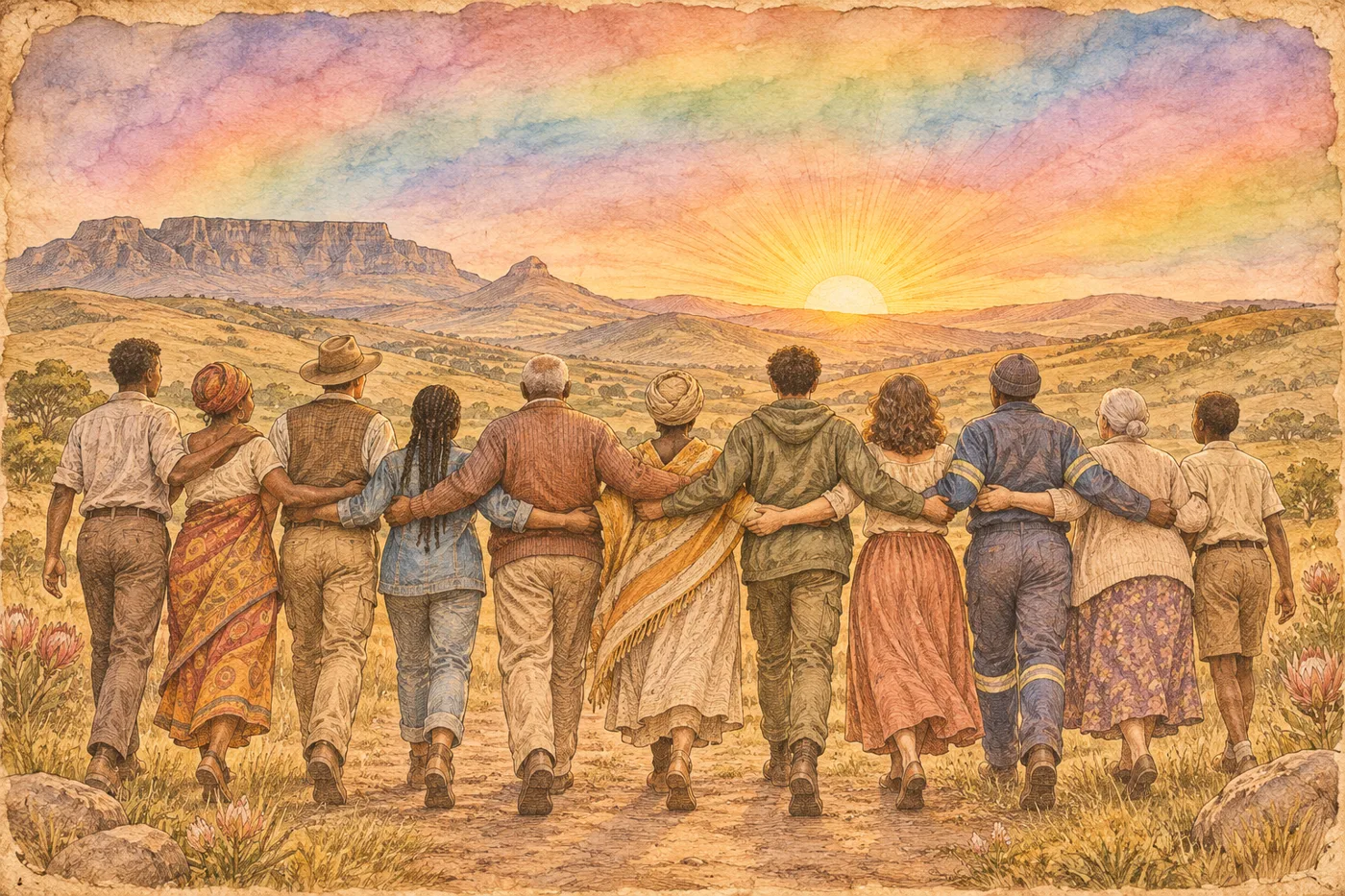
Why did someone imprisoned for so long choose the path of forgiving the other side?
Nelson Mandela was born in 1918 in the Eastern Cape province of South Africa, into the family of a tribal chief. He studied at school and later became a lawyer. In 1944, he helped found the Youth League of the African National Congress (ANC) and entered the movement against discrimination.
After the Sharpeville massacre in 1960, the movement was banned, and Mandela came to believe that nonviolence alone could not bring change. In 1961, he became involved in forming the ANC’s armed wing. He was arrested in 1962, and at the 1964 Rivonia Trial he was sentenced to life imprisonment and sent to Robben Island.
Life in prison was harsh, including work in a limestone quarry. Still, Mandela studied with fellow prisoners, talked with guards, and learned their language (Afrikaans). Internationally, calls for Mandela’s release grew louder, and in 1990, he was finally freed after more than 27 years behind bars.
In 1993, Mandela received the Nobel Peace Prize together with President F. W. de Klerk. In 1994, the ANC won the first multiracial elections, and Mandela was elected president. He served until 1999.
Mandela’s government established the Truth and Reconciliation Commission. It allowed victims to testify about human rights abuses during apartheid, and granted amnesty to perpetrators who told the full truth. The chair was Archbishop Desmond Tutu (Nobel Peace Prize 1984).
At the 1995 Rugby World Cup, Mandela used a sport popular among whites as a chance to unite the nation. He wore the jersey of the mostly white national team on the field at the final. This event was later depicted in the film Invictus. Mandela died in 2013.
Mini timeline
- 1918Mandela born in Eastern Cape
- 1962Arrested; later sentenced to life at the Rivonia Trial (1964)
- 1990Released from prison
- 1993Nobel Peace Prize (with de Klerk)
- 1994Inaugurated as president (until 1999)
People in this chapter
After a long imprisonment, he tried to lead the country toward reconciliation rather than revenge.
He received the Nobel Peace Prize in 1984 and served as chair of the Truth and Reconciliation Commission.
Meanwhile, elsewhere
Why it still matters
South Africa hosted the 2010 FIFA World Cup, the first African nation to do so. However, high unemployment and income inequality remain major challenges. How today’s people shape the society Mandela envisioned—that story continues.
Perspectives differ
- Assessment of Armed Struggle
- How to evaluate Mandela’s involvement in armed struggle has divided opinions. For a long time, he was regarded as a terrorist in some countries.
- Assessment of "Reconciliation"
- While many highly praise his achievement in making reconciliation the foundation of nation-building, others criticize that economic inequality remained and that compensation for victims was insufficient.
- Achievements of the Truth and Reconciliation Commission
- There are views that it helped uncover truth and heal society, while criticism says amnesty for perpetrators did not serve justice.
- Scope of This Chapter
- The political and economic situation described here mainly covers up to around 2011. Since circumstances have changed since then, please check the latest information separately.
Facts checked (5, verified by AI on the web)
- Confirmed Mandela was arrested in August 1962 and sentenced to life at the 1964 Rivonia Trial Trials and prison chronology (Nelson Mandela Foundation)
He received a 5-year sentence for a separate charge in November 1962, and life imprisonment on June 12, 1964. - Confirmed 1993 Nobel Peace Prize (jointly with de Klerk) Nobel Peace Prize 1993
The committee also mentioned Luthuli and Tutu as previous laureates. - Confirmed Confirmation that sign language was added as an official language in 2023 (Chapter 5) President Ramaphosa: signing of SASL Bill (gov.za)
Reference (support for a statement in the previous chapter). - Confirmed Tutu received the Nobel Peace Prize in 1984 and chaired the Truth and Reconciliation Commission South African History Online: Bishop Desmond Tutu awarded Nobel Peace Prize, Oslo
Confirmed in text: Tutu received the Nobel Peace Prize in 1984 (award ceremony December 10, Oslo) and chaired the Truth and Reconciliation Commission. - Confirmed 1995 Rugby World Cup, president 1994–1999, died 2013 World Rugby: 1995 Mandela, Williams, Pienaar
Text states Mandela encouraged the Springboks in the 1995 final and handed the trophy to Pienaar. Presidency 1994–1999 confirmed via Nelson Mandela Foundation Biography (inaugurated May 10, 1994, one term ended 1999). Death year 2013 per foundation's existing records.
Sources
Trials and prison chronology (Nelson Mandela Foundation)
South African History Online: Bishop Desmond Tutu awarded Nobel Peace Prize, Oslo
President Ramaphosa: signing of SASL Bill (gov.za)
Nelson Mandela Foundation: Biography
* AI-drafted and cross-checked; human review is in progress. Status: