Independence and the Arab Spring — In Search of Bread, Freedom, and Dignity
What path did the countries that became independent from colonial rule take, and what did their people seek?
In 1952, Egypt's Free Officers, led by Nasser, overthrew the monarchy, and in 1953 the country became a republic. In 1956, Nasser declared the nationalization of the Suez Canal. Britain, France, and Israel, opposed to this, intervened militarily (the Suez War), but withdrew under international criticism. Nasser came to be spoken of as a hero of the Arab world.
Independence followed one after another in North Africa. Libya in 1951, Sudan in 1956, and Morocco and Tunisia in 1956. Algeria gained independence in 1962 after about eight years of fierce fighting (the Algerian War). Many people saw the day they were freed from long colonial rule.
After independence, the new states faced fresh challenges. One-party systems, military regimes, and strong monarchies persisted, and long-term governments emerged: Libya's Gaddafi (1969–2011), Egypt's Mubarak (1981–2011), Tunisia's Ben Ali (1987–2011), and others. Economic disparities and youth unemployment were serious problems.
On December 17, 2010, a young street vendor in Tunisia attempted suicide by self-immolation to protest official harassment. This event sparked protests that spread nationwide, and on January 14, 2011, President Ben Ali fled the country.
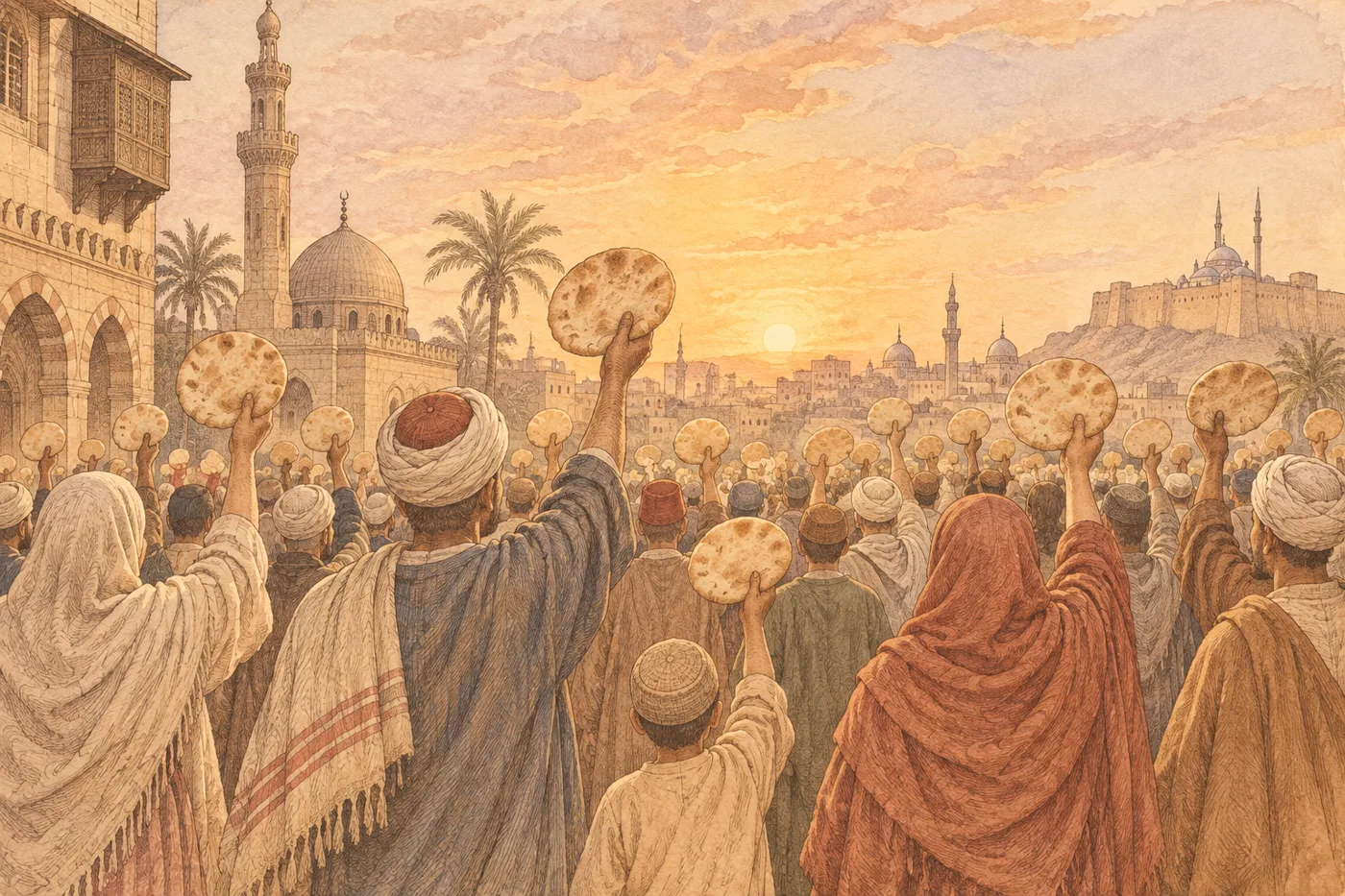
The movement spread to other countries. In Egypt, people gathered in Cairo's Tahrir Square on January 25, shouting 'Bread, freedom, social justice (dignity).' On February 11, President Mubarak resigned. In Libya, it turned into a civil war, and Gaddafi died in October 2011. Western media called these movements the 'Arab Spring.'
The paths taken afterward differed by country. This section covers events up to about 2011. The people of North Africa live using Arabic, Berber, and French in daily life, and the younger generation makes up a large part of the population. The desire to decide their own future is common to all these countries.
Mini timeline
- 1952Revolution by the Free Officers in Egypt
- 1956Suez Canal nationalized; Suez War occurs
- 1962Algeria gains independence
- December 2010Protests spread in Tunisia
- 2011Movements spread to Egypt and Libya
People in this chapter
He nationalized the canal and called for Arab unity. There is also criticism that he was authoritarian, and his assessment is divided.
His self-immolation in December 2010 is said to have triggered the movement. Mourning for his death spread across borders.
Meanwhile, elsewhere
Why it still matters
The countries of North Africa still face their own challenges today. The rich culture woven from Arabic, Berber, and French is also an important face of this region.
Perspectives differ
- Casualties of the Algerian War
- The Algerian side claims 'over one million,' but researchers' estimates range from 250,000 to about 500,000, and the number is not settled.
- The term 'Arab Spring'
- This name was spread by Western media; those involved sometimes call it the 'Dignity Revolution' or other names. There are both views that emphasize the role of social media and those that give it less weight.
- Assessments of Nasser
- There is a view of him as a hero who called for Arab unity, and a view that he created an authoritarian regime.
- Military intervention in Libya
- The international military intervention in 2011 is seen by some as protecting civilians, and criticized by others for leading to subsequent chaos.
- Recent events
- This chapter covers up to about 2011. The situation since then has seen major changes; please check elsewhere.
Facts checked (5, verified by AI on the web)
- Confirmed Free Officers' coup in July 1952; republic in 1953; Suez Canal nationalized on July 26, 1956 Encyclopaedia Britannica: Egypt — The revolution and the Republic
- Confirmed Suez Crisis (1956): Britain, France, and Israel withdraw; Nasser retains control of the canal Encyclopaedia Britannica: Suez Crisis
- Confirmed Algerian War 1954–62; death toll varies greatly by perspective, from 300,000 to 1.5 million Library of Congress Country Studies: Algeria(The Generals' Putsch)
The Library of Congress Country Studies notes that the FLN claimed about 300,000 dead in 1962, the French side roughly 350,000, and later the Algerian side claimed about 1.5 million (the government says 1 million); the FLN revolt of November 1, 1954 is recorded on another page of the same series. - Confirmed Bouazizi's self-immolation on December 17, 2010; Ben Ali flees on January 14, 2011; Mubarak resigns on February 11; Gaddafi dies in October 2011 Encyclopaedia Britannica: Arab Spring
Bouazizi's death was on January 4, 2011. - Confirmed Independence: Libya 1951, Sudan 1956, Morocco and Tunisia 1956 U.S. Office of the Historian: Libya
The U.S. State Department's Office of the Historian notes Libya declared independence on December 24, 1951; the U.S. recognized Sudan on January 1, 1956, Morocco on March 7, 1956, and Tunisia on March 22, 1956.
Sources
Encyclopaedia Britannica: Egypt — The revolution and the Republic
Encyclopaedia Britannica: Suez Crisis
Encyclopaedia Britannica: Arab Spring
Library of Congress Country Studies: Algeria(The Generals' Putsch)
Library of Congress Country Studies: Algeria(Aftermath of the War)
U.S. Office of the Historian: Libya
U.S. Office of the Historian: Sudan
U.S. Office of the Historian: Morocco
U.S. Office of the Historian: Tunisia
* AI-drafted and cross-checked; human review is in progress. Status: