The Cold War and Eastern Europe — Between Two Blocs
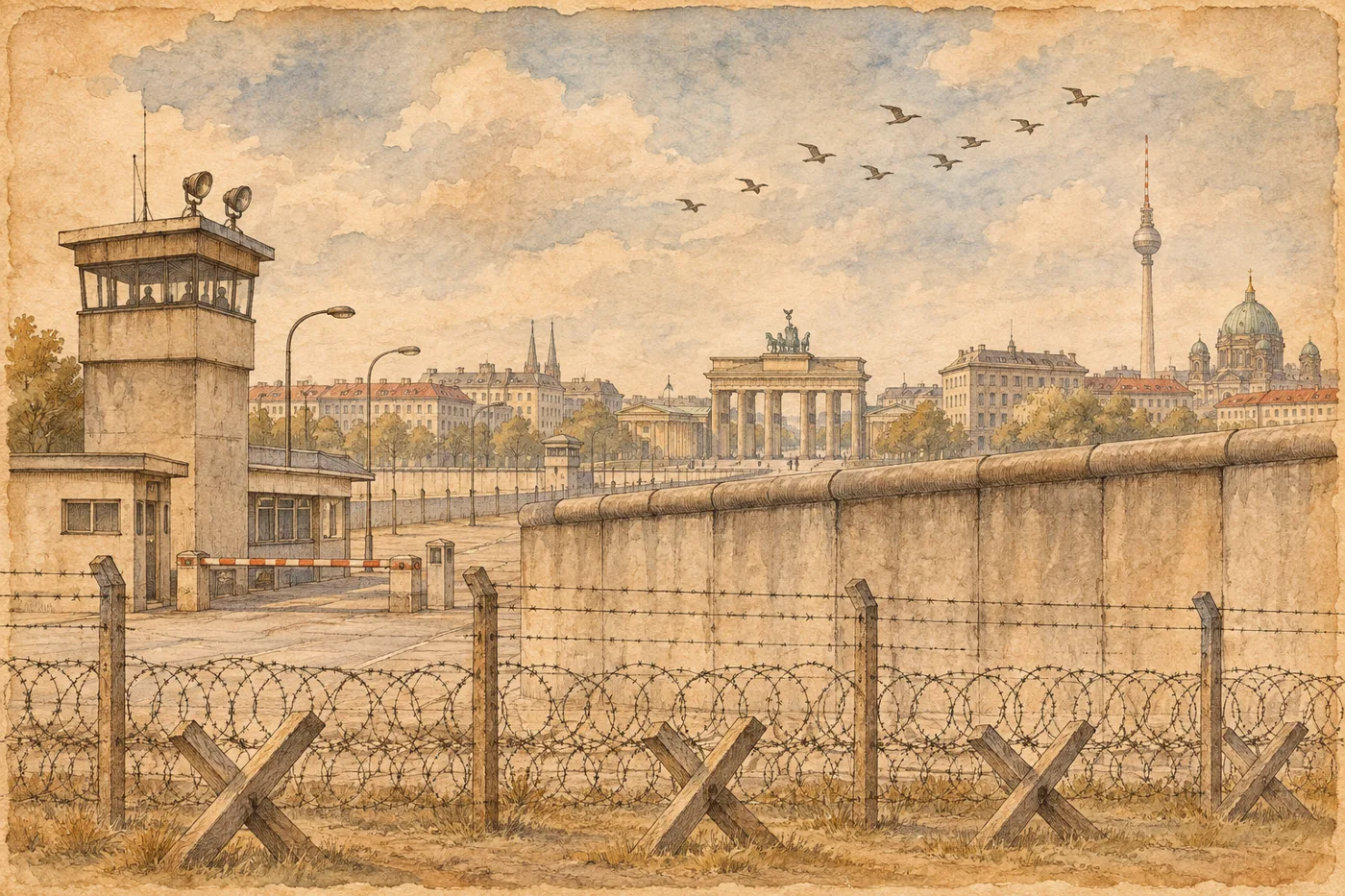
Why were the countries of Eastern Europe placed under Soviet influence?
In August 1939, Germany and the Soviet Union signed the German–Soviet Nonaggression Pact. It is said that in secret protocols, they divided Eastern Europe into their respective spheres of influence. When Germany invaded Poland in September, starting World War II, the Soviet Union also occupied eastern Poland, and in 1940 it annexed the Baltic States (the European Parliament and others regard this as an illegal occupation and annexation; the Soviet side maintained that the governments of the time had consented). In 1941, Germany invaded the Soviet Union, beginning the German–Soviet War. Over the entire war, the Soviet Union is said to have lost over 20 million people, including both soldiers and civilians (estimates commonly range from about 26 to 27 million, but figures vary).
In May 1945, the Soviet army, advancing from the east, captured Berlin, and together with the Allied forces of the US and Britain advancing from the west, forced Germany to surrender. In many Eastern European countries, with Soviet troops stationed there, governments centered on communist parties were established. In 1946, Britain’s Churchill declared in a speech: "From the Baltic to the Adriatic, an iron curtain has descended across the Continent."
The confrontation (Cold War) between the Western bloc, led by the United States, and the Eastern bloc, led by the Soviet Union, began. NATO was formed in 1949, and in 1955 the Soviet Union and its Eastern European allies created the Warsaw Pact. In 1961, the Berlin Wall was built, cutting off movement between the people of East and West Germany. Yugoslavia, under Tito, followed its own independent path, keeping its distance from the Soviet Union.
In Eastern Europe, movements seeking freedom arose repeatedly. The 1956 Hungarian Uprising was crushed by Soviet forces. In 1968, in Czechoslovakia, Dubček pushed for reforms aiming at "socialism with a human face" (the Prague Spring), but it ended with an invasion by Warsaw Pact troops.
In 1980, at the Gdańsk shipyard in Poland, Lech Wałęsa and others formed the Independent Self-Governing Trade Union "Solidarity." The government imposed martial law in 1981 and suppressed it, but the movement continued, and in 1989, after negotiations and elections, Solidarity won a landslide victory.
Around the same time, in the Soviet Union, Gorbachev was pushing reforms and signaled a policy of not intervening militarily in Eastern Europe. In 1989, Hungary removed the fence on its border with Austria, and on November 9, the Berlin Wall was opened. One after another, communist governments in various countries stepped down; in Romania, the regime fell with bloodshed. The Cold War order began to change dramatically.
Mini timeline
- 1939German–Soviet Nonaggression Pact. World War II begins.
- 1945Germany surrenders; Soviet forces stationed in Eastern Europe.
- 1956Hungarian Uprising
- 1968Prague Spring
- 1989Berlin Wall opened.
People in this chapter
From an electrician at the shipyard, he became the leader of the trade union and later President of Poland.
He pushed forward the reforms of the Prague Spring, advocating "socialism with a human face."
Meanwhile, elsewhere
Connection to Japan
Japan and the Soviet Union restored diplomatic relations in 1956. The dispute over the Northern Territories has continued since then, with the two sides maintaining different positions.
Why it still matters
Parts of the Berlin Wall still stand in the city, now forming the "East Side Gallery," a stretch of wall covered in murals. Poland, the Czech Republic, and Hungary joined NATO in 1999 and the EU in 2004. Other Eastern European countries have followed since 2004.
Perspectives differ
- Responsibility for the start of the Cold War
- Regarding why the Cold War began, there are views that emphasize Soviet expansion, views that emphasize US policy, and views that mutual mistrust was the cause. The debate continues among historians.
- Secret protocol of the German–Soviet Nonaggression Pact
- The Soviet Union long denied the existence of secret agreements. It officially acknowledged their existence only in 1989.
- Was 1945 a 'liberation'?
- It was the year of liberation from Nazi Germany, but also, for many countries, the beginning of falling under Soviet influence. Which aspect is emphasized differs by country and by individual.
- Casualties of the German–Soviet War
- Soviet deaths are estimated at 20 to 27 million, but estimates vary depending on the distinction between soldiers and civilians and the method of statistics.
- Death toll of the Hungarian Uprising
- Hungarian deaths are estimated at about 2,500 to 3,000, but figures vary.
Facts checked (6, verified by AI on the web)
- Confirmed German–Soviet Nonaggression Pact and secret protocol of August 1939 Yale Avalon Project: Nazi-Soviet Relations 1939-1941, Secret Additional Protocol
Signed in Moscow on August 23, 1939 (original text of the protocol). It divided the Baltic states, Finland, Poland, etc., into spheres of influence and was designated "top secret." - Corrected & confirmed Annexation of the Baltic states in 1940 U.S. Office of the Historian: Milestones, U.S.-Soviet Relations 1937-1945
The US State Department records it as "the reincorporation of the Baltic republics into the USSR in August 1940." The US did not recognize the annexation. The European Parliament and the UN Human Rights Council call it an "illegal occupation and annexation," while the Soviet (Russian) side argued that the governments of the time consented. The main text notes this difference in assessment in parentheses. - Views differ The Soviet Union lost approximately 26 to 27 million people in WWII (estimates vary) Britannica: World War II, Costs of the war
Britannica states that "no reliable statistics exist for Soviet casualties" (the specific figures could not be confirmed in the source used here). Approximately 27 million is a common figure, but estimates vary widely. The main text expresses this as a range: "over 20 million (estimates commonly range from about 26 to 27 million)." - Confirmed 1946 'Iron Curtain' speech; 1949 NATO; 1955 Warsaw Pact; 1961 Berlin Wall Britannica: Iron Curtain speech
The speech was on March 5, 1946. NATO was formed on April 4, 1949; the Warsaw Pact on May 14, 1955 (five days after West Germany joined NATO); the Wall was built starting August 13, 1961. - Confirmed 1956 Hungarian Uprising; 1968 Prague Spring Britannica: Hungarian Revolution
Hungarian deaths are estimated at about 2,500 to 3,000, with estimates varying (see debates section). According to Britannica, the Prague Spring began in January 1968 and effectively ended with the Soviet invasion on August 20, 1968. - Confirmed 1980 founding of Solidarity; 1981 martial law; 1989 elections and Solidarity's landslide victory Library of Congress Country Studies: Poland (Solidarity and the 1989 election)
The text in the Library of Congress Country Studies (Poland) was consulted and confirmed regarding the rise of Solidarity in 1980, the imposition of martial law on December 13, 1981, and the overwhelming victory of the Solidarity-affiliated Citizens' Committee in the June 1989 elections.
Sources
Yale Avalon Project: Nazi-Soviet Relations 1939-1941, Secret Additional Protocol
U.S. Office of the Historian: Milestones, U.S.-Soviet Relations 1937-1945
Britannica: World War II, Costs of the war
Britannica: Iron Curtain speech
Britannica: Hungarian Revolution
Britannica: Prague Spring
Library of Congress Country Studies: Poland (Solidarity and the 1989 election)
Library of Congress Country Studies: Poland, Solidarity and the 1989 election
EBRD: Hungary's 1989 negotiated change of regime
* AI-drafted and cross-checked; human review is in progress. Status: