Today — A World Born of Blending
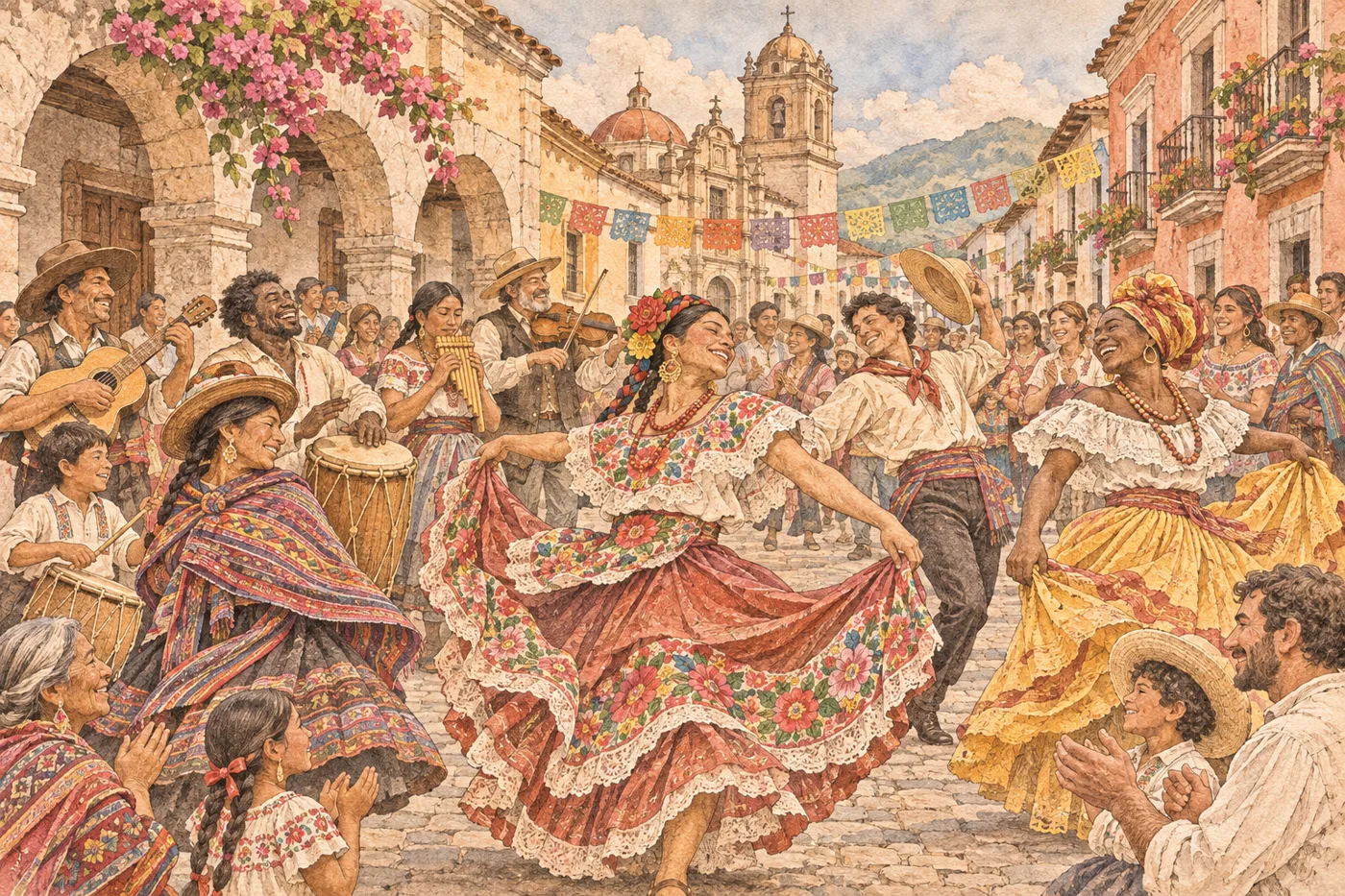
Why has Latin America become one of the world's most diverse and vibrant regions?
About 600 million people live in Latin America (as of around 2010). Spanish and Portuguese are the main languages, blended with indigenous languages, African-derived cultures, and the cultures of immigrants from Europe and Asia.
After democratization from the 1980s onward, the 2000s saw a wave of 'left-wing governments.' Brazil's President Lula (first and second terms 2003–2010, then took office again in 2023) advanced anti-poverty measures, while Venezuela's President Chávez (in office 1999–2013) was known for policies funded by oil revenue. In Bolivia, 2006 saw the inauguration of Evo Morales, the country's first president with a background in indigenous movements.
At the same time, Latin America is said to be one of the world's regions with the greatest income inequality. The large cities of Brazil and Mexico have enormous slums. Drug-related crime and violence have also become serious problems in countries such as Mexico.
It is also a resource-rich region. The Amazon rainforest plays a major role in the Earth's climate. The highlands of Chile, Argentina, and Bolivia hold abundant lithium, used in batteries. How to make good use of this resource is a major challenge for the future.
Latin American culture has also spread worldwide. Colombian writer Gabriel García Márquez won the Nobel Prize in Literature in 1982 for works such as 'One Hundred Years of Solitude.' With soccer, samba, tango, and salsa, the region has given rise to many forms of music and sports beloved around the world.
The descendants of the Maya, Aztec, and Inca peoples still live here today. Through conquest, independence, revolution, and dictatorship, Latin America continues to create new stories by making blending its strength.
Mini timeline
- 1980sDemocratization advances in many countries
- 1999Chávez government takes power in Venezuela
- 2003Lula government takes power in Brazil
- 2006Morales, of indigenous background, becomes president of Bolivia
- 2010Brazil continues economic growth
People in this chapter
Born in Colombia. Known for 'One Hundred Years of Solitude.' Received the Nobel Prize in Literature in 1982.
Inaugurated in 2006 as Bolivia's first president with a background in indigenous movements. His legacy remains both supported and criticized.
Meanwhile, elsewhere
Connection to Japan
Many people of Japanese descent live in Brazil and Peru. In 1990, Fujimori, who is of Japanese descent, took office as president in Peru. Many people of Japanese descent also come to Japan for work.
Why it still matters
People from Latin America have transformed the world's table. Potatoes, tomatoes, corn, and cacao all originated in this region. In soccer, Brazil and Argentina remain powerhouse teams.
Perspectives differ
- Evaluation of left-wing governments
- There is a view that praises the achievements in reducing poverty, and a criticism that policies reliant on resource prices made the economy unstable.
- Inequality indicators
- Income inequality figures vary by country and statistical method. Whether it can be called 'the greatest in the world' is debated.
- The name 'Latin America'
- It is said to have spread in the 19th century as a collective name for regions where Romance languages are spoken. There are various theories as to who used it first.
- Scope of this chapter
- This chapter covers up to around 2011. Since conditions have changed rapidly since then, please check the latest information from other sources.
Facts checked (5, verified by AI on the web)
- Confirmed Morales took office in 2006, said to be the first president of indigenous origin Evo Morales (Britannica)
There are dissenting views on 'first indigenous' (the main text cautiously writes 'with a background in indigenous movements') - Confirmed García Márquez won the 1982 Nobel Prize in Literature (1927–2014) Gabriel García Márquez (Nobel Prize)
Born March 6, 1927; died April 17, 2014 - Confirmed President Chávez's term was 1999–2013 The Hugo Chávez presidency (Britannica)
There was a brief interruption in 2002; died March 5, 2013 - Confirmed Latin America's population is about 600 million (around 2010) Latin America and the Caribbean Population 2010 (PopulationPyramid, UN WPP)
About 589 million - Confirmed President Lula's term was 2003–2010 La Vie des idées: Lula, Father of the Poor
Text states Phase 1 was 2003-2006, and Phase 2 ended in late 2010.
Sources
Evo Morales (Britannica)
Gabriel García Márquez (Nobel Prize)
The Hugo Chávez presidency (Britannica)
Latin America and the Caribbean Population 2010 (PopulationPyramid, UN WPP)
* AI-drafted and cross-checked; human review is in progress. Status: