Revolution and Dictatorship — In the Cold War's 'Backyard'
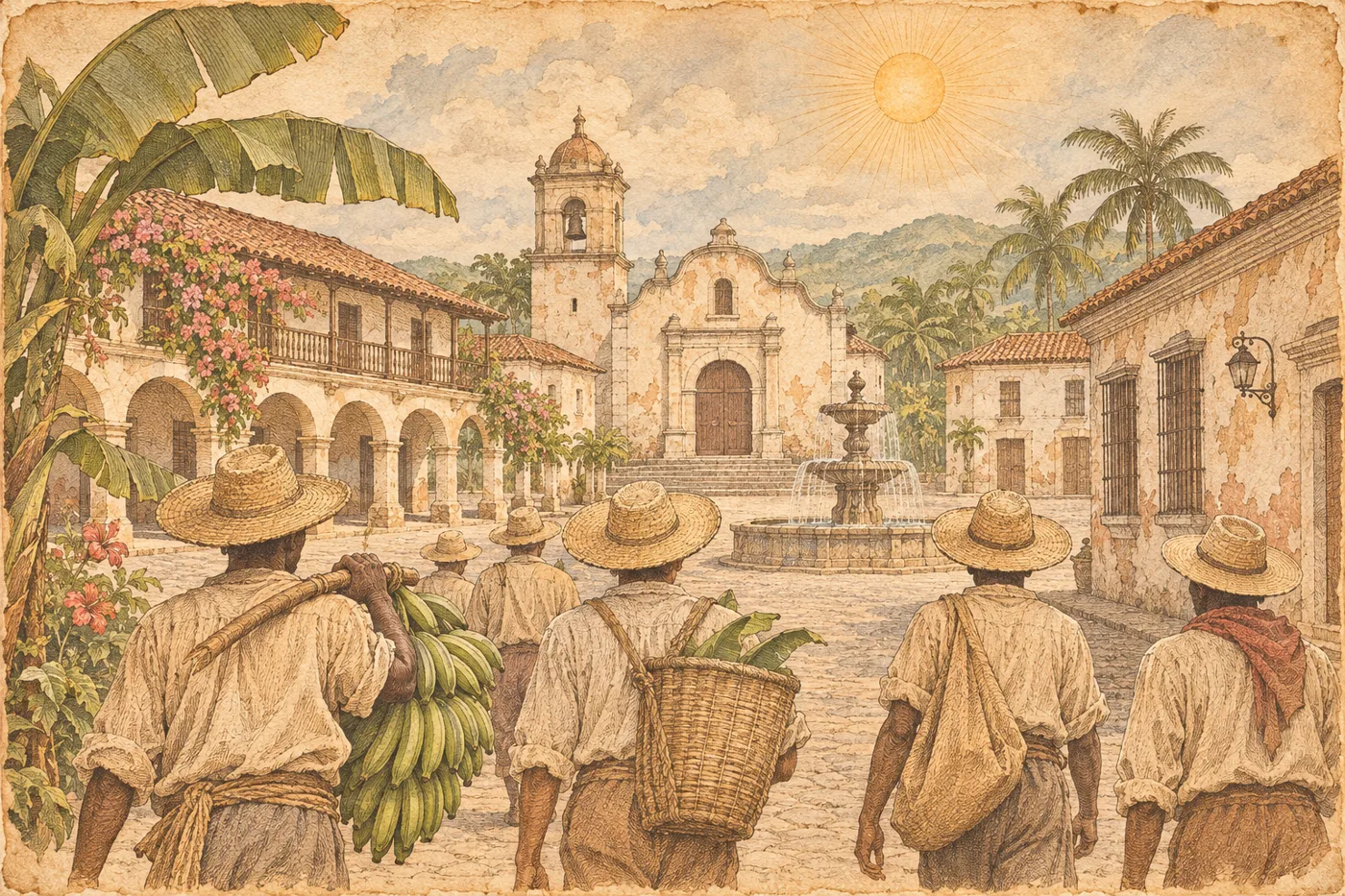
Why were revolution and military rule repeated in Latin America?
In the countries of Latin America that gained independence in the 19th century, land and wealth were concentrated among a very small portion of the population. The Mexican Revolution, which began in 1910, was an explosion of discontent over such inequality. In 20th-century Latin America, revolutions and changes of government occurred repeatedly over the question of improving the lives of the poor.
The United States regarded Latin America as its own 'backyard' and exerted great political and economic influence. In the Spanish–American War of 1898, Cuba was separated from Spain and formally became independent in 1902, but conditions were attached that left the United States with the right to intervene.
In 1959, in Cuba, Fidel Castro and the Argentine-born Che Guevara, among others, overthrew the Batista government (Cuban Revolution). Cuba later took a socialist path. While education and healthcare improved, free speech and political activity were restricted.
In 1961, a U.S.-backed invasion by Cuban exiles failed (Bay of Pigs Invasion), and in 1962, the Soviet Union attempted to place missiles in Cuba, bringing the United States and the Soviet Union to the brink of nuclear war (Cuban Missile Crisis).
In the 1970s, a series of countries saw the military take power. In 1973, the Chilean military overthrew the elected Allende government (September 11), and General Pinochet took power. In Argentina, under the military regime that began in 1976, many people disappeared.
Citizens raised their voices against such repression. In Argentina, mothers demanding the return of their disappeared children, as the 'Mothers of the Plaza de Mayo,' continued a weekly march. In the 1980s, democratization progressed in many Latin American countries.
Mini timeline
- 1910Mexican Revolution begins
- 1959Cuban Revolution
- 1962Cuban Missile Crisis
- 1973Military coup in Chile
- 1976Military regime begins in Argentina
- 1980sDemocratization progresses
People in this chapter
An Argentine-born doctor. He participated in the Cuban Revolution and later died in Bolivia. Assessments of him remain deeply divided.
Wearing white scarves, they continued to march in a Buenos Aires plaza, demanding to know the fate of their children.
Meanwhile, elsewhere
Connection to Japan
In 1908, the first Japanese immigrants sailed to Brazil on the ship Kasato Maru. Today, more than two million people of Japanese descent live in Brazil, the largest Japanese community outside Japan.
Why it still matters
The Cuban Missile Crisis is said to be one of the events that brought the world closest to nuclear war in the 20th century. In a square in Argentina, the march of the 'Mothers' is still known as a symbol of human rights.
Perspectives differ
- Assessment of the Cuban Revolution
- Opinions are sharply divided depending on one’s stance: some praise its achievements in education and healthcare, while others criticize the restrictions on freedom and economic stagnation.
- U.S. involvement
- Analysis of declassified documents regarding the extent of U.S. involvement in events such as the Chilean coup is ongoing, and researchers’ views differ on the degree and scope of that involvement.
- Number of disappeared persons
- The number of disappeared persons under the Argentine military regime is given as about 9,000 in a report by a government investigative commission and estimated at about 30,000 by human rights groups; figures vary.
- Scope of this chapter
- This chapter covers the period up to about 1990. For political developments thereafter, including those in the next chapter, please consult other sources for the latest information.
Facts checked (5, verified by AI on the web)
- Confirmed Chilean military coup of September 11, 1973; Pinochet regime Chile — the military dictatorship from 1973 (Britannica)
Allende died that same day (said to be suicide). - Confirmed Disappeared persons under the Argentine military regime ICTJ(国際移行期正義センター): Accountability in Argentina
A report by the international NGO ICTJ estimates the number of disappeared under the military regime at 10,000–30,000, and notes that CONADEP reported 8,960 disappeared (figures treated as a range). - Confirmed Mothers of the Plaza de Mayo began in 1977 Western Kentucky University (Int. Journal of Leadership and Change): Azucena Villaflor, the Mothers of the Plaza de Mayo
It is said to have begun in 1977 (per university research materials). Most sources give the first gathering as taking place in April, but the date (14th or 30th) and number of participants (12–14) vary among sources. - Unverified Che Guevara (1928–1967) National Security Archive: Henry Butterfield Ryan, The Fall of Che Guevara
NSA Archive page only states 'about 40 years old' on the death certificate, with no birth year of 1928. Britannica returns 403. - Confirmed 1961 Bay of Pigs; 1962 Cuban Missile Crisis; 1902 independence and Platt Amendment U.S. Office of the Historian: The Bay of Pigs Invasion and Its Aftermath
The U.S. State Department’s Office of the Historian notes that Brigade 2506 landed at the Bay of Pigs on April 17, 1961; the Cuban Missile Crisis occurred in October 1962; the Republic of Cuba formally came into being on May 19, 1902; and Fordham University’s sources note that the Platt Amendment was drafted in 1901.
Sources
Chile — the military dictatorship from 1973 (Britannica)
ICTJ(国際移行期正義センター): Accountability in Argentina
Western Kentucky University (Int. Journal of Leadership and Change): Azucena Villaflor, the Mothers of the Plaza de Mayo
National Security Archive: Henry Butterfield Ryan, The Fall of Che Guevara
U.S. Office of the Historian: The Bay of Pigs Invasion and Its Aftermath
U.S. Office of the Historian: Milestones: Cuban Missile Crisis
U.S. Office of the Historian: Cuba
Fordham University Internet Modern History Sourcebook: The Platt Amendment, 1901
* AI-drafted and cross-checked; human review is in progress. Status: