The Mexican Revolution — A Decade in Search of Land and Liberty
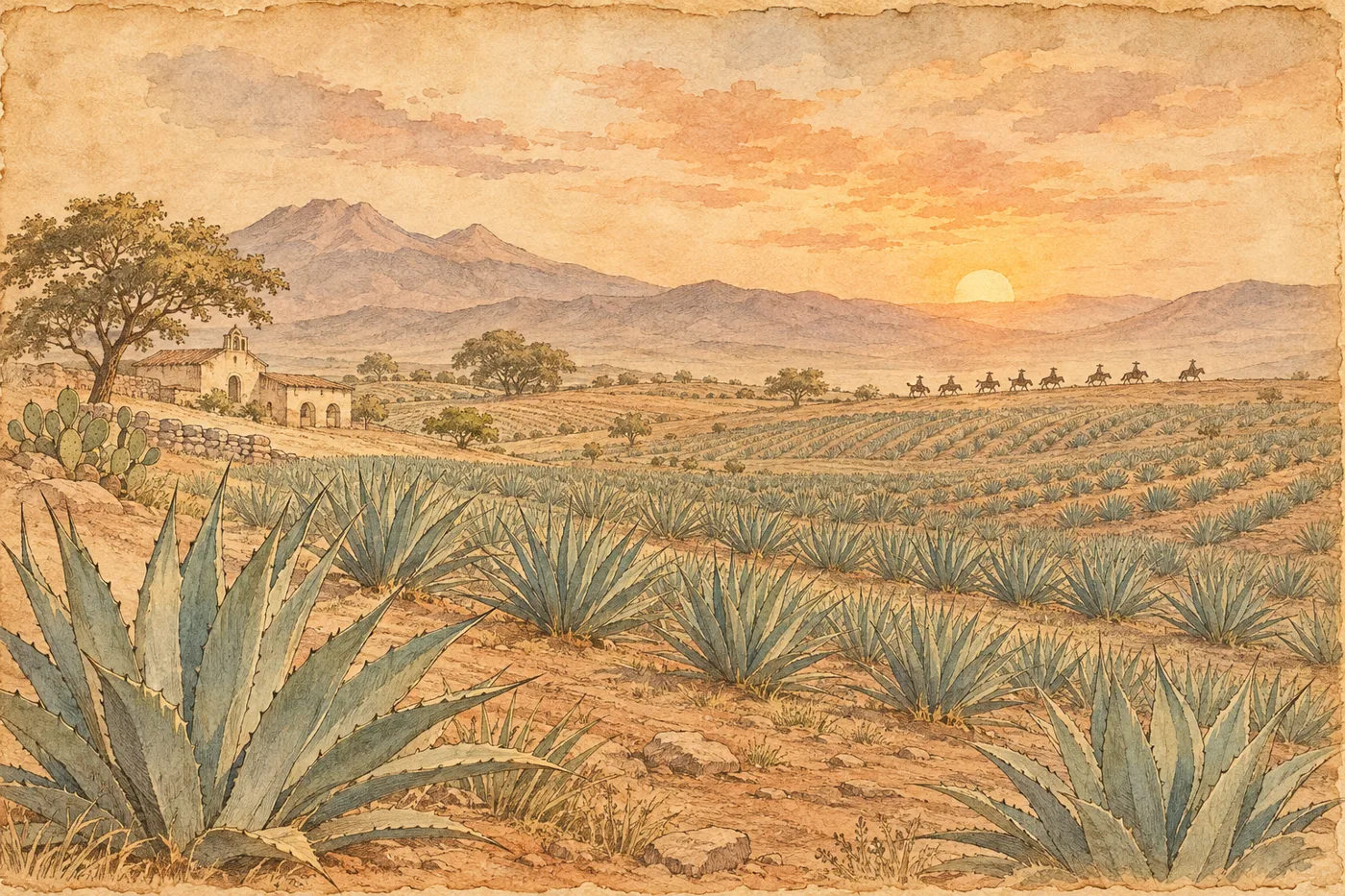
Why did the people of Mexico take up arms against a long-running regime?
In 1910, Porfirio Díaz had been president of Mexico for over thirty years. He ruled the country in two separate periods: 1876–1880 and 1884–1911. This era brought peace and economic development to the nation, but also strict repression, and was called a 'dictatorship.' In the countryside, land became concentrated in large estates.
In 1910, Francisco Madero, the son of a landowner, ran for president. After the election, Madero wrote the 'Plan of San Luis Potosí' and called on the people to rise up with weapons on November 20. In the north, Pancho Villa and others joined, and in May 1911 Ciudad Juárez fell; Díaz left the presidency. Madero became president later that year.
In the southern state of Morelos, Emiliano Zapata had risen up in March 1911 demanding the rights of villagers to land and water. Even after Madero became president, land was not returned as expected, and in November of the same year, Zapata issued the 'Plan of Ayala,' calling for the recovery of land from large estate owners. At this point, the revolution broadened from a political one to one about the land.
In February 1913, General Victoriano Huerta staged a coup, and Madero and the vice president were killed. Opposing Huerta, Venustiano Carranza, Villa, and Zapata fought, and in July 1914 Huerta left the country. However, the victorious factions then turned on each other, leading to civil war. In 1915, General Obregón defeated Villa's cavalry, giving Carranza's side the upper hand.
On February 5, 1917, a new constitution was enacted. The nation's subsoil resources were declared national property, and land taken from peasants during the Porfiriato was ordered to be returned. Workers were granted rights such as an eight-hour workday and the right to organize and strike. However, the provisions of the constitution were also goals, and it is said that not everything was realized immediately. The return of land and protection of workers proceeded over a long period afterwards.
After that, Zapata was killed in an ambush in 1919, and Carranza was also killed in 1920. In December of the same year, Obregón assumed the presidency. The revolution is generally considered to have lasted about ten years, from around 1910 to around 1920, but there are differing views on the ending year. Estimates of the number of lives lost during this period vary by study, and no single figure can be given.
Mini timeline
- Oct–Nov 1910Madero writes the Plan and calls for an uprising on November 20
- May 1911Ciudad Juárez falls; the Díaz regime collapses
- Feb 1913Huerta's coup; Madero is killed
- July 1914Huerta resigns and leaves the country
- Feb 1917The new Constitution (the 1917 Constitution) is enacted
- Dec 1920Obregón assumes the presidency
People in this chapter
He rose up demanding the rights of villagers to land and water. He was killed in an ambush in 1919.
The northern forces took Zacatecas in 1914, but he was defeated by Obregón in 1915. In 1916, he attacked Columbus in the United States.
Meanwhile, elsewhere
Connection to Japan
In 1910, Japan was in its 43rd year of Meiji, and the annexation of Korea took place. 1917 corresponds to the 6th year of Taisho; Japan was in the midst of World War I. This was around the same time as Mexico's 1917 Constitution.
Why it still matters
The 1917 Constitution, repeatedly amended, is still in use as Mexico's constitution today. The ideas of workers' rights and national ownership of resources are said to have influenced the constitutions of other countries around the world. Zapata and Villa remain alive in people's memories.
Perspectives differ
- The ending year of the revolution
- It is generally considered to be 1910–1920, but some explanations see the enactment of the 1917 Constitution as the cutoff; there are various theories about the ending year.
- Number of victims
- Estimates of the death toll and population loss vary greatly among researchers. One study puts the population loss in the range of 1.9 to 3.5 million, but this figure includes not only deaths but also a decline in births and emigration abroad.
- Evaluation of the Díaz era
- This era is said to have brought peace and economic development, yet it was also an era of dictatorship and repression. How it is evaluated differs among researchers.
- To what extent was the 1917 Constitution realized?
- The Constitution had progressive content, but views differ on how far land redistribution and other measures advanced, depending on the period and region.
- What kind of revolution was it?
- Whether it was a political revolution or a social revolution in which peasants sought land is a matter on which researchers' views differ; there are various theories.
Facts checked (6, verified by AI on the web)
- Confirmed Díaz served as president from 1876–1880 and 1884–1911 The Mexican Revolution and the United States(米国議会図書館): Overview
Confirmed in the text. It also notes both the peace, stability, and economic development, and the repression and dictatorship. - Confirmed In October 1910, Madero wrote the Plan of San Luis Potosí and called for an uprising on November 20. Ciudad Juárez fell in May 1911 The Mexican Revolution and the United States(米国議会図書館): Timeline
Confirmed in the timeline. It notes that Villa and Orozco captured Ciudad Juárez on May 10. Regarding Díaz's resignation, as it was not read in this text's main body, the main text simply says 'left the presidency.' - Confirmed In February 1913, after Huerta's coup, Madero and the vice president were killed The Mexican Revolution and the United States(米国議会図書館): Timeline
It notes the coup on February 18 and the two being shot on February 22. - Confirmed Zapata rose up in March 1911 demanding rights to land and water, and issued the Plan of Ayala in November of the same year. It called for the recovery of land from large estate owners, among other things NC State University (Slatta): Plan of Ayala, 1911, by Emiliano Zapata
The Plan of Ayala is dated November 25, 1911. It stipulates the recovery of village lands and the expropriation of one-third of large landowners' lands. The slogan 'Land and Liberty' is not found in the text of the Plan itself, so the main text does not link the slogan to the Plan, using it only in the chapter title. The March uprising is confirmed in the Library of Congress timeline. - Confirmed The Constitution was enacted on February 5, 1917, stipulating the nationalization of subsoil resources, the return of seized land, an eight-hour workday, and the rights to organize and strike The Mexican Revolution and the United States(米国議会図書館): The Constitution of 1917
Confirmed in the main text. The degree of implementation is not discussed on that page (another page notes it was a goal and was not immediately realized). - Confirmed Population loss is estimated by researchers to range from 1.9 to 3.5 million (this figure is not just the number of deaths) McCaa(ミネソタ大学): Missing millions: the human cost of the Mexican Revolution
In McCaa's paper, the range of multiple estimates is 1.9–3.5 million; his own estimate is about 2.1 million (excess deaths about two-thirds). This differs greatly from other researchers' figures. The main text does not assert a single figure.
Sources
The Mexican Revolution and the United States(米国議会図書館): Overview
The Mexican Revolution and the United States(米国議会図書館): Timeline
The Mexican Revolution and the United States(米国議会図書館): The Constitution of 1917
The Mexican Revolution and the United States(米国議会図書館): The End of the Revolution and its Consequences
NC State University (Slatta): Plan of Ayala, 1911, by Emiliano Zapata
McCaa(ミネソタ大学): Missing millions: the human cost of the Mexican Revolution
* AI-drafted and cross-checked; human review is in progress. Status: