Independence — From 'No Taxation Without Representation' to a New Nation
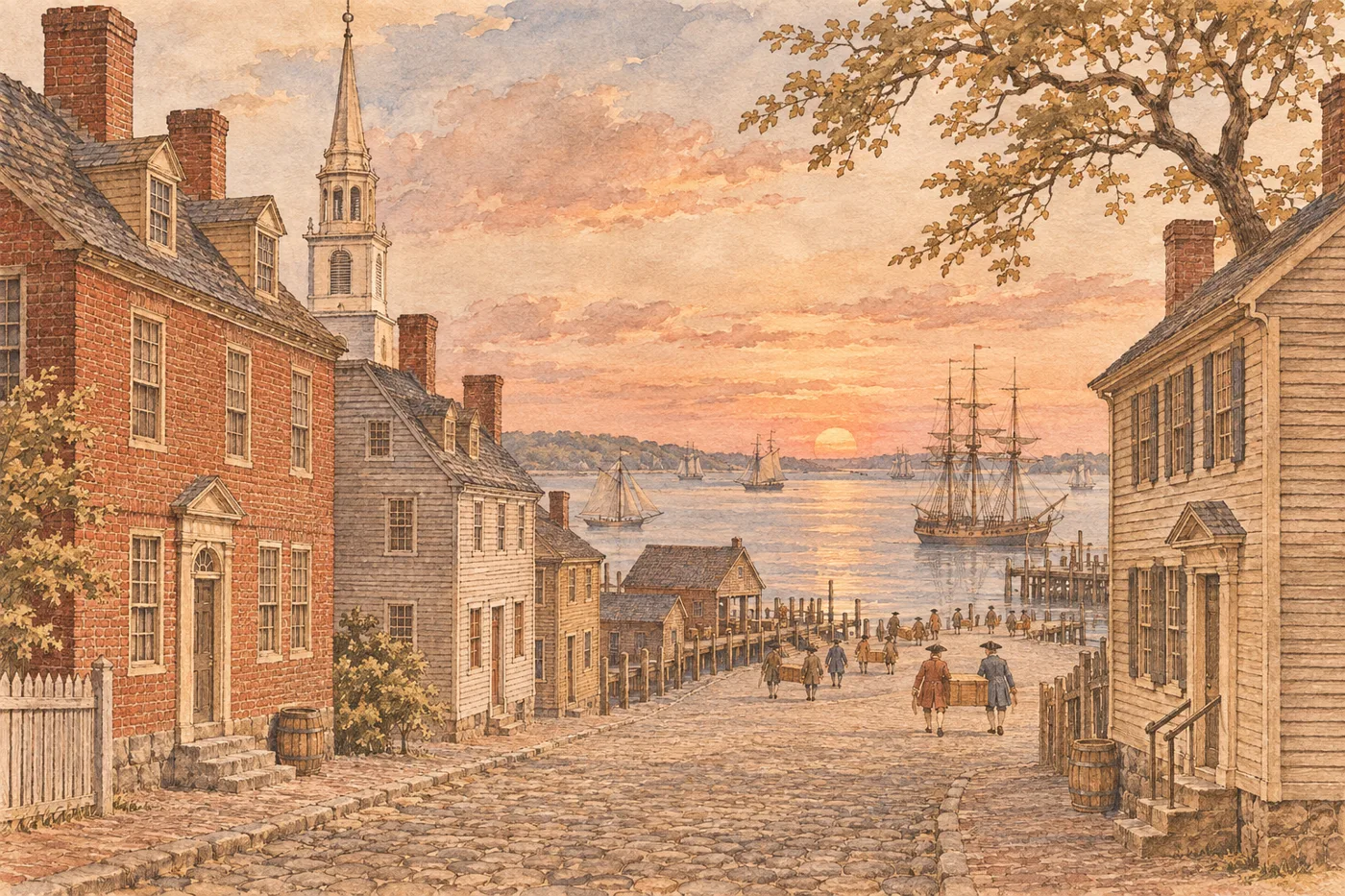
Why did the thirteen British colonies choose to break away from their mother country?
In the mid-18th century, on the east coast of North America, there were thirteen British colonies. The north was centered on commerce and fishing, while the south had plantations growing tobacco, rice, and indigo, where people of African descent were forced to work as slaves. Each colony had its own circumstances, but the people were accustomed to holding their own assemblies and governing themselves.
The trigger was a war with France that began in 1754 (the French and Indian War). With the Treaty of Paris in 1763, Britain won and gained Canada from France. However, the war costs had ballooned. So Britain imposed new taxes on the colonies (such as the Stamp Act of 1765). The colonists protested, saying it was wrong for a parliament in which they had no representatives to decide on taxes.
The slogan was 'No taxation without representation.' In 1773, as a protest against British tea, people in Boston dumped tea chests from ships in the harbor into the sea (the Boston Tea Party). Britain responded with strong measures, deepening the conflict. In 1775, armed clashes finally broke out at Lexington and Concord.
In July 1776, the representatives of the colonies issued the Declaration of Independence. Thomas Jefferson was the main drafter. The words 'all people are created equal and have the rights to life, liberty, and the pursuit of happiness' influenced people around the world. However, at the time, these words did not apply directly to those forced to work as slaves, nor to Indigenous peoples or women.
The war lasted eight years. The Continental Army, led by George Washington, struggled, but the tide turned when France joined as an ally in 1778. A victory at Yorktown in 1781 and the Treaty of Paris in 1783 secured British recognition of independence. Many Indigenous tribes had to choose sides during the war, and opinions were divided even within the Iroquois Confederacy.
After the war, the United States Constitution was created in 1787, and Washington became the first president in 1789. Meanwhile, the colonies to the north, in Canada, did not choose independence and remained under British rule. After the war, tens of thousands of loyalists who had sided with Britain moved from the United States to Canada. Even within North America, the paths of nations diverged.
Mini timeline
- 1763Treaty of Paris: Britain gains Canada
- 1773Boston Tea Party
- 1776Declaration of Independence
- 1783Treaty of Paris: Britain recognizes independence
- 1787United States Constitution is created
People in this chapter
He led the war effort and later set a precedent for the transfer of power by stepping down after two terms.
He sided with the British during the War of Independence, and after the war secured land for his people in Canada, leading them there.
Meanwhile, elsewhere
Connection to Japan
In 1776, Japan was in the Edo period, the era of Tanuma Okitsugu. In 1774, Sugita Genpaku and others had published 'Kaitai Shinsho' (a Japanese translation of a Dutch anatomy text).
Why it still matters
In the United States, July 4 is celebrated every year as Independence Day. Canada, meanwhile, is still a constitutional monarchy with the British monarch as head of state, and its founding is dated to 1867. Even within North America, the origins of nations differ greatly.
Perspectives differ
- Was it a 'revolution'?
- There is a view that sees the War of Independence as a 'revolution' that reshaped society, and another that sees it as a 'conservative movement' that preserved existing self-governance.
- Support among the colonists
- The proportions of those who supported independence, those who remained loyal to Britain, and those who took neither side are often said to be 'one-third each,' but this is only a rough estimate and is not clear.
- Who was included in 'all men are created equal'?
- Some of the men who wrote the Declaration were slave owners. How to evaluate this contradiction remains a subject of debate. During the war, some people responded to the British offer of freedom if they fled to their side.
- Date of Independence Day
- The vote for independence was on July 2, and the text of the Declaration was approved on July 4. The holiday falls on July 4 because it derives from the date of the Declaration.
Facts checked (4, verified by AI on the web)
- Confirmed The 1763 Treaty of Paris ceded Canada (New France) from France to Britain Treaty of Paris 1763 (The Canadian Encyclopedia)
Signed February 10, 1763. French territory east of the Mississippi went to Britain; west of it (including New Orleans) went to Spain. - Confirmed The Boston Tea Party of 1773 Office of the Historian: Parliamentary Taxation
December 16, 1773. An incident in which tea from East India Company ships was dumped into the harbor (Office of the Historian). - Confirmed Independence was voted on July 2; the Declaration was adopted on July 4 National Archives: Declaration of Independence (1776)
Independence was voted on July 2; the text was approved on July 4; most signatures were made on August 2 (National Archives). Consistent with the main text and the debate section. - Confirmed The 1783 Treaty of Paris recognized American independence National Archives: Treaty of Paris (1783)
Signed September 3, 1783; Britain recognized independence (National Archives; Library of Congress also cites the same date).
Sources
Canadian Encyclopedia: Treaty of Paris 1763
Library of Congress: American Revolution
Office of the Historian: Parliamentary Taxation
National Archives: Declaration of Independence (1776)
National Archives: Treaty of Paris (1783)
* AI-drafted and cross-checked; human review is in progress. Status: