Japanese Occupation and Independence — War Changed the Shape of Independence
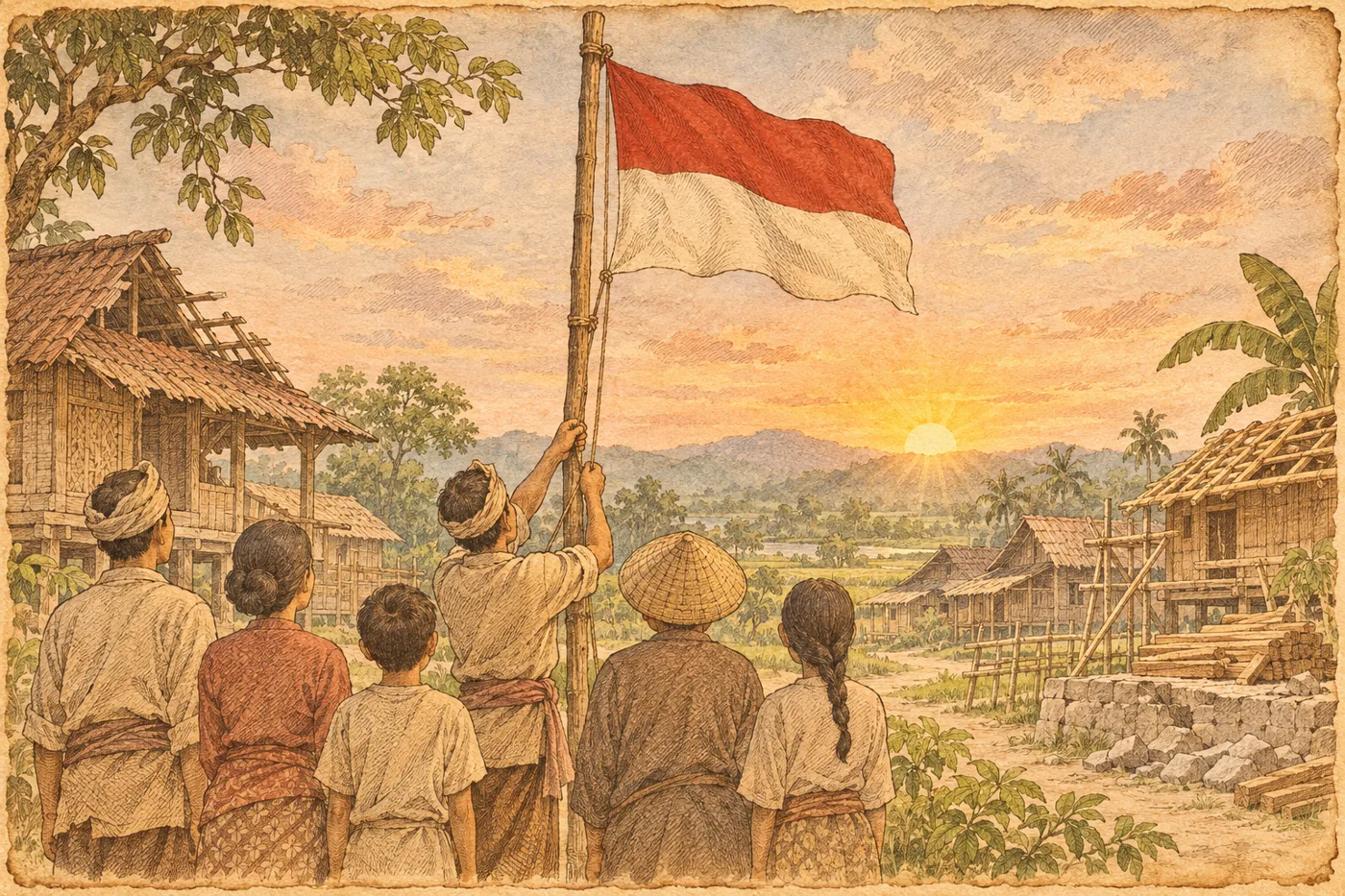
How did colonial rule in Southeast Asia come to an end?
In December 1941, the Japanese military launched nearly simultaneous attacks on the Malay Peninsula, the Philippines, and other areas. By February 1942 they had captured Singapore, and within a few months they controlled most of Southeast Asia. Japan proclaimed it was 'liberating Asia from Western rule,' but in reality, securing resources such as oil and rubber was a major objective.
In the occupied territories, goods were requisitioned and forced labor was imposed, leading to food shortages in many areas. The construction of the Thai–Burma Railway, linking Thailand and Burma, cost the lives of many Allied prisoners of war and local laborers. In Vietnam, a severe famine from 1944 to 1945 is estimated to have killed anywhere from several hundred thousand to two million people. In Singapore and the Malay Peninsula, many ethnic Chinese were killed.
On the other hand, the Japanese occupation also affected the political movements of the people of Southeast Asia. Japan provided military training to local youth and sought cooperation from independence movement leaders. However, whether this is seen as a 'benefit' from Japan or as something local leaders 'reluctantly made use of' varies by country and by individual. Some people cooperated with Japan, while others resisted.
When Japan surrendered in August 1945, action came quickly. On August 17, Sukarno and Hatta declared Indonesia’s independence. On September 2, Ho Chi Minh declared the independence of the Democratic Republic of Vietnam. However, the Netherlands and France tried to return to their colonies, leading to fighting in various places.
After a war of independence lasting just over four years, sovereignty was transferred from the Netherlands to Indonesia in 1949. The Philippines became independent from the United States in 1946, and Burma from Britain in 1948. The Federation of Malaya became independent in 1957 and formed Malaysia in 1963. Singapore split off from Malaysia and became independent in 1965.
In Vietnam, the war against France (the First Indochina War) continued, and in 1954 the French were defeated at Dien Bien Phu. Cambodia and Laos became independent states within the French Union in 1949, then achieved full independence in 1953. The dates and forms of independence differ from country to country. The war hastened independence, but it also created many casualties and new conflicts. The next chapter is about Vietnam.
Mini timeline
- 1941–42The Japanese military occupies most of Southeast Asia
- August 1945Japan surrenders; Indonesia declares independence (17th)
- September 1945The Democratic Republic of Vietnam declares independence (2nd)
- 1946The Philippines becomes independent from the United States
- 1949The Netherlands transfers sovereignty over Indonesia
People in this chapter
He declared independence and called for national unity. He is a figure whose evaluation has changed greatly over time.
He was active abroad for a long time and declared independence in 1945. In Vietnam, he is revered as the father of the nation.
Meanwhile, elsewhere
Connection to Japan
In Japan, the war is called the 'Pacific War' or 'Greater East Asia War,' but in Southeast Asia it is remembered as the 'Japanese Occupation.' After the war ended, some former Japanese soldiers stayed behind, and it is said that some even joined the Indonesian War of Independence (the numbers are debated).
Why it still matters
Indonesia’s Independence Day is still celebrated every year on August 17. The independence days of the countries of Southeast Asia differ, and those dates reflect each country’s view of its own history.
Perspectives differ
- Assessment of the Japanese Occupation
- Observers point to both Japan's proclaimed 'liberation of Asia' and the reality that its focus was on resource acquisition and military control. The question of 'liberation' versus 'invasion' carries different memories depending on the country and generation.
- Number of Victims
- The number of laborer deaths on the Thai–Burma Railway, the victims of the Vietnam famine, and the killings of ethnic Chinese are all estimated with wide ranges and have not been confirmed.
- Did the Japanese Occupation Accelerate Independence?
- There is a view that the occupation broke down the structures of colonial rule and hastened independence, and another view that independence movements were developing independently of the occupation.
- Date of Independence
- Indonesia celebrates August 17, 1945 as its Independence Day, but the Netherlands did not recognize the transfer of sovereignty until 1949. The idea of 'when independence was achieved' differs by country.
Facts checked (5, verified by AI on the web)
- Confirmed Deaths from the Vietnam famine of 1944–45: estimated at about 600,000 to 2 million Cambridge Asia-Pacific Journal: The Great Vietnamese Famine of 1944-45 Revisited
According to the same paper, Ma says about 1 million, Bui Minh Dung says 1–2 million, Ngo Vinh Long says 2 million in northern Vietnam alone, the French estimate is 600,000–700,000, and the official Vietnamese figure is 1–2 million. The main text says 'estimated at anywhere from several hundred thousand to two million,' which is consistent. - Confirmed Sukarno and Hatta declared Indonesia’s independence on August 17, 1945; the Netherlands transferred sovereignty on December 27, 1949 UNC Asia: Indonesia in the 1940s
UNC Asia records the August 17, 1945 declaration and the Netherlands’ non-recognition, and the revolution of 1945–49. The U.S. State Department’s historical office records that the United States recognized the Republic of the United States of Indonesia on December 28, 1949 (the transfer of sovereignty is commonly dated December 27, but this was not directly confirmed in the sources consulted). - Confirmed Thai–Burma Railway: about 12,000 Allied POWs and 75,000–100,000 or more Asian laborers died Encyclopaedia Britannica: Burma Railway
The main text does not give numbers and says 'many,' which is consistent. Laborer numbers vary greatly by source. - Confirmed Malaya independent in 1957, Malaysia in 1963, Singapore separated in 1965; Philippines in 1946; Burma in 1948; Cambodia and Laos in 1953 US Office of the Historian: Malaysia
The U.S. State Department’s historical office confirms recognition of Malaya on August 31, 1957; the formation of Malaysia in 1963; Singapore’s separation in 1965 (U.S. recognition August 11, 1965); the Philippines on July 4, 1946; and Burma on January 4, 1948 (U.S. recognition). Cambodia and Laos were independent states within the French Union in 1949 and achieved full independence in 1953. The main text has been corrected from 'achieved independence in 1953' to 'became independent states within the French Union in 1949, then achieved full independence in 1953.' - Confirmed Ho Chi Minh declared the independence of the Democratic Republic of Vietnam on September 2, 1945 Fordham Internet History Sourcebooks: Proclamation of Independence of the Democratic Republic of Vietnam (1945)
Confirmed as 'Proclamation of the Democratic Republic of Vietnam on September 2, 1945.'
Sources
Cambridge Asia-Pacific Journal: The Great Vietnamese Famine of 1944-45 Revisited
UNC Asia: Indonesia in the 1940s
Encyclopaedia Britannica: Burma Railway
US Office of the Historian: Indonesia
Fordham Internet History Sourcebooks: Proclamation of Independence of the Democratic Republic of Vietnam (1945)
US Office of the Historian: Laos
US Office of the Historian: Malaysia
* AI-drafted and cross-checked; human review is in progress. Status: