Independence in 1960 — "The Year of Africa"
Why did so many countries gain independence all at once in 1960?
After World War II, colonized peoples increasingly wanted to determine their own fate. The European powers had been weakened by the war. Independence movements in Asia also inspired people in Africa.
In 1957, the British colony of the Gold Coast became independent as Ghana. It was one of the earliest countries in sub-Saharan Africa to gain independence. Its leader, Kwame Nkrumah, advocated Pan-Africanism—unity across the continent. The country's name was taken from the ancient Ghana Empire mentioned earlier.
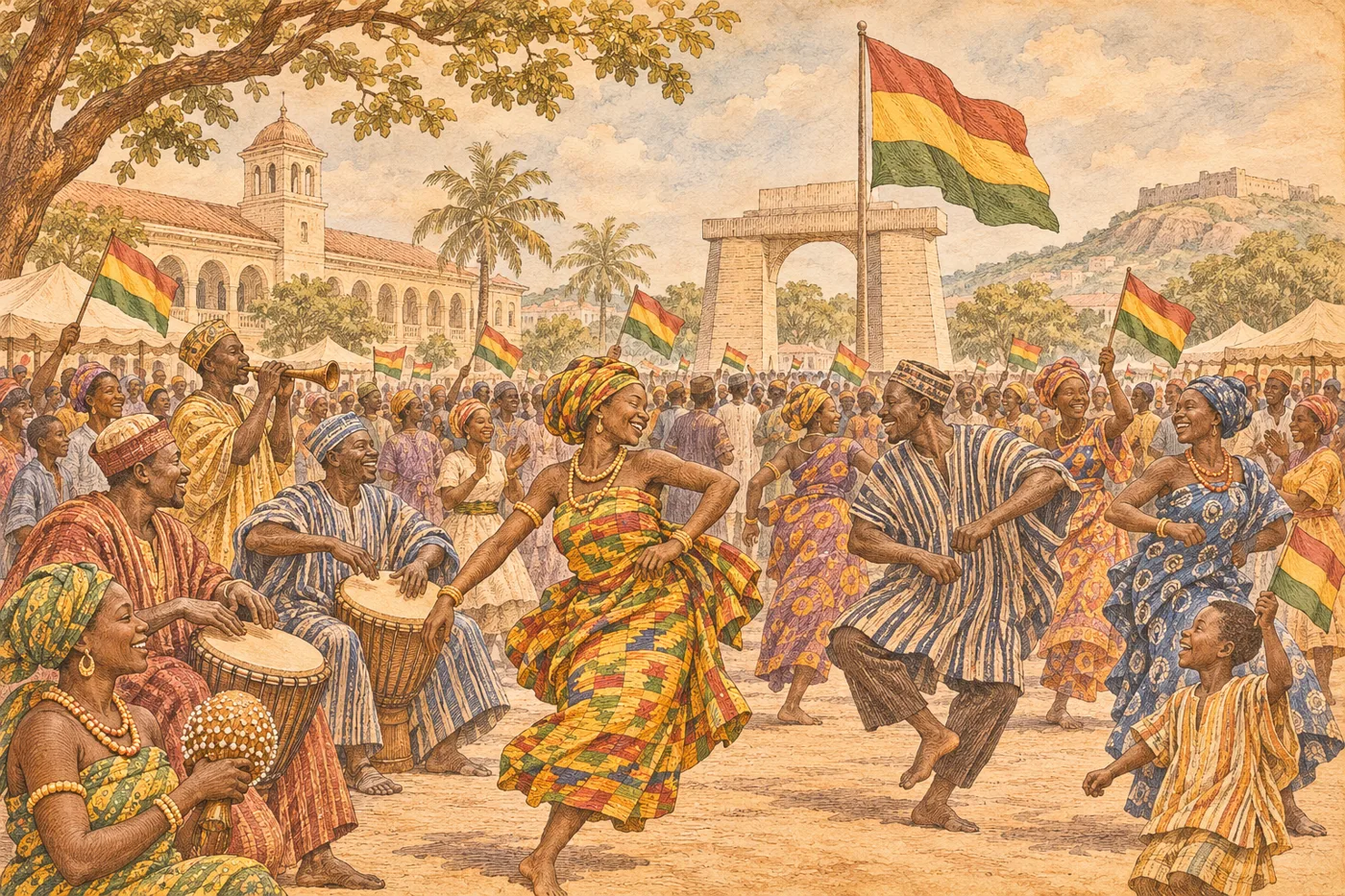
Around 17 countries are said to have gained independence in 1960, including Cameroon, Senegal, Mali, Nigeria, and the Congo (formerly the Belgian Congo). This year is called "The Year of Africa." Flags were raised, new national anthems were sung, and people spoke of their hopes for the future.
However, independence did not proceed peacefully in every country. In the Belgian Congo, turmoil broke out soon after independence, and the first prime minister, Patrice Lumumba, was killed in 1961. In Nigeria, the Biafran War, a civil war, raged from 1967 to 1970.
In 1963, the Organization of African Unity (OAU) was formed, creating a forum for cooperation among nations. Meanwhile, economies remained dependent on cash crops and minerals for export, a legacy of colonialism, and the Cold War exerted its influence. From the 1960s onward, military coups occurred in many countries.
In the 1990s, multiparty elections became common in many nations, and democratization advanced. Yet challenges remain, while some countries are achieving positive results. West Africans today bring their voices to the world through music, film, sports, and other fields.
Mini timeline
- 1957Ghana becomes independent
- 1958Guinea becomes independent
- 1960Around 17 countries become independent ("Year of Africa")
- 1963Organization of African Unity (OAU) is founded
- 1967–70Biafran War in Nigeria
People in this chapter
He led the independence movement and advocated Pan-Africanism. He later lost power in a coup.
He led the independence movement but was killed in 1961 amid turmoil.
Meanwhile, elsewhere
Connection to Japan
This was the period of Japan's high economic growth. Newly independent African nations participated in the 1964 Tokyo Olympics.
Why it still matters
Nigeria's film industry, called "Nollywood," is one of the largest in the world by number of productions. West African music genres like Afrobeat influence musicians around the globe.
Perspectives differ
- The term "Year of Africa"
- This term points to the many independences in 1960, but the independence movement actually spanned from the 1950s to Namibia in 1990. Focusing only on 1960 may overlook the broader picture.
- How independence was achieved
- Some countries achieved independence through negotiation, while others, such as Algeria, endured long armed struggles. Whether it was "granted" or "won" varies by country.
- Responsibility for the killing of Lumumba
- Domestic rivals and foreign involvement, including by Belgium, have been suggested. The Belgian government is said to have acknowledged "moral responsibility" in 2002.
- Casualties of the Biafran War
- Estimates of the number of dead range widely from 500,000 to about 2 million, with a large proportion said to have died from starvation.
- Preserving colonial borders
- Keeping the colonial borders has been both praised for preventing chaos and criticized for perpetuating ethnic divisions.
Facts checked (5, verified by AI on the web)
- Confirmed Gold Coast became independent as Ghana in 1957 U.S. Office of the Historian: Ghana (country page)
Confirmed in a U.S. State Department history text stating the former Gold Coast declared independence from the British Empire on March 6, 1957, becoming Ghana. - Confirmed Guinea became independent in 1958 Britannica「Sékou Touré」
October 2, 1958. It is considered the first independent country in Francophone Africa. - Corrected & confirmed 17 countries became independent in 1960 ("Year of Africa") United Nations Audiovisual Library: Stories from the UN Archive (1960)
A UN document states that of the 17 new member states joining the UN in 1960, 16 were from Africa. The count of '17 countries' varies by method, so the text uses 'around 17' and 'is said to.' Nigeria's independence was October 1. - Confirmed Lumumba was killed in 1961 The New Humanitarian「Belgium apologises for Lumumba killing」
He was executed on January 17, 1961. The Belgian government expressed regret in February 2002 (a parliamentary inquiry found 'moral responsibility'). - Confirmed OAU was founded in 1963; Biafran War 1967–70 Union of International Associations「OAU」/ Model Diplomat「Biafran War」
The OAU was founded on May 25, 1963, in Addis Ababa (with 32 or 33 signatories). Death estimates for the Biafran War range widely from 500,000 to several million.
Sources
U.S. Office of the Historian: Ghana (country page)
Britannica「Sékou Touré」
United Nations Audiovisual Library: Stories from the UN Archive (1960)
The New Humanitarian「DRC: Belgium apologises for Lumumba killing」
Union of International Associations「Organisation of African Unity」
* AI-drafted and cross-checked; human review is in progress. Status: