The Berlin Conference and the Scramble — A Continent Decided on a Map
Why was most of Africa divided up among European countries in such a short time?
In the latter half of the 19th century, European countries, seeking industrial raw materials and markets, turned their attention to the interior of Africa. The ability to prevent tropical diseases with quinine, along with advances in steamships and firearms, also spurred their advance.
From 1884 to 1885, Germany's Bismarck convened an international conference in Berlin. Participants included European nations and the United States, but not a single African person attended. The conference set rules for free navigation on the Congo and Niger rivers and for notifying other powers when occupying coastal territory.
However, Africa was not divided up on the spot at the Berlin Conference. The scramble had been proceeding both before and outside the conference; around 1880 only about 10 to 20 percent of Africa (depending on estimates) was under European control, but by 1914, most of it, except for Ethiopia and Liberia, was dominated by European countries.
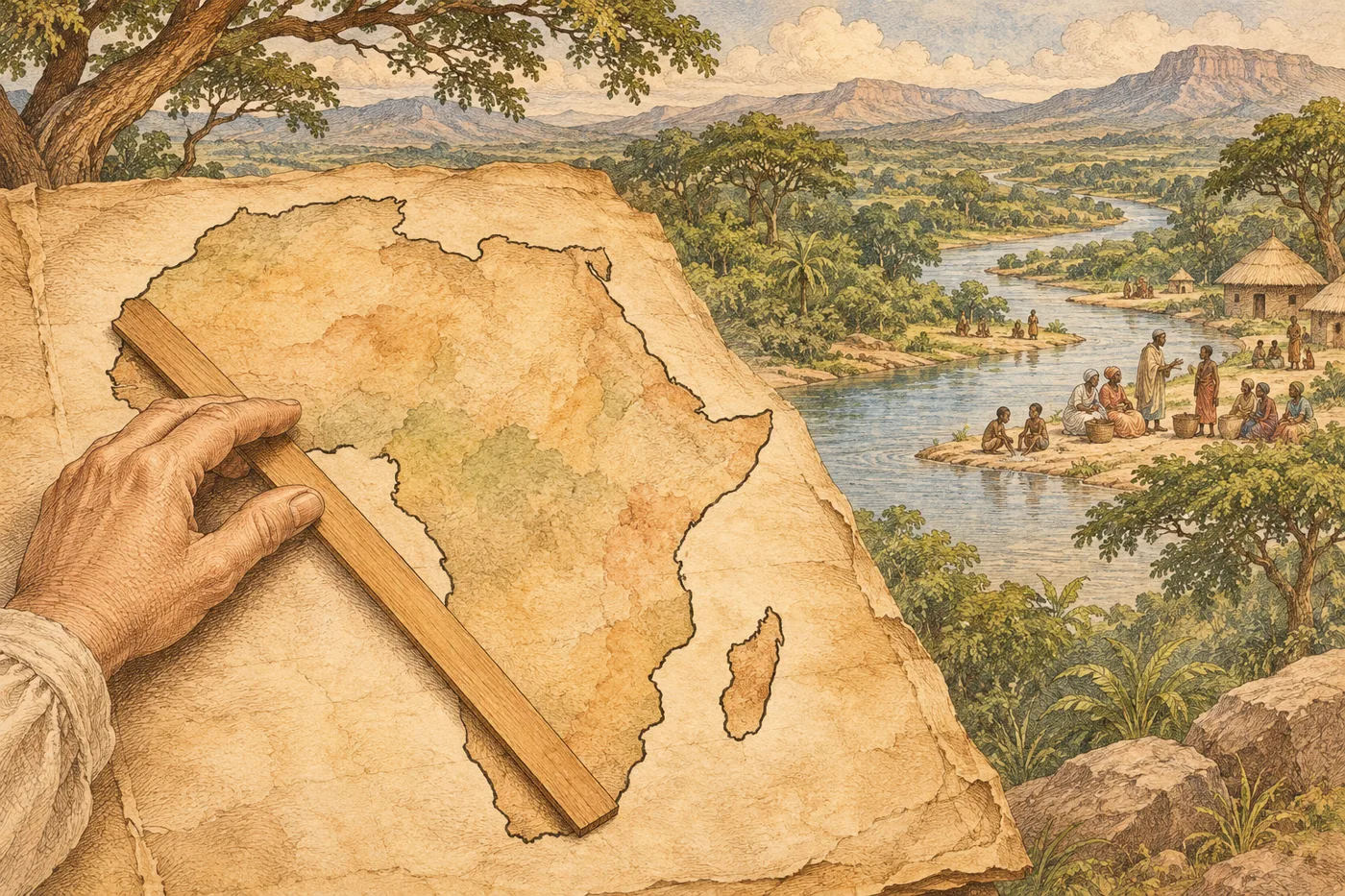
In West Africa, France governed vast areas as 'French West Africa', while Britain controlled Nigeria, the Gold Coast, and other territories. Germany acquired Togo and Cameroon. Borders were often drawn on a map, without regard for the lives or ethnic distributions of local people.
The people did not submit quietly. Samori Touré fought a long war against France from the 1880s into the 1890s. In 1900, in Asante, a queen mother named Yaa Asantewaa is known for leading resistance against the British.
In the colonies, taxes, forced labor, and the cultivation of cash crops for export were imposed. In the 'Congo Free State', the private domain of King Leopold II of Belgium, many people suffered from rubber extraction. While railways, schools, and hospitals were built in some areas, these were primarily developed to serve colonial rule.
Mini timeline
- 1884–85Berlin Conference
- 1885Congo Free State established
- 1895France brings its West African colonies under a governor-general (organized as French West Africa in 1904)
- 1900War of the Golden Stool (Asante)
- 1914Nigeria unified
People in this chapter
A West African leader who fought a long war against the French army. He was captured in 1898 and died in 1900.
One of the Asante leaders who rose up in 1900 to resist British demands.
Meanwhile, elsewhere
Connection to Japan
Japan was in the Meiji era. It aimed to join the ranks of the great powers by revising the unequal treaties.
Why it still matters
After independence, in 1964 the Organisation of African Unity (OAU) decided to generally accept the colonial borders as they were. Today's map is a result of that.
Perspectives differ
- Role of the Berlin Conference
- The description 'the conference that divided Africa' is common but oversimplified; the conference's main role is said to have been setting rules to prevent competition from turning into war.
- Casualties in the Congo Free State
- Estimates of the number of people who died under its rule range from several million to ten million; the exact figure is unknown.
- Borders and Conflict
- Some view the artificial borders as a cause of current conflicts. On the other hand, it is pointed out that this is not the cause in many cases, and that some borders inherited pre-colonial boundaries, making a simple explanation difficult.
- Evaluation of Colonial Rule
- There are opinions that evaluate aspects like railways and healthcare, and opinions that place greater weight on exploitation and violence. The experiences of local people were diverse.
Facts checked (5, verified by AI on the web)
- Confirmed Africa was not divided on the spot at the Berlin Conference (1884–85) World History Encyclopedia「Berlin Conference 1884-5」
The conference set 'rules' for the scramble and is said to have accelerated it - Corrected & confirmed Around 1880, about 10% of Africa was under European control; by 1914, almost all except Ethiopia and Liberia Al Jazeera「What happened at the Berlin Conference of 1884-1885?」
Pre-conference controlled area varies by source: about 20% (Al Jazeera), 80% outside European control (New World Encyclopedia). Text revised: 'about 10%' → 'about 10 to 20 percent (depending on estimates)'. Confirmed that by 1914 most except Ethiopia and Liberia was under control - Confirmed Yaa Asantewaa led resistance against the British in 1900 Smithsonian Libraries: The role of Nana Yaa Asantewaa in the 1900 Asante war of resistance
As queen mother of Ejisu, she led resistance against the British governor's demand for the Golden Stool and besieged the British in Kumasi for about six months (catalog, Smithsonian Africa, etc.). Later exiled, died 1921 - Views differ Samori Touré was captured in 1898 and died in 1900 Library of Congress Country Studies: Ivory Coast(French Expansion)
Sources conflict. Library of Congress country study states 'captured in 1898'; MSU's Exploring Africa states 'France finally captured him in 1900.' Neither mentions date of death. The text does not assert capture or death year definitively, so no correction needed, but safer to phrase as 'captured around 1898' if used in a timeline. - Corrected & confirmed French West Africa was established in 1895; Nigeria unified in 1914 Library of Congress Country Studies: Ivory Coast(French Rule until World War II)
Page states: 'In 1895, France grouped its West African colonies under a Governor-General in Senegal.' 'A series of decrees in 1904 defined the structure, organizing French West Africa.' 1895 marks the framework's creation, full organization in 1904. For Nigeria: country study (Nigeria) states 'Lugard returned in 1912 to consolidate, completing it two years later (on the eve of WWI),' consistent with 1914.
Sources
World History Encyclopedia「Berlin Conference 1884-5」
Al Jazeera「Colonising Africa: What happened at the Berlin Conference?」
Smithsonian Libraries: The role of Nana Yaa Asantewaa in the 1900 Asante war of resistance
Britannica: French West Africa
Britannica「Lugard」関連項目
Library of Congress Country Studies: Ivory Coast(French Expansion in Cote d'Ivoire)
Library of Congress Country Studies: Ivory Coast(French Rule until World War II)
Library of Congress Country Studies: Nigeria(Unification of Nigeria)
* AI-drafted and cross-checked; human review is in progress. Status: