The Mongol Yoke and Moscow — How a Small Town Became the Center of a Great Power
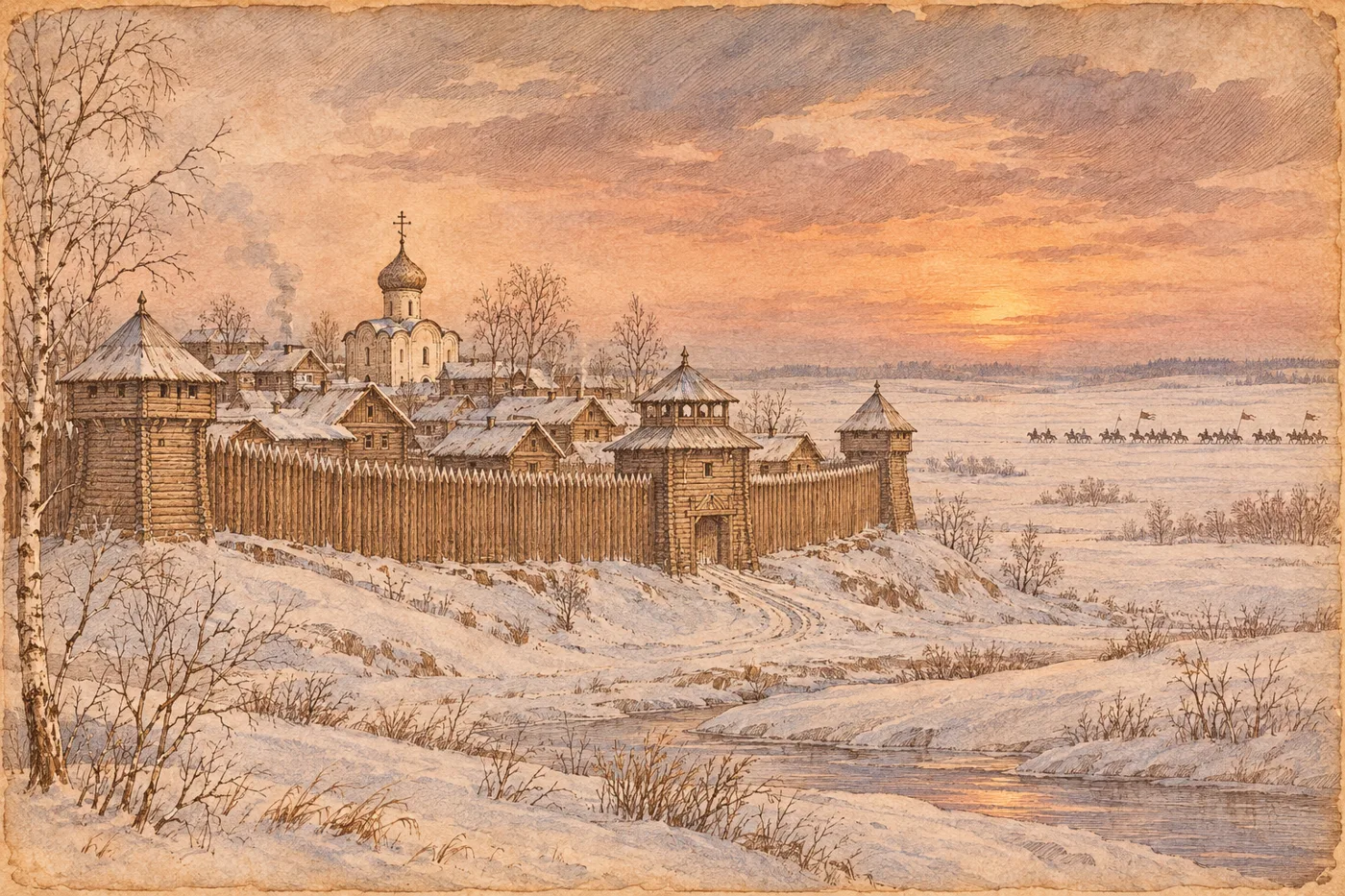
Why did a small frontier town like Moscow eventually become the center of a great power?
In 1240, Batu captured Kiev and pushed further west, subjugating many Rus' principalities. The Kipchak Khanate (Jochi Ulus), which Batu founded on the lower Volga, forced the Rus' princes to pay tribute. Princes needed the khan's approval to hold their positions. In Russian history, this period is called the 'Tatar Yoke.'
However, the Mongols recognized the Orthodox Church and people's faith, and exempted churches from taxes. The Rus' princes also continued to govern their own lands. Although the memory of the fighting remained strong, opinions differ on how much the rule affected daily life.
Alexander Nevsky, prince of the northern trading city Novgorod, is said to have defeated a Swedish force in 1240 and the Teutonic Knights in 1242. At the same time, he chose to pay tribute to the Mongols and submit, trying to protect his lands from both west and east.
Around that time, Moscow, then just a small town, began to grow stronger. In the 14th century, Prince Ivan I of Moscow (r. 1325–40) took on the role of collecting tribute for the khan, gained his trust, and in 1328 was recognized by the khan as 'Grand Prince' (shared with other princes for a time, before later becoming the sole grand prince). Around the same time, the seat of the head of the Orthodox Church (the metropolitan) also moved to Moscow, making it a religious center.
In 1380, the army of Grand Prince Dmitry of Moscow defeated a Mongol force at the Battle of Kulikovo. However, two years later in 1382, the khan's army burned Moscow, and the tribute is said to have continued afterwards. Still, this victory became a source of pride for the Rus' people.
Ivan III is said to have stopped paying tribute to the khan in the 1470s, and in 1480, his forces faced the khan's army across the Ugra River. No major battle is thought to have occurred. This is considered the effective end of Mongol rule. Ivan III subjugated Novgorod (1478) and married the niece of the last Byzantine emperor (1472), gaining the prestige of being a defender of Eastern Orthodoxy.
Mini timeline
- 1240Kiev is captured by Batu's forces
- 1242Nevsky is said to have defeated the Teutonic Knights (Battle on the Ice)
- 1325Ivan I becomes Prince of Moscow
- 1380Battle of Kulikovo
- 1480Standoff on the Ugra River. Effective end of Mongol subjugation
People in this chapter
He chose a difficult path: fighting enemies from the west while cooperating with the Mongols in the east.
He stopped paying tribute, subjugated neighboring lands, and laid the foundations for a state centered on Moscow.
Meanwhile, elsewhere
Connection to Japan
Japan was in the Kamakura to Muromachi periods. The Mongols (Yuan) also attacked Japan twice (1274 and 1281).
Why it still matters
Under Ivan III, the walls and cathedrals of the Moscow Kremlin were built in a form close to what we see today. The double-headed eagle emblem was later passed down to Russia's national coat of arms.
Perspectives differ
- The word 'yoke' and assessing Mongol rule
- 'Yoke' is a familiar term in Russian history, but there are views that the rule held back the country's development and views that it influenced state-building. The term 'Tatar' is also a blanket name for Mongols and Turkic peoples.
- Extent of the damage
- The scale of population decline and destruction of cities from the Mongol invasion is debated among scholars due to a lack of sources.
- Assessment of Nevsky
- The 'Battle on the Ice' was greatly emphasized by later generations, but some see it as a minor engagement. While revered as a saint, his choice to submit to the Mongols is also assessed differently.
- Reasons for Moscow's rise
- Multiple factors are cited: geography, the role of tribute collector, Church support, and skillful maneuvering in the conflicts among the princes.
- 'Third Rome'
- The idea of Moscow as the 'Third Rome' is famously associated with a monk's words from the early 16th century, but there is debate over how widespread it was as an official state idea at the time.
Facts checked (6, verified by AI on the web)
- Confirmed Battle of the Neva in 1240, Battle on the Ice in 1242 (scale debated) EBSCO Research Starters: Saint Alexander Nevsky
The Battle of the Neva was on July 15, 1240; the Battle on the Ice (against the Teutonic Knights) was in 1242. Some scholars see the Neva battle as a minor skirmish; its scale is debated. - Corrected & confirmed Ivan I reigned 1325–40. Granted title of Grand Prince in 1328 Encyclopedia.com: Ivan I (Gale)
He became Prince of Moscow in 1325 and received a patent for the grand princely title from the khan (Uzbek) in 1328. He died in 1340. Text revised (the point about sharing the title with other princes is unconfirmed in the source). - Confirmed Battle of Kulikovo in 1380 Britannica: Grand Principality of Moscow
Victory of Dmitry Donskoy. - Corrected & confirmed Khan's army burned Moscow in 1382, tribute continued World History Encyclopedia: Golden Horde
Tokhtamysh besieged and captured Moscow in 1382. The continuation of tribute could not be confirmed in this source, so the text was softened to 'is thought to have continued.' - Corrected & confirmed Ivan III had stopped tribute by the 1480 standoff on the Ugra River World History Encyclopedia: Ivan III of Russia
In 1478, the khan demanded unpaid tribute; Ivan III refused. In 1480, the two armies faced off on the Ugra River. The date of tribute cessation varies by source (1476 or 1478), so the text was changed to '1470s.' Descriptions of the battle also vary. - Confirmed Married the niece of the last Byzantine emperor in 1472, subjugated Novgorod in 1478 World History Encyclopedia: Ivan III of Russia
Married Sophia (Zoe) Palaiologina (niece of Constantine XI) in 1472. Novgorod surrendered in 1478.
Sources
EBSCO Research Starters: Saint Alexander Nevsky
Encyclopedia.com: Ivan I (Gale)
Britannica: Grand Principality of Moscow
World History Encyclopedia: Golden Horde
World History Encyclopedia: Ivan III of Russia
* AI-drafted and cross-checked; human review is in progress. Status: