The Balkan Peninsula — How It Came to Be Called the 'Powder Keg of Europe'
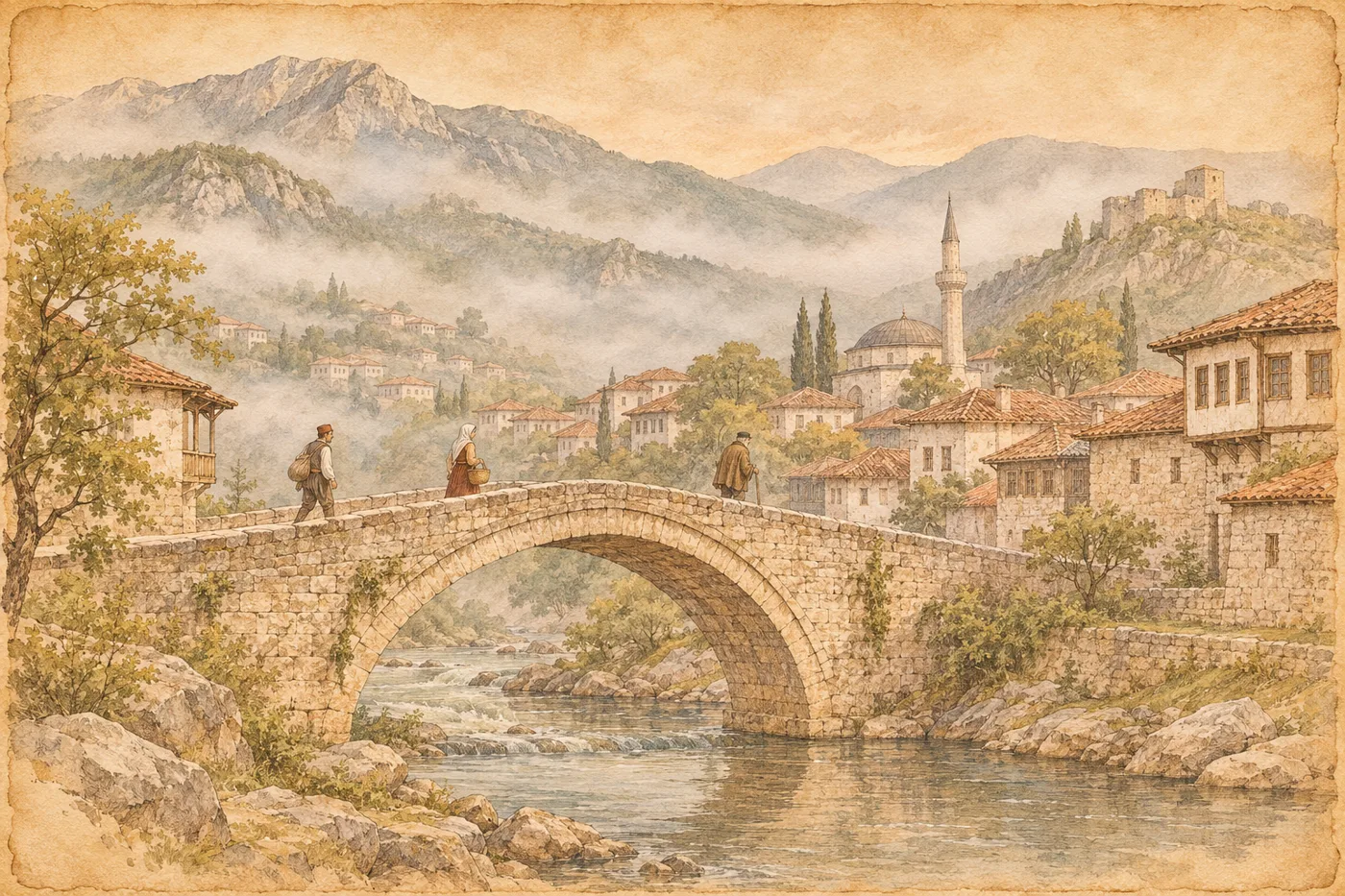
Why did the Balkan Peninsula come to be called the 'Powder Keg of Europe'?
The Balkan Peninsula is a mountainous region in southeastern Europe. For a long time it was under the rule of the Ottoman Empire, and people of various languages and religions lived intermingled. As the empire weakened in the 19th century, movements to create nation-states grew stronger across the region. The 1878 Treaty of Berlin recognized the independence of Serbia, Montenegro, and Romania, and Bulgaria became an autonomous principality.
Under the same treaty, Bosnia and Herzegovina, while nominally remaining Ottoman territory, was to be occupied and administered by Austria-Hungary. That country annexed the region in 1908. Two Balkan Wars occurred in 1912–13. In the first war, the Balkan states pushed back the Ottoman Empire. In the next war, former allies fought over the spoils.
On June 28, 1914, in the Bosnian city of Sarajevo, Franz Ferdinand, heir to the Austro-Hungarian throne, and his wife were shot dead by Gavrilo Princip, a student from Bosnia. Austria-Hungary sent an ultimatum on July 23 and declared war on Serbia on July 28. Alliances triggered a chain reaction, starting World War I. However, there is still debate over the background to the incident and views on responsibility.
After the war, on December 1, 1918, the Kingdom of Serbs, Croats, and Slovenes was proclaimed. It later became Yugoslavia (meaning 'land of the South Slavs'). After World War II, on November 29, 1945, a federal people's republic (renamed the Socialist Federal Republic in 1963) was established, consisting of six republics. Its leader, Tito, distanced himself from the Soviet Union in 1948 and pursued his own path.
Tito died in 1980. Power had already been devolved to the republics and autonomous provinces under the 1974 constitution. Amid economic hardship and rising ethnic consciousness, Slovenia and Croatia declared independence on June 25, 1991. By around January 1992, Yugoslavia as a federal state had effectively disappeared. The conflicts that followed varied greatly by region.
In Bosnia and Herzegovina, independence was declared in 1992, and war continued until 1995. In July 1995 in Srebrenica, an event occurred that international tribunals later recognized as genocide. A preliminary agreement was initialed in Dayton in November of that year, and peace was signed in Paris on December 14, ending the war. The term 'powder keg' is an external label and does not represent the entirety of life there.
Mini timeline
- 1878Treaty of Berlin: Serbia and others recognized as independent; Bosnia placed under Austro-Hungarian administration
- 1912–13Two Balkan Wars occur
- June 28, 1914Sarajevo incident; declaration of war announced on July 28
- December 1, 1918Kingdom of Serbs, Croats, and Slovenes proclaimed
- November 29, 1945Federal People's Republic of Yugoslavia (renamed Socialist Federal Republic in 1963) established
- 1991–95Federation moves toward dissolution; war in Bosnia ends with the Dayton Agreement (conflicts continue afterward in Kosovo and elsewhere)
People in this chapter
A student from Bosnia. He was sentenced to 20 years in prison and is said to have died of tuberculosis in 1918. Evaluations vary by perspective.
He led the partisans during World War II and guided post-war Yugoslavia. He died in 1980.
Meanwhile, elsewhere
Connection to Japan
1914 was the 3rd year of the Taishō era in Japan. In August of that year, Japan joined the war in Europe. The 1878 Treaty of Berlin was an event of the 11th year of the Meiji era.
Why it still matters
On the territory of the former Yugoslavia today are Slovenia, Croatia, Bosnia and Herzegovina, Serbia, Montenegro, North Macedonia, and Kosovo (whose status of diplomatic recognition varies), among others. How the memories of the past are narrated remains an important challenge for the region.
Perspectives differ
- Responsibility for the Sarajevo incident
- It is known that the perpetrator received support from a Serbian secret organization, but researchers doubt the involvement of the Serbian government. Views on which country bears responsibility for starting the war remain divided.
- The term 'powder keg'
- Some point out that this phrase reinforced an external image. In reality, there were also long periods when various people lived together, and evaluations vary depending on perspective.
- Causes of the breakup of Yugoslavia
- Various factors are cited: economic stagnation, decentralization under the 1974 constitution, rising ethnic consciousness, and the actions of foreign countries. Which is emphasized differs among researchers and according to standpoint.
- Number of victims in Bosnia
- Victims of the war are placed at about 97,000 (a minimum figure) based on record-based studies. The actual total varies depending on the method of counting, and care is needed in handling numbers. Victims in Srebrenica have also been recognized by international tribunals and other bodies as 'more than 8,000' killed or missing.
- Date of independence and naming of the war
- Bosnia's independence is said to have been declared in March 1992, followed by recognition by Western countries in April and UN membership in May (there are multiple views on whether the start of the war was March or April). Whether to call this war a 'civil war' or an 'invasion' also differs by standpoint. This book does not judge which is correct.
Facts checked (8, verified by AI on the web)
- Confirmed The 1878 Treaty of Berlin recognized the independence of Serbia, Montenegro, and Romania, made Bulgaria an autonomous principality, and placed Bosnia under Austro-Hungarian occupation and administration FRUS 1878: Treaty of Berlin
Confirmed in the articles (Articles 1, 25, 26, 34, 43). Drawn up in Berlin on July 13, 1878. - Confirmed On June 28, 1914, Archduke Franz Ferdinand and his wife were shot dead by a student in Sarajevo; ultimatum on July 23; declaration of war on July 28 FRUS 1914 d29 / LOC Law Library Blog
Telegram reports assassination by a 'student'. LOC blog confirms Princip's name and the July 28 declaration of war; country study confirms the July 23 ultimatum. The country study says the Black Hand provided weapons and training but doubts Serbian government approval. The main text does not take a position on responsibility. - Confirmed The kingdom was proclaimed on December 1, 1918. The federal republic of six republics was established on November 29, 1945 Yugoslavia: A Country Study (Library of Congress)
Confirmed by reading the text. It also notes that King Alexander suspended the constitution and declared a dictatorship in January 1929. - Corrected & confirmed Slovenia and Croatia declared independence on June 25, 1991. Bosnia declared independence after a referendum (March 1992, boycotted by Serbs) Office of the Historian: The Breakup of Yugoslavia
The same page gives the independence declaration as May 1992, while other sources say April. The main text kept to '1992' and the spring season. It also notes that the federation effectively ceased to exist in January 1992. - Confirmed The Dayton Agreement was initialed on November 21, 1995, and signed in Paris on December 14 OHR: The General Framework Agreement for Peace
Confirmed in the main text. Bosnia consists of two entities: the Federation of Bosnia and Herzegovina and the Republika Srpska. - Confirmed Up to about 8,000 people were killed or went missing in Srebrenica, recognized as genocide by the ICTY and ICJ IRMCT: About the 1995 Genocide in Srebrenica
Confirmed in the IRMCT text. The number is written as 'up to'. - Confirmed Recorded deaths in the Bosnian war are about 97,000 (a minimum figure) Ball, Tabeau & Verwimp (2007) The Bosnian Book of Dead: Assessment of the Database
Read the report text. It states 96,895 entries and clearly says 'it is an approximation of the minimum and not the total overall number' (2007 edition). The main text rounds to about 97,000 and writes 'minimum figure'. This is a tally by a civilian organization, and there are different opinions on counting methods. - Confirmed Yugoslavia's name was changed in 1929 / The timing of the establishment of the term 'powder keg' 米国務省歴史局: Kingdom of Serbs/Yugoslavia
Page states: 'In 1929, the Kingdom of Serbs, Croats, and Slovenes adopted the name Kingdom of Yugoslavia.' Confirms the renaming year as 1929. The origin and timing of the term 'Powder Keg' are not confirmed in official sources (the text does not assert it).
Sources
米国務省歴史局 FRUS 1878: Treaty of Berlin(ベルリン条約の条文)
米国務省歴史局 FRUS 1914: Ambassador Penfield to the Secretary of State(1914年6月28日の電報)
米国議会図書館 Law Library Blog: July 28, 1914 - State of War with Serbia Declared
米国議会図書館 連邦調査部: Yugoslavia: A Country Study(1992年)
米国務省歴史局: The Breakup of Yugoslavia, 1990-1992
ボスニア・ヘルツェゴヴィナ上級代表事務所(OHR): The General Framework Agreement for Peace (Dayton Peace Agreement)
国連 IRMCT: About the 1995 Genocide in Srebrenica
Ball, Tabeau & Verwimp (2007) The Bosnian Book of Dead: Assessment of the Database, HiCN Research Design Note 5(サセックス大学IDS)
米国務省歴史局: Kingdom of Serbia/Yugoslavia
* AI-drafted and cross-checked; human review is in progress. Status: