Independence — The Dream of Liberators, and Divided Nations
Why did so many countries in Central and South America gain independence in such a short time?
From the late 18th century, new winds blew into Central and South America: the independence of the United States (1776), the French Revolution (1789), and Enlightenment ideas that people are free and equal. In 1791, slaves rose up in the French colony of Saint-Domingue in the Caribbean.
That uprising led to Haiti's independence in 1804. Former slaves built a country with their own hands, making it the world's first black republic. Later, France demanded a huge indemnity from Haiti in exchange for recognizing its independence, and Haiti long struggled under that burden.
In 1808, when Napoleon occupied Spain and forced the king to abdicate, the mother country's control wavered. In 1810, in Mexico, Father Miguel Hidalgo called on the people to rise up with the "Cry of Dolores." Wars for independence began in many places.
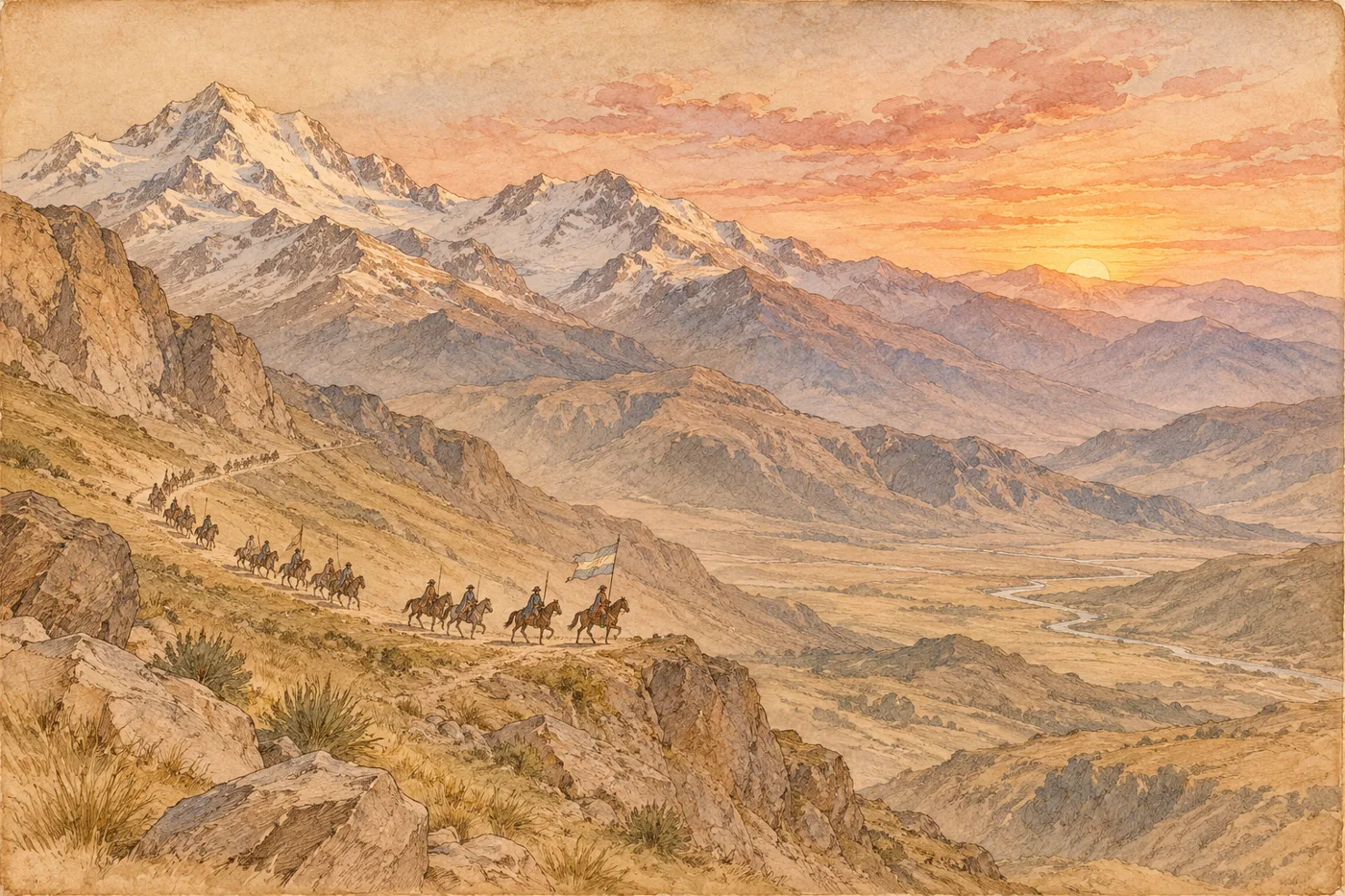
In northern South America, Simón Bolívar from Venezuela led the independence struggle. After winning the Battle of Boyacá in 1819, he created Gran Colombia. In the south, José de San Martín from Argentina crossed the Andes into Chile and advanced to Peru's declaration of independence (1821).
The main battles in South America were settled at the Battle of Ayacucho in 1824, and Mexico became independent in 1821. In Brazil, a prince of the Portuguese royal family declared independence in 1822 and established an empire. Thus, within about 20 years, most of Central and South America had achieved independence.
Bolívar dreamed of uniting South America into one large country, but Gran Colombia split apart around 1830. Many of the independence leaders were whites born in the colonies (criollos). The lives of indigenous people and slaves did not change quickly. Independence was not the end, but the start of new challenges.
Mini timeline
- 1791Slave uprising begins in Saint-Domingue
- 1804Haiti becomes independent
- 1810Cry of Dolores in Mexico
- 1819Battle of Boyacá. Bolívar creates Gran Colombia
- 1822Brazil declares independence
- 1824Battle of Ayacucho
People in this chapter
Born in Venezuela. He led the independence of northern South America and is called "the Liberator." He dreamed of uniting South America, but it was not realized.
He played a major role in the independence of Argentina, Chile, and Peru.
Meanwhile, elsewhere
Connection to Japan
This period corresponds to the late Edo period in Japan. It was more than 30 years before Perry's arrival in 1853.
Why it still matters
The country name Bolivia comes from Bolívar's name. Venezuela's official name is still the Bolivarian Republic of Venezuela.
Perspectives differ
- Character of the independence
- Some view the independence as a "revolution from above" led by white criollo leaders, while others argue that indigenous people, slaves, and mixed-race people also played important roles.
- Evaluation of Bolívar
- He is revered as a hero of liberation, but also criticized as a dictator who sought strong power. Evaluations differ by country and era.
- Haiti's indemnity
- In 1825, France demanded a huge indemnity from Haiti in exchange for recognizing its independence (later reduced). Some researchers point out that this burden was one cause of Haiti's long difficulties.
- Brazil's independence
- Brazil's independence is said to have involved fewer battles than in the Spanish-speaking regions, but in fact fighting also occurred in various places.
Facts checked (4, verified by AI on the web)
- Confirmed Haiti became independent in 1804 after the 1791 uprising, the first independent state founded by former slaves Haiti and the Latin American Wars of Independence
It is also commonly called 'the world's first black republic,' but the source uses the expression 'the first independent state founded by former slaves.' The source quality is not high. - Corrected & confirmed Bolívar (1783–1830) and San Martín (1778–1850), Peru's declaration of independence in 1821 BYU Religious Studies Center: El Libertador (Simón Bolívar)
Brigham Young University article confirms Bolívar was born in Caracas on July 24, 1783, died December 17, 1830, and San Martín first raised the flag of independent Peru on July 28, 1821. San Martín's birth and death years (1778–1850) were not confirmed in the accessible source. - Confirmed 1810 Hidalgo (Cry of Dolores), 1819 Boyacá, 1824 Ayacucho (Sucre) Haiti and the Latin American Wars of Independence
Source is educational material. The victory at Ayacucho was by Sucre. - Confirmed 1822 Brazil independence, 1808 Napoleon's occupation of Spain SUNY(Lumen Learning)世界史講座: Abdication in Spain(1808年)
The text states that in 1808 Napoleon forced the Spanish royal family to abdicate and put his brother Joseph on the throne. Brazil's September 7, 1822 declaration of independence is confirmed in the same course 26.2.3 (courses.lumenlearning.com/suny-worldhistory/chapter/26-2-3-constitutionalist-movement-in-portugal/).
Sources
Haiti and the Latin American Wars of Independence
BYU Religious Studies Center: El Libertador (Simón Bolívar)
Britannica: José de San Martín summary
SUNY(Lumen Learning)世界史講座: Abdication in Spain(1808年)
* AI-drafted and cross-checked; human review is in progress. Status: