The Crusades and the Mongols — Two Shocks That Rocked the Middle East
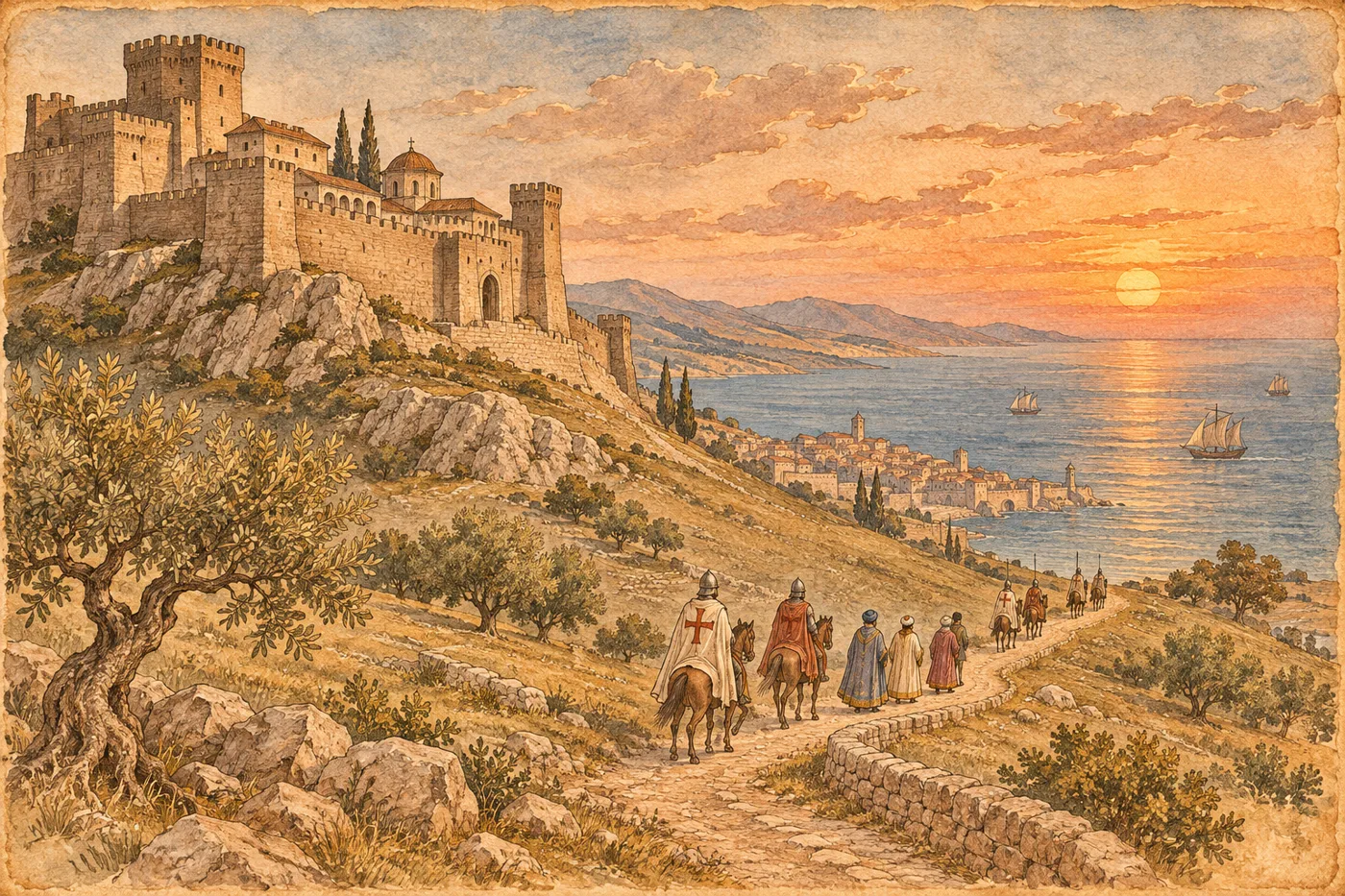
For whom was the struggle over the Holy Land really a 'war'?
In the 11th century, the Turkish Seljuk Empire took control of Baghdad and advanced into Anatolia (modern-day Turkey). After the Byzantine Empire was defeated at the Battle of Manzikert in 1071, the emperor asked Western Europe for help (though the details of that request are debated).
In 1095, Pope Urban II called on people in France to 'recover the holy city of Jerusalem.' The knights and commoners who answered set out on the First Crusade in 1096. They captured Jerusalem in 1099, and it is said that many of the inhabitants were killed.
The leader who united Egypt and Syria to counter the Crusader states was Saladin (Salah al-Din), a Kurd. In 1187, he defeated the Crusaders at the Battle of Hattin and recaptured Jerusalem. His generous treatment of those who surrendered, and the fact that he negotiated with mutual respect even with his enemy King Richard I of England, is still remembered in Europe.
The Crusades were launched many times over about 200 years. But the motives were not purely religious. Expectations of land and wealth, commercial interests of cities, and honor all played a part. The Fourth Crusade in 1204 attacked Constantinople, the capital of the fellow Christian Byzantine Empire, instead of its intended target, Jerusalem.
In the meantime, there is a view that for the people of the Middle East, the Crusaders were for a long time just one group of 'invaders from afar.' The real blow came from the east. A Mongol army led by Hulagu, grandson of Genghis Khan, captured Baghdad in 1258, and the Abbasid Caliphate fell. It is said that many libraries and scholarly works were lost (on the other hand, later Mongol rulers protected astronomers and other scholars, leading to new learning).
However, the Mongol advance was stopped by the Egyptian Mamluk Sultanate at the Battle of Ain Jalut in 1260. Even so, the face of the Middle East had been greatly changed. In Europe, Italian trading cities flourished, and exchanges between East and West increased. Through conflict, the connections of the world grew ever stronger.
Mini timeline
- 1071Battle of Manzikert (Seljuks defeat the Byzantines)
- 1099First Crusade captures Jerusalem
- 1187Saladin recaptures Jerusalem
- 1204Fourth Crusade sacks Constantinople
- 1258Mongols capture Baghdad; Abbasid Caliphate falls
People in this chapter
The hero who recaptured Jerusalem. He was respected even in Europe as a generous leader.
He captured Baghdad and established Mongol rule in the Middle East.
Meanwhile, elsewhere
Connection to Japan
Japan was in the Kamakura period. The Mongols (Yuan) also attacked Japan twice (the Mongol invasions of 1274 and 1281).
Why it still matters
Today the word 'crusade' is still used as a metaphor for a 'great movement.' But the memories of those who lived through the events differ completely depending on region and religion. The same events become different stories depending on one's perspective. That is the difficulty of history.
Perspectives differ
- Number and causes of the Crusades
- They are often numbered as 'First to Seventh,' but the count varies among scholars. Also, the content of the Byzantine emperor's request for help to the pope is debated, depending on how the sources are read.
- Casualties in Jerusalem in 1099
- The number of dead reported in sources varies widely and has not been determined.
- Number of casualties in the fall of Baghdad
- Estimates range from several hundred thousand to over a million; no certain figure is known.
- How to view the Crusades
- The currently prevailing view sees them not only as 'religious wars' but also as political, economic, and social movements. Also, because the word 'crusade' is still used politically today, care is needed in how it is used.
- The reality of Mongol 'destruction'
- It is sometimes said that all learning in the Middle East ended in 1258, but in recent years, emphasis has been placed on how astronomy, medicine, and historical writing also developed under the Mongol Ilkhanate.
Facts checked (5, verified by AI on the web)
- Confirmed Pope Urban II's call in 1095 (Council of Clermont). Emperor Alexios I's request for aid was at the Council of Piacenza the same year. Council of Clermont (World History Encyclopedia)
The emperor's envoy made the request at Piacenza (March 1095); Clermont was in November of the same year. The nature of the request (mercenaries, etc.) is consistent with the debate section. - Confirmed The Crusaders captured Jerusalem in 1099 and killed many of its inhabitants. Saladin's Conquest of Jerusalem (World History Encyclopedia)
July 15, 1099. The scale of the massacre varies in sources and is noted in the debates section. - Confirmed The Battle of Hattin and the recapture of Jerusalem in 1187. Battle of Hattin (World History Encyclopedia)
Hattin was July 3–4, 1187; Jerusalem surrendered on October 2 of the same year. - Confirmed The Mongols captured Baghdad in 1258, ending the Abbasid Caliphate. World History Encyclopedia(事典): Ilkhanate
World History Encyclopedia: Hulagu's forces defeated the Abbasids in January 1258 and occupied Baghdad the following month; the execution of the caliph ended the caliphate. Casualties are reported as 'up to 800,000,' with widely varying estimates. - Confirmed The Mamluks defeated the Mongols at Ain Jalut in 1260. EBSCO Research Starters: Battle of Ayn Jahlut
September 3, 1260. The Mamluk army under Qutuz defeated the Mongol force, recorded as the first decisive Mongol defeat (though the Ilkhanate itself continued).
Sources
World History Encyclopedia: Council of Clermont
World History Encyclopedia: First Crusade
World History Encyclopedia: Battle of Hattin
World History Encyclopedia(事典): Ilkhanate
EBSCO Research Starters: Battle of Ayn Jahlut
* AI-drafted and cross-checked; human review is in progress. Status: