The Hittites and Anatolia — An Ancient State of Iron and Treaties
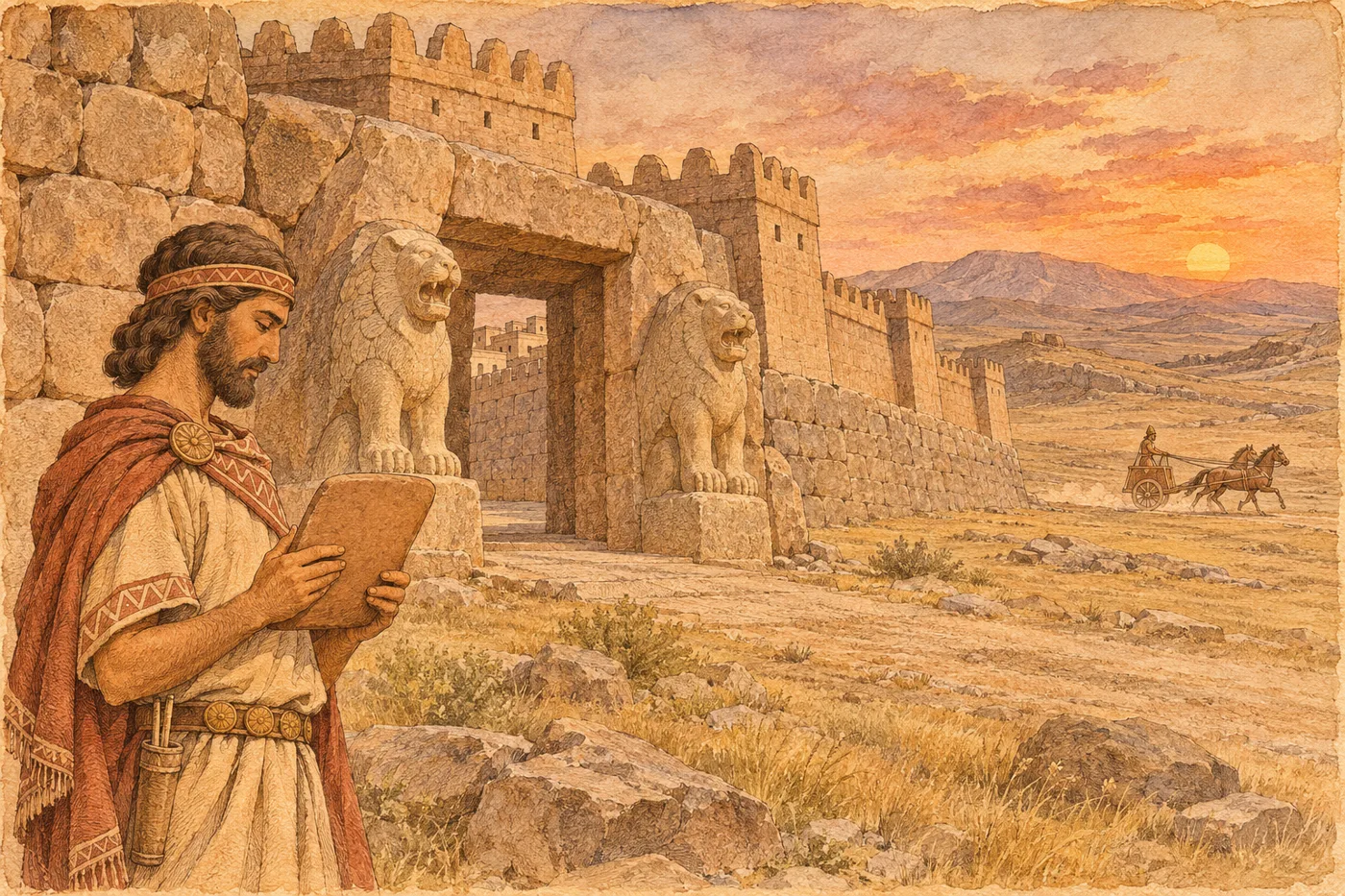
Was the Hittite kingdom truly a 'nation of iron'? And why did it leave its name as a 'nation of treaties'?
Around 1650 BC, the Hittite kingdom is said to have appeared on the Anatolian plateau in what is now central Turkey. The plateau is a dry land with little rain. The capital was Hattusa (near modern Boğazkale), and King Hattusili I is said to have rebuilt the city. The later king Mursili I is said to have captured distant Babylon (around 1595 BC, but there are different explanations for the date).
The period from around 1400 BC is called the Hittite 'New Kingdom' or the imperial period. Its power is said to have reached its peak under King Suppiluliuma I (c. 1344–1322 BC). It was an international era in which the Hittites confronted major powers like Egypt and Assyria over borders and alliances. It is thought that Hattusa had institutions like government offices, and the king's orders and correspondence with foreign countries were recorded on clay tablets.
Around 1274 BC, near Kadesh in Syria, the Hittite king Muwatalli II fought the Egyptian Ramesses II. Ramesses had his great victory inscribed on monuments. The Hittite side also claimed victory, saying they had defended Kadesh. Most researchers today view the Egyptian records as having a strong propaganda character and believe that while the battle itself was close to a draw, the Hittites maintained control over Kadesh and the surrounding area.
About fifteen years later, a treaty was concluded between Hittite king Hattusili III and Ramesses II. It is dated to around 1259–1258 BC, though some explanations place it around 1269 BC. They promised that Egypt would not attack the Hittites, and the Hittites would not attack Egypt, and it stipulated that high-status fugitives would be sent back. The clay tablet was found in 1906 at the ruins of Hattusa and is known as one of the world's oldest peace treaties.
Many people associate the Hittites with 'iron.' However, iron in this era was still a rare luxury. Early iron tools are often thought to have been made from meteoric iron (iron that fell from the sky), and the blade of Tutankhamun's dagger in Egypt is also identified as meteoric iron based on component analysis. The explanation that 'the Hittites monopolized iron, and that was the secret of their strength' has been undergoing revision in recent years.
Around 1200 BC, the Hittite kingdom collapsed, and the capital Hattusa was also abandoned. No single cause has been settled on. An analysis of tree rings in 2023 suggested a severe drought lasting about three years around 1198–1196 BC (with a margin of about three years), but the researchers themselves stated that this alone was not the cause. Afterwards, small states that carried on Hittite traditions remained in the southern region.
Mini timeline
- c. 1650 BCThe Hittite kingdom is said to have appeared in central Anatolia
- c. 1595 BCMursili I is said to have attacked Babylon (there are different explanations for the date)
- c. 1344–1322 BCDuring the reign of Suppiluliuma I, the empire reaches its peak
- c. 1274 BCBattle of Kadesh; both sides claimed victory
- c. 1259–1258 BCA treaty is concluded between the Hittites and Egypt (some explanations say around 1269 BC)
- c. 1200 BCThe kingdom collapses and Hattusa is abandoned
People in this chapter
He is considered the king during the empire's peak.
After the death of Muwatalli II, he seized the throne from Muwatalli's son Mursili III and became king. He is known as the king who concluded a treaty with Ramesses II.
Meanwhile, elsewhere
Connection to Japan
In Japan around the 1250s BC, it was the latter part of the Jōmon period. There were no written records, and life was completely different from a state like the Hittites, which left treaties on clay tablets.
Why it still matters
The practice of confirming borders and alliances in writing after a battle and concluding promises is spoken of as a concept that led to later international treaties. However, as for which treaty is the 'world's oldest,' calling it 'among the oldest' is the cautious phrasing.
Perspectives differ
- Differences in Dating
- The Battle of Kadesh is dated to around 1274 BC, and the treaty to around 1259–1258 BC, but some explanations put it around 1269 BC. Depending on how the dating is aligned with Egypt, a discrepancy of several to over ten years arises.
- Victor of the Battle of Kadesh
- The Egyptian records speak of a great victory, but many researchers view them as having a strong propaganda character. The Hittite side also claimed victory. The prevalent view is that while the battle itself was close to a draw, the Hittites maintained control over Kadesh and the surrounding area, but there are various theories.
- Theory of Iron Monopoly
- The explanation that 'the Hittites monopolized iron' is said to be currently under revision. Iron was a precious item linked to the king and temples, but evidence for large-scale production is said to be lacking. However, research on this point is ongoing, and a definitive conclusion cannot be drawn.
- Cause of the Collapse
- Accounts also vary depending on the source as to whether Hattusa was burned or abandoned.
Facts checked (9, verified by AI on the web)
- Confirmed The Hittites appeared in central Anatolia around 1650 BC. Hattusa was abandoned around 1200 BC. Cornell Chronicle: ヒッタイト帝国の崩壊と干ばつ
Confirmed in a Cornell University article. The rebuilding by Hattusili I was confirmed in World History Encyclopedia. - Corrected & confirmed Mursili I conquered Babylon (c. 1595 BC) World History Encyclopedia: Hittites
The timeline says 1595 BCE, but the main text has no date and notes differences by school of chronology. The main text added 'around' and 'there are different explanations'. - Confirmed The empire peaked under Suppiluliuma I (c. 1344–1322 BC) World History Encyclopedia: Hittites
Confirmed in encyclopedia entries. The New Kingdom is dated 1400–1200 BC. - Confirmed The Battle of Kadesh was around 1274 BC. Both sides claimed victory, and it is considered inconclusive. World History Encyclopedia: Kadesh
Muwatalli II and Ramesses II. Article notes many historians view Egyptian sources as propaganda. Based on encyclopedia, no academic paper verification. - Corrected & confirmed The treaty was concluded between Hattusili III and Ramesses II, stipulating non-aggression and the return of high-status fugitives. The clay tablet was found in 1906 at Boğazköy (Hattusa). World History Encyclopedia: The Treaty of Kadesh
Date discrepancy in article: one says 1258 BC, another caption says 1269 BC. Main text used 'around 1259–1258 BC (some explanations say 1269 BC)'. The '1259' is from other sources, not verified in this article. - Confirmed Around 1198–1196 BC (margin of about 3 years), a severe drought lasting about three years occurred, possibly a contributing factor to the collapse (not the sole cause). Cornell Chronicle: ヒッタイト帝国の崩壊と干ばつ
Manning & Sparks, Nature 2023. Researchers themselves said 'may not be the only cause' and 'could have been a tipping point'. Verified via university press release, not the paper itself. - Confirmed Early iron objects are often thought to be made from meteoric iron. Tutankhamun's dagger is identified as meteoric iron from its composition. Comelli et al. (2016) 要旨のまとめ
Nickel about 10.8%, cobalt about 0.58%. Read abstract summary (paper text not read). The article also states 'iron use in the eastern Mediterranean was sporadic'. - Unverified The Hittite iron monopoly theory is being revised by scholars (iron was precious but evidence of monopoly is scant). Comelli et al. (2016) 要旨のまとめ
Unverified. World History Encyclopedia Hittite article only includes ironworking in a timeline, with no revision of the monopoly theory. Cornell Chronicle has no relevant description. Search results show academic papers (e.g., Cordani 2016) re-examining the monopoly theory's evidence, but texts not opened. - Confirmed The treaty is the only ancient Near Eastern treaty for which both sides' versions survive, with an Egyptian version also carved on a temple. Univ. of Memphis Hypostyle Hall Project: Welcome
University of Memphis page states: 'Ramesses II had the hieroglyphic copy of the treaty inscribed on the wall outside the south gate of the Great Hypostyle Hall.' Confirms the Egyptian temple inscription. Hittite clay tablet version: UN gift page (replica description) states 'discovered at Hattusha in 1906, cuneiform script, original in Istanbul Archaeological Museum.' The term 'only' is not confirmed in sources and is not used in the text.
Sources
World History Encyclopedia(事典): Hittites
World History Encyclopedia(事典): Kadesh
World History Encyclopedia(事典): The Treaty of Kadesh
Cornell Chronicle(コーネル大学): ヒッタイト帝国の崩壊と干ばつに関する研究(Manning & Sparks, Nature 2023)
Comelli et al. (2016) The meteoritic origin of Tutankhamun's iron dagger blade(要旨のまとめ。Meteoritics & Planetary Science)
Univ. of Memphis Hypostyle Hall Project: Welcome
国連 UN Gifts: Replica of Peace Treaty between Hattusilis and Ramses II
* AI-drafted and cross-checked; human review is in progress. Status: