Penal Colonies — New Societies Carried by Prison Ships
Why were prisoners sent to the opposite side of the earth?
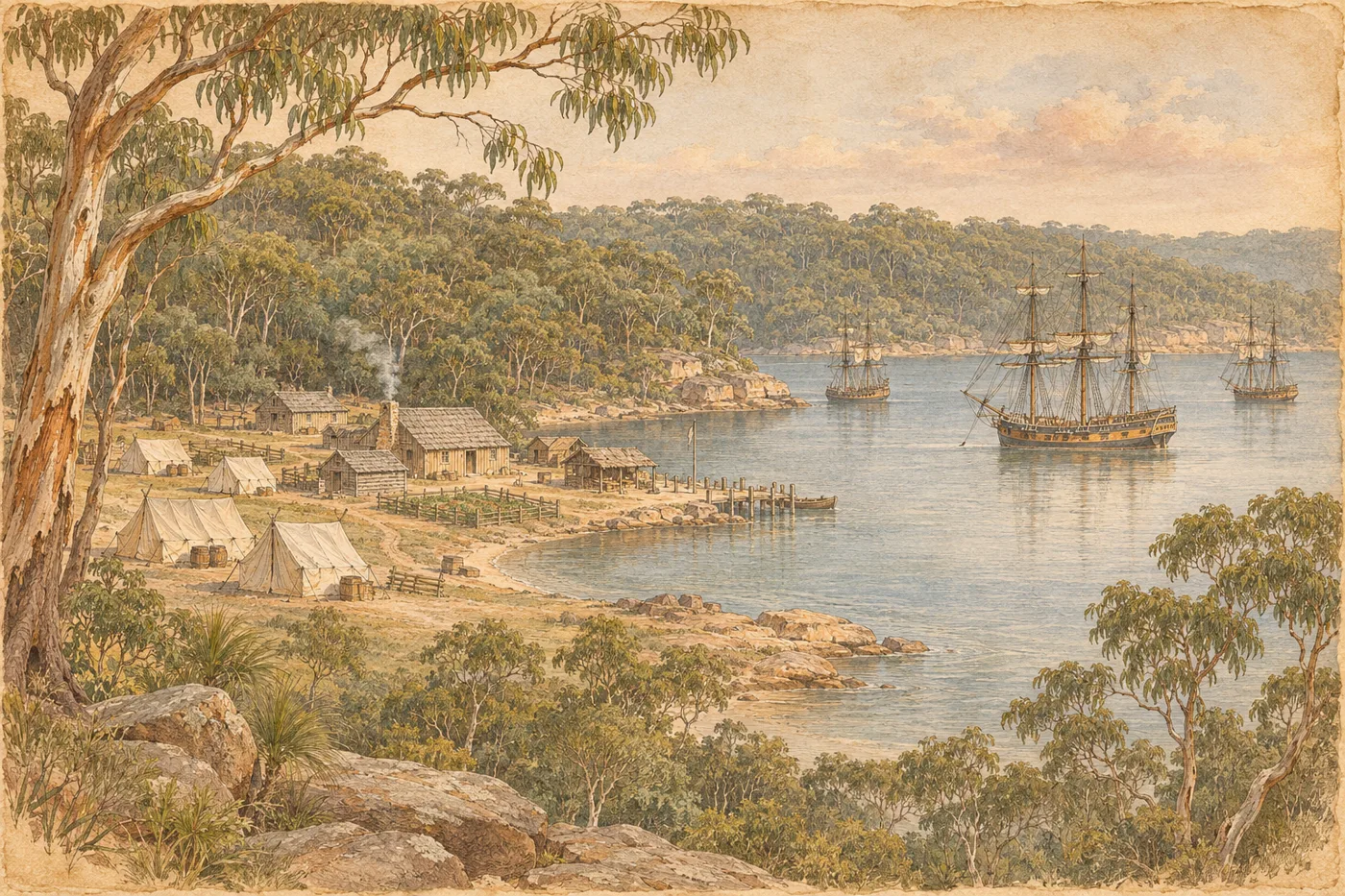
In January 1788, a fleet of 11 ships led by Arthur Phillip arrived at Botany Bay and soon moved to Sydney Cove (Port Jackson) just to the north. The ships carried some 750 or more convicts (the Museums of History NSW gives 759), along with others. They landed on the land of the Eora people. A flag was raised on January 26, which later became 'Australia Day.'
By 1868, Britain had sent about 160,000 convicts. Many had committed relatively minor crimes like theft. In the first few years, food was scarce and people suffered from hunger. After serving their sentences, many received land and became farmers, gradually building a new society.
For Indigenous people, however, this was an event that fundamentally changed their way of life. In 1789, a smallpox epidemic broke out, killing many. As settlements expanded, land for hunting and water sources was fenced off, leading to conflicts in many places.
Bennelong (also spelled Benelon), an Eora man, interacted with Governor Phillip and even traveled to England in 1793. He stood between two worlds and tried to bridge them. Later records, however, also tell of his struggles with that situation.
In the 19th century, the wool industry developed. Merino sheep farming spread, and ranches extended inland. A gold rush began in 1851, and the number of free migrants surged. Conflicts with Indigenous people continued across the continent, and many are believed to have died in what is called the 'frontier wars.'
The last convicts were sent to Western Australia in 1868. By then, free migrants made up the majority of the population. Many Australians today are descendants of those convicts. Across the same sea, a different story was unfolding in New Zealand.
Mini timeline
- 1788First Fleet arrives at Sydney Cove; settlement begins
- 1789Smallpox epidemic spreads among Indigenous people
- c. 1830Black Line campaign to round up Indigenous people in Tasmania
- 1851Gold rush begins
- 1868Last convict ship arrives in Western Australia
People in this chapter
He led the fleet, established the settlement, and steered through the harsh early years.
An Indigenous person who interacted with the Governor and traveled to England in 1793.
Meanwhile, elsewhere
Connection to Japan
Japan was in the late Edo period. Commodore Perry's arrival in 1853 came two years after the Australian gold rush.
Why it still matters
Whether to celebrate Australia Day on January 26 is still debated. Some argue the date should be changed.
Perspectives differ
- How to refer to 1788
- Some call it 'settlement,' others 'invasion.' Some Indigenous people refer to January 26 as 'Invasion Day' or 'Survival Day.'
- Convicts' crimes
- Some argue the crimes were minor; research suggests serious crimes were also common. The proportions are debated.
- Decline in Indigenous population
- Causes are said to include disease, violence, and loss of land. Researchers disagree on the relative importance of each.
- Number of deaths in frontier wars
- Some estimates put the figure at tens of thousands, but records are incomplete, leading to a wide range.
Facts checked (5, verified by AI on the web)
- Corrected & confirmed The First Fleet consisted of 11 ships carrying some 750 or more convicts. It arrived at Botany Bay in January 1788, and moved to Sydney Cove (Port Jackson) on the 26th. Museums of History NSW: The First Fleet
Page confirmed: 11 ships, 759 convicts (568 men, 191 women, plus 13 children arriving with mothers), arrived at Botany Bay on January 18, 1788, and anchored in Sydney Cove on January 26. State Library NSW also records arrival at Port Jackson on the 26th. The total number 'about 1400 people' is not in the two pages read; raising flags also unverified. Proposal to remove the total number. - Confirmed From 1788 to 1868, over 162,000 convicts were sent; the last ship arrived in Western Australia in 1868. National Museum of Australia: Convict transportation ends
- Confirmed In 1789, smallpox broke out, killing many Indigenous people. National Museum of Australia: Smallpox epidemic
Mortality rates vary between 50 and 90% in different sources. The origin of the infection is debated. - Confirmed The Black Line in Tasmania in 1830. National Museum of Australia: The Black Line
October 7 to November 24, 1830. Very few were captured; it is considered a short-term failure. - Confirmed Gold rush in 1851; Phillip was the first governor. Old Treasury Building(Victoria州): Gold is discovered
The Old Treasury Building records the gold rush following discoveries at Clunes, etc., in July 1851, and at Ballarat and Bendigo later that year. The Museum of Australian Democracy notes that Phillip declared the colony of New South Wales in 1788 and served as governor (1788–92).
Sources
State Library of NSW: Arrival
NMA: Convict transportation ends
NMA: Smallpox epidemic
NMA: The Black Line
高校世界史の教科書・用語集
Old Treasury Building(Victoria州): Gold is discovered
Museum of Australian Democracy: Arthur Phillip
Museums of History NSW: The First Fleet
* AI-drafted and cross-checked; human review is in progress. Status: