The Maori and the Treaty of Waitangi — A Promise Written in Two Languages
Why was the same treaty read in two different ways?
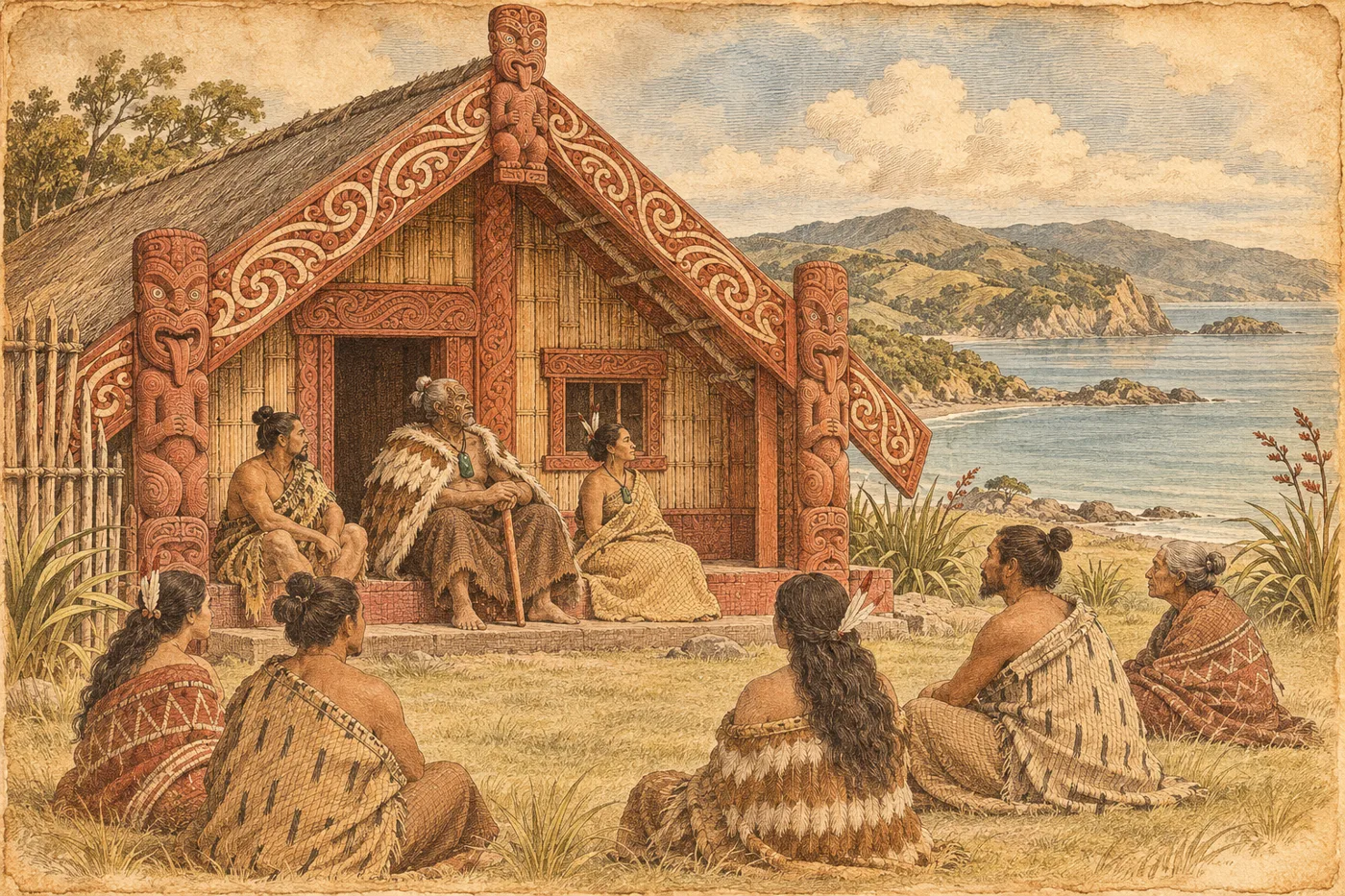
The Maori people, who arrived in New Zealand (Aotearoa) around the 13th century, lived in communities organized by iwi (tribes). From the late 18th century, European (Pakeha in Maori) whaling and sealing ships began to visit, and trade started.
The Maori took a strong interest in European goods, especially iron tools and guns. Tribes that obtained guns expanded their power, and from around 1807, intertribal conflicts escalated. These conflicts are called the Musket Wars, and many people died.
In 1835, northern chiefs signed a 'Declaration of Independence,' asserting their sovereignty. However, as settlers increased, the question of how to maintain order became an issue. On February 6, 1840, British representative Hobson and about 40 Maori chiefs signed a treaty at Waitangi. Copies were then carried around the country, and by about September roughly 500 signatures in all had been gathered.
The treaty had English and Maori versions, and their contents differed. In the English version, the chiefs were said to have ceded 'sovereignty' to the British Queen. In the Maori version, however, it read that while they gave the Queen 'governance' (kawanatanga), the chiefs retained the right to control their lands and treasures (tino rangatiratanga).
Settlers increased rapidly, and conflicts over land continued. From 1845, battles called the New Zealand Wars broke out across the country, and in the 1860s–70s, much land was taken from the Maori through warfare and laws. The Maori population declined sharply by the end of the 19th century.
On the other hand, in 1893, New Zealand became the first self-governing country in the world to grant adult women the right to vote in national elections. This included Maori women. Issues surrounding the treaty would be addressed in new ways at the end of the 20th century.
Mini timeline
- c. 1807Musket Wars begin
- 1835Maori chiefs sign the Declaration of Independence
- 1840Treaty of Waitangi signed
- 1845New Zealand Wars begin
- 1893Women's suffrage granted
People in this chapter
As the British representative, he handled the negotiation and signing of the Treaty of Waitangi.
He is known for cutting down the flagstaff in protest against British rule after the treaty.
Meanwhile, elsewhere
Connection to Japan
This period in Japan spanned the late Edo period into the Meiji era. In 1840, news of the Opium War reached Japan.
Why it still matters
February 6 is a public holiday in New Zealand called Waitangi Day. The Maori language became an official language in 1987.
Perspectives differ
- Interpretation of the Treaty
- Due to differences between the English and Maori versions, there is still debate among historians and in courts about what the signing chiefs understood they were agreeing to.
- Number of Signatories
- About 40 chiefs signed at Waitangi on February 6, and roughly 500 signatures in total were collected around the country. The number varies depending on the counting method.
- Casualties of the Musket Wars
- Some estimates put the death toll at tens of thousands, but accurate figures are unknown due to limited records.
- Name of the Wars
- Formerly called the 'Maori Wars,' they are now more often called the 'New Zealand Wars' to reflect the involvement of both settlers and the military.
Facts checked (5, verified by AI on the web)
- Unverified The Treaty of Waitangi was signed on February 6, 1840: about 40 chiefs at Waitangi, roughly 500 signatures in total across the country. The English and Maori versions differ. NZHistory: Differences between the texts
NZ history site (nzhistory.govt.nz) returns 403; text could not be read. - Confirmed The 1835 Declaration of Independence (He Whakaputanga) was signed by 34 northern chiefs. NZHistory: He Whakaputanga, Declaration of Independence 1835
- Corrected & confirmed In 1893, New Zealand was the first country in the world to grant women suffrage. NZHistory: New Zealand women and the vote
Text revised: changed to 'first self-governing country in the world' (the Isle of Man granted it in 1881). - Confirmed The Musket Wars began around 1807, with casualties in the tens of thousands. NZHistory: The Musket Wars
Start date is 1807 or 1808 (Battle of Moremonui). Casualty figures range from 'thousands to tens of thousands.' - Corrected & confirmed Maori arrival in New Zealand was around the 13th century. Wilmshurst et al. 2011, PNAS
Text revised: changed from 'c. 1250–1300' to 'around the 13th century' (estimated 1230–1282).
Sources
NZHistory: Differences between the texts
Waitangi Tribunal: About the Treaty
NZHistory: He Whakaputanga 1835
NZHistory: Women and the vote
NZHistory: The Musket Wars
Wilmshurst et al. 2011, PNAS
(no direct source confirmed)
* AI-drafted and cross-checked; human review is in progress. Status: