Modern India — The World's Largest Democracy and Its Diversity
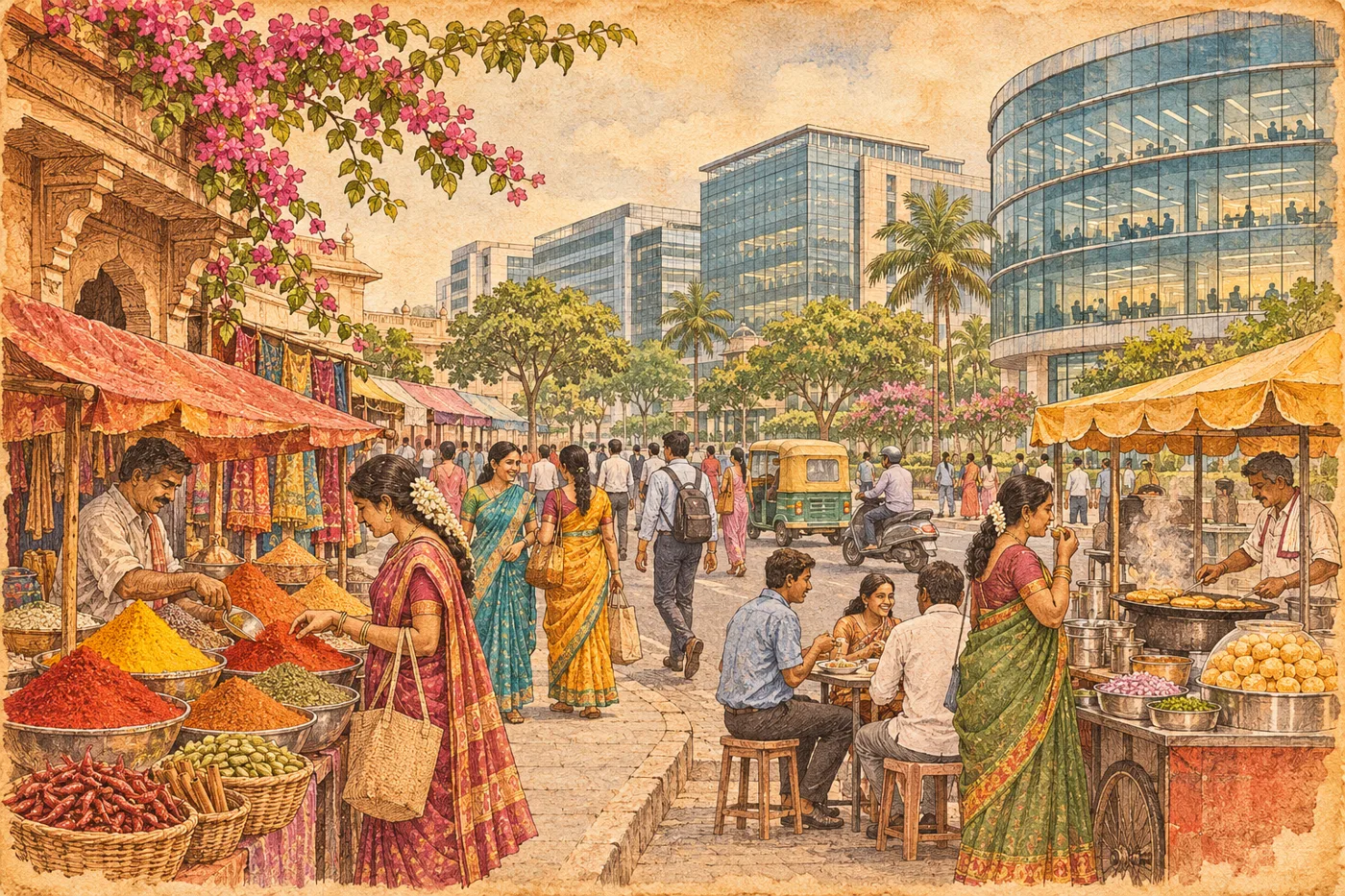
How has such a diverse country managed to function as a single democracy?
India's first prime minister after independence in 1947 was Jawaharlal Nehru. A constitution came into effect in 1950, making it a republic. In an era when many were poor or illiterate, universal adult suffrage was granted, and the first general election was held in 1951–52. This marked the beginning of what would later be called the world's largest democracy.
The country is extremely diverse in both language and religion. States were reorganized along linguistic lines in 1956, and the constitution officially recognizes 22 languages, including Hindi (originally 14 in 1950, with others added later). Hindi is the official language of the union government, with English as a subsidiary official language. According to the 2011 census, about 80% of the population is Hindu, about 14% Muslim, with Christians, Sikhs, Buddhists, and others living there as well.
During the Cold War, Nehru adopted a policy of non-alignment, aligning with neither the US nor the Soviet Union. Domestically, he promoted a planned economy, and in the 1960s the Green Revolution, using new crop varieties, boosted wheat and rice production, easing fears of food shortages.
In 1991, a crisis over repaying foreign loans prompted India to open its economy and relax regulations. Soon, IT service industries grew in cities like Bangalore and Hyderabad, and in the mid-2000s, the economy grew at around 7–9% in many years.
Many challenges remained: poverty, inequality, and caste-based discrimination. The constitution banned discrimination in 1950 and introduced a reservation system, setting aside seats in legislatures and quotas in education and jobs for people from lower castes. The architect of the constitution, Ambedkar, was himself born into a family considered untouchable.
There were also religious conflicts, including the destruction of a mosque in Ayodhya in 1992 and subsequent riots, and riots in Gujarat in 2002. India fought several wars with Pakistan over Kashmir, and both countries conducted nuclear tests in 1998. The population in 2011 was about 1.21 billion. The effort to remain one country amid such diversity continues.
Mini timeline
- 1947India gains independence
- 1950Constitution takes effect; India becomes a republic
- 1951–52First general election held
- 1960sGreen Revolution boosts food production
- 1991Economic liberalization begins
People in this chapter
He championed democracy and non-alignment, shaping the form of independent India.
He dedicated his life to the rights of people who suffered caste discrimination.
Meanwhile, elsewhere
Connection to Japan
In 1958, Japan extended its first yen loan (government loan) to India. Later, Japanese companies expanded into the automotive and railway sectors.
Why it still matters
In the 2009 general election, voters numbered about 700 million, making it the world's largest election. India produces one of the highest numbers of films (Bollywood) in the world, and yoga, originating in India, is enjoyed globally.
Perspectives differ
- The Kashmir Issue
- Both India and Pakistan claim Kashmir and have fought wars over it. The two countries have differing views on the will of the people and historical interpretations. This site does not take either side.
- Religious Clashes and Riots
- The death tolls in the 1992 and 2002 riots differ greatly between official figures and estimates by citizens' groups. Views on the causes and responsibility also differ depending on one's standpoint.
- Assessment of the Reservation System
- There are views that see it as important for correcting discrimination, and debates over its revision and the scope of its application.
- The Course of Economic Growth
- There are views that growth reduced poverty and views that it widened inequality.
- Recent Events
- This chapter covers up to around 2011. Subsequent political and economic developments change rapidly and are not addressed here.
Facts checked (7, verified by AI on the web)
- Confirmed Constitution came into effect on January 26, 1950 Britannica: Constitution of India
Adopted on November 26, 1949. - Corrected & confirmed Officially recognizes 22 languages (Eighth Schedule of the Constitution) Indian Ministry of Home Affairs: Eighth Schedule (Lok Sabha reply)
Originally 14 languages. Sindhi added in 1967; Konkani, Manipuri, Nepali in 1992; Bodo, Dogri, Maithili, Santali in 2004, bringing the total to 22 (Ministry of Home Affairs). Text corrected: added background and removed redundant sentence. - Confirmed States were reorganized on a linguistic basis in 1956 Chhatrapati Shahu Ji Maharaj University: Creation of new states: whether a challenge to federalism
According to academic papers, the States Reorganisation Commission (Chairman Fazl Ali) used linguistic and cultural homogeneity as principles for reorganization, resulting in 14 states and 6 union territories under the States Reorganisation Act of 1956, which took effect in November 1956. Punjab was later divided into Punjab and Haryana in 1966. - Corrected & confirmed 2011 census: population about 1.21 billion, about 80% Hindu, about 14% Muslim Census of India: C-01 Population by religious community 2011
Hindu 79.8%, Muslim 14.2%. Text corrected from 'about 10%' to 'about 14%'. - Confirmed 1991 economic crisis and economic liberalization IMF Working Paper WP/04/43: India in the 1980s and 1990s: A Triumph of Reforms (Panagariya)
An IMF paper describes the June 1991 crisis and the major liberalization (dismantling of import controls, tariff cuts, currency devaluation, abolition of industrial licensing) by the minority government of P. V. Narasimha Rao and Manmohan Singh in July 1991. However, some argue the seeds of liberalization were sown in the 1980s. - Confirmed Destruction of mosque in 1992, nuclear tests in 1998, Gujarat riots in 2002 Human Rights Watch: "We Have No Orders to Save You" (Gujarat 2002)
HRW states that Hindu extremists destroyed a 16th-century mosque in 1992, and that riots began after the Godhra incident on February 27, 2002, with official deaths over 850 and unofficial estimates as high as 2,000. The Pokhran nuclear tests on May 11 and 13, 1998, are confirmed by the Arms Control Association. - Confirmed First general election in 1951–52 Election Commission of India: First General Elections in India, Vol. I (1951-1952)
The official report of the Election Commission of India is titled '1951-1952'. The first Chief Election Commissioner was Sukumar Sen.
Sources
Britannica: Constitution of India
Indian Ministry of Home Affairs: Eighth Schedule (Lok Sabha reply)
Census of India: C-01 Population by religious community 2011
IMF Working Paper WP/04/43: India in the 1980s and 1990s: A Triumph of Reforms (Panagariya)
Human Rights Watch: "We Have No Orders to Save You" (Gujarat 2002)
Chhatrapati Shahu Ji Maharaj University: Creation of new states: whether a challenge to federalism
Human Rights Watch: "We Have No Orders To Save You" (Gujarat 2002)
Election Commission of India: First General Elections in India, Vol. I (1951-1952)
* AI-drafted and cross-checked; human review is in progress. Status: