The Birth of Bangladesh — A Country of People Who Defended Their Language
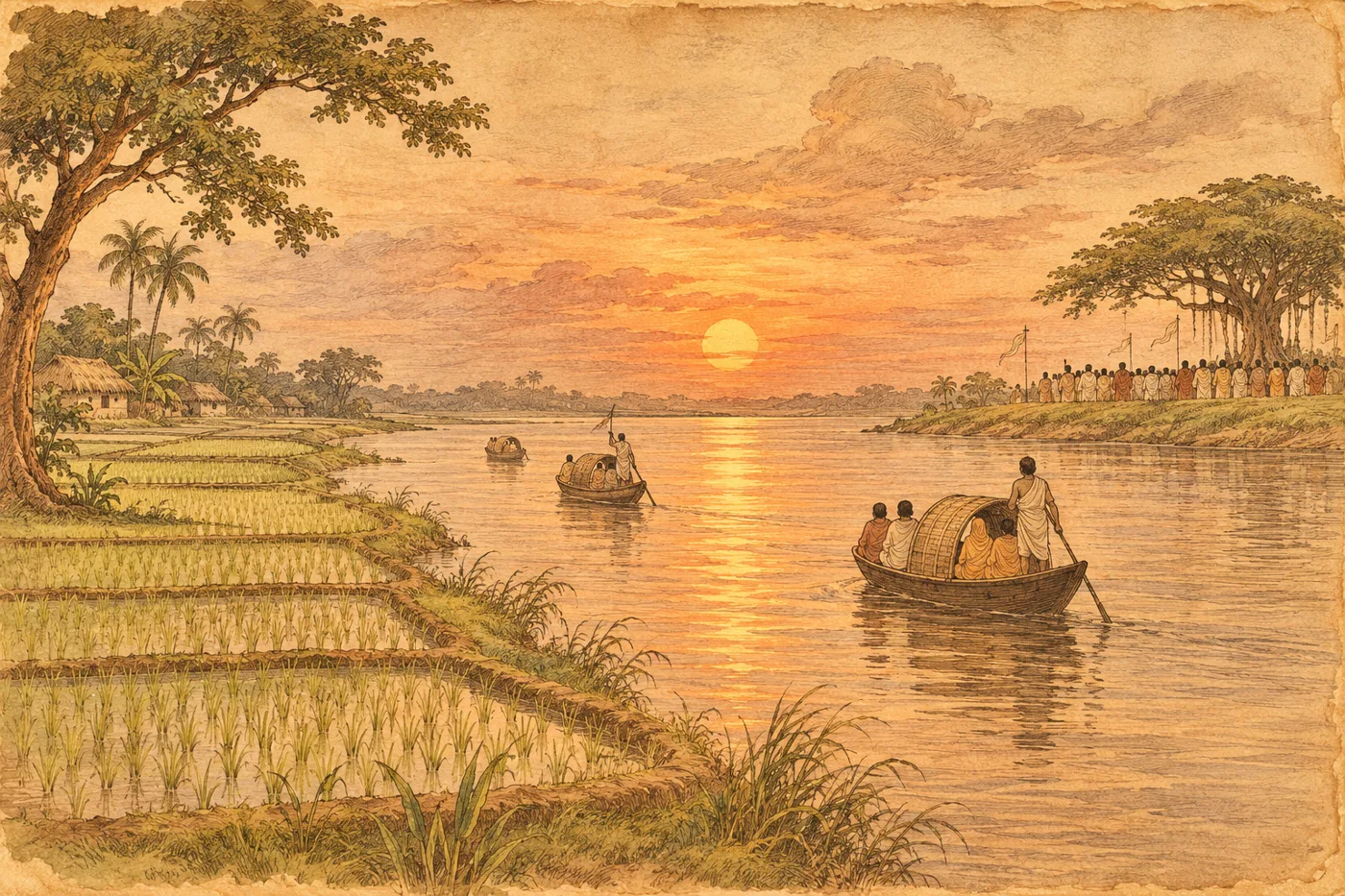
How did a desire to protect their own language lead to the birth of a nation?
In August 1947, British rule ended and India and Pakistan became independent. Pakistan was formed from regions with large Muslim populations and consisted of two territories (wings): East and West. The eastern side was East Bengal (renamed East Pakistan in 1955), which is today's Bangladesh. From the start, the country faced the challenge of uniting people with different languages and ways of life.
In 1948, there was a growing push to make Urdu the sole national language. Since most people in the east spoke Bengali as their mother tongue, this meant their language would be excluded from official use. In February of that year, a legislator named Datta proposed that Bengali also be used in parliament, but the proposal was rejected. In March, leader Jinnah reiterated the idea of Urdu as the only national language. Protests spread.
In January 1952, Nazimuddin declared that 'the national language will be Urdu alone,' and students began to demand Bengali as a national language. On February 21, police reportedly fired on student protesters in Dhaka, leaving several dead. The number of deaths and the exact dates vary among sources, so we do not specify the number here.
The movement continued, and in May 1954 the Constituent Assembly approved, and in February 1956 the constitution was adopted, making Bengali a national language alongside Urdu. In memory of the victims, a first temporary memorial was erected in Dhaka soon after the 1952 incident, and later the Shaheed Minar (Martyrs' Monument) was built. The experience of defending their language is said to have become a foundation for the people of the east to think about their own political and economic future.
In December 1970 (and January 1971 for cyclone-hit areas), Pakistan held its first general election on a one-person, one-vote basis. The Awami League, a party from the east, won most of the eastern seats (160 out of 162). However, the transfer of power stalled, negotiations reached an impasse, and on the night of March 25, 1971, the military launched a major crackdown in the east. Many people fled across the border to India; the number of refugees is estimated to have reached nearly 10 million.
Independence was declared in March 1971, and after the Indo-Pakistani War in December, the Pakistani military signed the instrument of surrender in Dhaka on December 16, marking Bangladesh's effective independence. Estimates of the death toll in this war vary widely, from tens of thousands to hundreds of thousands, and even millions, and remain uncertain. Beyond the numbers, this is an event that calls us to remember each individual who lived through it.
Mini timeline
- August 1947British India is partitioned and becomes independent as India and Pakistan
- 1948Protests in the east against moves to make Urdu the sole national language
- February 21, 1952Police fire on a language movement demonstration in Dhaka, resulting in casualties
- February 1956Bengali is recognized as a national language alongside Urdu
- March 25, 1971Military crackdown begins; refugees flee to India
- December 16, 1971Instrument of surrender signed in Dhaka; Bangladesh becomes independent
People in this chapter
In February 1948, he is recorded as having proposed adding Bengali to the languages used in parliament.
He led the party that demanded autonomy for the east and was central to events after the 1970 election. He later became the leader of the independent country.
Meanwhile, elsewhere
Connection to Japan
1952 was the year Japan regained sovereignty with the San Francisco Peace Treaty coming into effect. Bangladesh's independence in 1971 came the year after the 1970 Osaka Expo.
Why it still matters
February 21 is observed in Bangladesh as Language Movement Day. On November 17, 1999, UNESCO declared this day International Mother Language Day. Around the world, it is a day to remember the importance of protecting one's own language.
Perspectives differ
- Death toll in 1971
- Estimates range widely, from tens of thousands to scholarly estimates of several hundred thousand to around one million, up to the official post-independence Bangladeshi figure of three million. What is counted (combat, massacres, famine, disease) also differs by estimate. There are various theories and no consensus. The main text does not specify a number.
- Casualties on February 21, 1952
- A few individuals are known by name, but the total number and the exact dates of death vary among sources. Here we only note that 'several people are reported to have died.'
- Seat count in the 1970 election
- The Awami League's seat count varies according to sources, depending on whether one counts only directly elected eastern seats, includes reserved women's seats, or looks at the total national assembly seats. Figures include 160 and 167. The main text says '160 out of 162 eastern seats.'
- Accounts of the declaration of independence
- Accounts of the March 7, 1971 speech and of who made the declaration of independence on March 26, 1971, and how, may differ by source and perspective. The main text does not go into detail.
Facts checked (10, verified by AI on the web)
- Confirmed On February 23, 1948, Datta moved to add Bengali to parliamentary languages, but the motion was rejected. On March 19, Jinnah reiterated that Urdu would be the sole language. Banglapedia: Language Movement
Confirmed in Banglapedia text. - Confirmed On February 21, 1952, police fired on students, resulting in multiple deaths (total unspecified). Banglapedia: Language Movement
Banglapedia lists three names, one later death, and a nine-year-old boy, but does not give a total; it treats deaths on the 22nd as a separate matter. The main text does not specify a number. - Confirmed On February 16, 1956, Bengali and Urdu became national languages. Banglapedia: Language Movement
Described as adopted unanimously as a constitutional amendment. - Confirmed On November 17, 1999, UNESCO declared February 21 International Mother Language Day. Banglapedia: Language Movement
Confirmed in Banglapedia text (UNESCO's own website was not used). The temporary monument was reportedly erected on February 23, 1952, and the concrete monument in 1963. - Confirmed In the December 7, 1970 general election, the Awami League won 160 of the 162 eastern seats. Banglapedia: Pakistan
Confirmed under Pakistan entry. However, another entry in the same source gives 167/169, so a note is included in the debates section. - Confirmed The military crackdown began on the night of March 25, 1971, and the instrument of surrender was signed in Dhaka on December 16, 1971. Banglapedia: War of Liberation, The
Confirmed in Banglapedia: start late on the 25th, war beginning December 3, signature at 5:01 PM on the 16th. - Confirmed Nearly 10 million (approximately 9.9 million) refugees fled to India. PLOS ONE: Death toll among the Bangladeshi refugees of the 1971 war
Confirmed in PLoS ONE abstract and text as approximately 9.9 million. Cambridge chapter abstract also gives approximately 10 million. - Confirmed Casualty estimates range widely: 50,000–100,000, 300,000, 3 million (official), and 500,000–1 million. Cambridge University Press: East Pakistan/Bangladesh 1971-1972: How many victims, who and why? (abstract)
PLoS ONE text gives 50,000–100,000, 300,000, and 3 million. Cambridge abstract gives 500,000–1 million. Only abstracts were consulted, not full chapters. - Confirmed On March 27, 1971, the Indian side was already concerned about massive refugee influx. Office of the Historian, FRUS 1969-1976 vol. XI, Document 12 (Telegram 4416, New Delhi, 27 March 1971)
Confirmed in a US Embassy cable, where an Indian foreign secretary expressed concern about a large-scale refugee inflow. - Unverified Discrepancies in accounts of who declared independence on March 26, 1971. Banglapedia: War of Liberation, The
Banglapedia 'War of Liberation' only mentions the declaration on March 26, with no mention of the declarer.
Sources
Banglapedia: Language Movement
Banglapedia: Pakistan
Banglapedia: War of Liberation, The
PLOS ONE: Death toll among the Bangladeshi refugees of the 1971 war
Cambridge University Press: East Pakistan/Bangladesh 1971-1972: How many victims, who and why? (abstract)
Office of the Historian, FRUS 1969-1976 vol. XI, Document 12 (Telegram 4416, New Delhi, 27 March 1971)
* AI-drafted and cross-checked; human review is in progress. Status: