Tea, Sugar, Coffee — How Drinks Connected the World
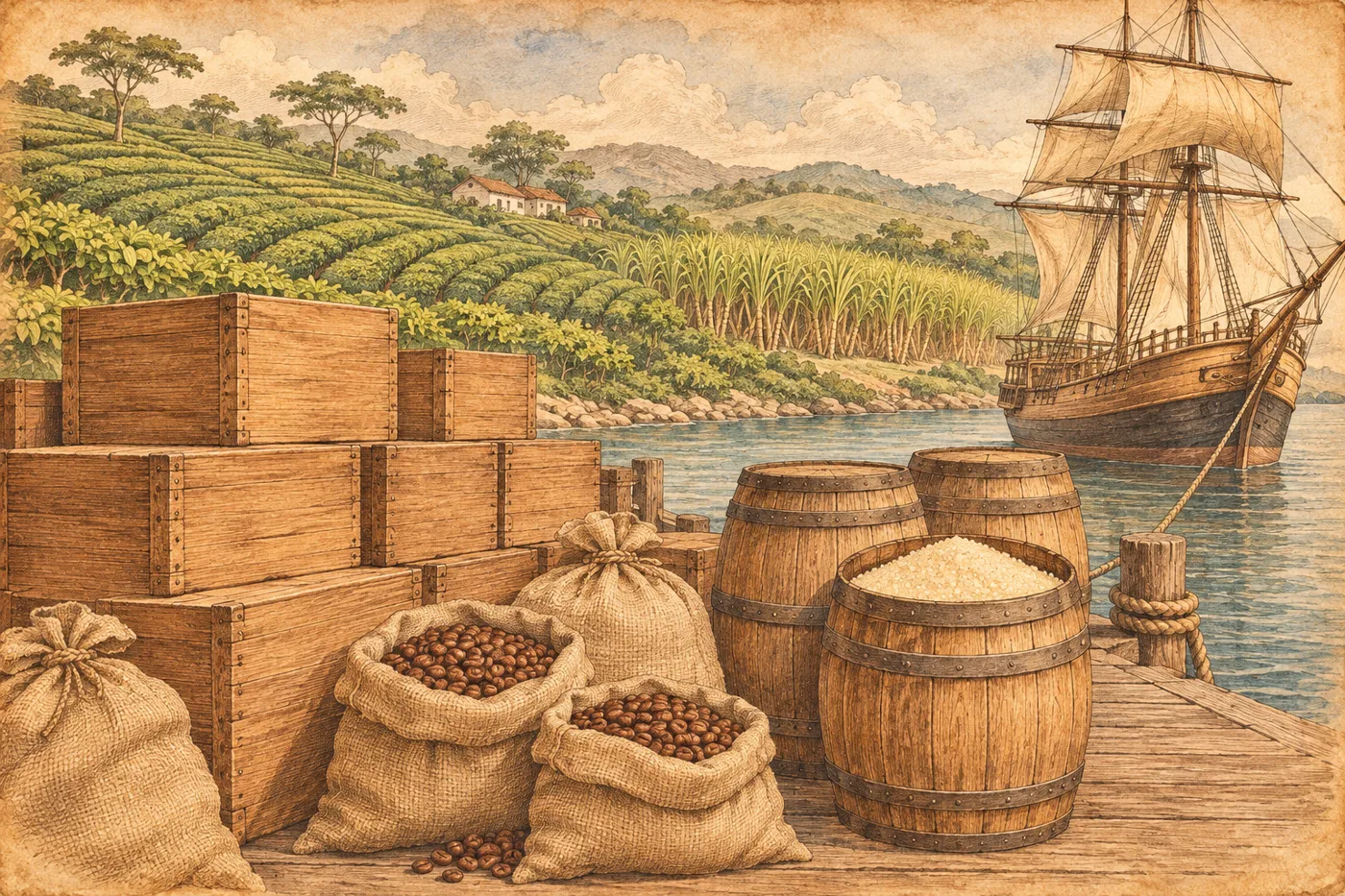
How did the sugar you put in your morning cup of tea or coffee help shape world history?
The sugar cane that gives us sugar is thought to have first been cultivated about 10,000 years ago in what is now New Guinea. People in India are said to have begun squeezing cane to make sugar several centuries BC. The technique is described as having spread to Persia, and then to Egypt in 710. India was one of the starting points of sugar's journey.
Sugar was produced on Madeira in 1432, and by the late 15th century the island is said to have become Europe's largest sugar supplier. In Brazil, full-scale sugar plantations began in the early 16th century (with an attempt around 1518, then more fully in 1532). Soon, large plantations growing a single crop spread across vast areas. The laborers were people brought from Africa and enslaved.
Tea is said to have first been drunk in China, where it was also known as a drink that aided monks in their monastic practice. Its popularity grew in Europe, and Britain bought huge quantities from China. But China accepted only silver as payment. Britain's silver reserves shrank, so the East India Company and others began selling Indian opium in China to get silver back, using it to buy tea. By the late 1820s, it is described that opium sales were enough to cover the cost of Britain's tea.
As more people suffered from opium addiction, the Qing dynasty seized and destroyed opium in Guangzhou (Canton) in 1839. This triggered the Opium War. The Treaty of Nanjing in August 1842 ceded Hong Kong Island to Britain and opened five ports. The links among tea, silver, and opium had led to war. However, some views of the war’s causes also consider trade restrictions and diplomatic frictions, not opium alone.
Britain sought tea independent of China and promoted cultivation in Assam, India. Tea gardens in Assam began in the mid-1830s (after the Tea Committee was established in 1834), and the Assam Company set up its headquarters in 1839. In Ceylon (Sri Lanka), a leaf disease that spread from 1869 devastated coffee plantations, and much land was replanted with tea. The work in the tea gardens was sustained by laborers brought from afar, many of whom are said to have been bound by harsh contracts.
Coffee is a plant native to the highlands of Ethiopia. Its history as a drink is said to have begun in 15th-century Yemen, spreading among Sufis (Islamic mystics) who used it to stay awake for prayers. Coffeehouses opened in the Ottoman capital in the 16th century, and their numbers grew in Europe in the 17th century. The Dutch began cultivation in Ceylon and Java, and in places like Brazil it was also sustained by the labor of enslaved people.
Mini timeline
- 1432Sugar production begins on Madeira, which later becomes Europe's largest sugar-producing area
- 15th centuryCoffee begins to be drunk among Sufis in Yemen
- 1532Full-scale sugar plantations begin in Brazil
- 1834Tea Committee established in Assam; tea garden development begins
- 1839The Qing dynasty seizes opium in Guangzhou, leading toward the Opium War
- 1842Treaty of Nanjing cedes Hong Kong Island to Britain
- 1869Coffee leaf disease spreads in Ceylon; later leads to conversion to tea
People in this chapter
He is said to have spread coffee among the Sufis. However, there are various accounts regarding the dates and the story.
Countless people worked the sugar, tea, and coffee fields; though few records of their names remain, they sustained the history of these drinks.
Meanwhile, elsewhere
Connection to Japan
In 1191, Eisai is said to have brought tea seeds back from Song-dynasty China (early Kamakura period). In 1842 (Tenpō 13), learning of Qing China’s defeat in the Opium War, the shogunate revised its policy toward foreign ships.
Why it still matters
There are also efforts to consider working conditions in producing regions and fair trade, and more people are paying attention to the background behind each cup.
Perspectives differ
- The story of coffee's origins
- The famous tale of an Ethiopian shepherd discovering it in the 9th century is considered a later legend with no solid evidence. The clear record of it as a drink begins in 15th-century Yemen.
- Causes of the Opium War
- One explanation says opium was sold to recover the silver spent on tea. Another explanation places more weight on diplomatic factors such as Qing trade restrictions and disputes over diplomatic etiquette. Which factor to emphasize is debated.
- Assessing plantations
- There is debate between economic assessments that they greatly expanded colonial economies and world trade, and social/human rights criticisms that they were built on slavery and harsh labor.
- Labor in Indian tea gardens
- Some contemporary views praised them for bringing railroads and employment, while later studies criticize the system that bound laborers with harsh contracts. Estimates of the number of contract laborers vary among studies.
Facts checked (10, verified by AI on the web)
- Confirmed Sugar cane cultivation began about 10,000 years ago in New Guinea; sugar-making began in India about 3000 years ago. It spread via Persia to Egypt by 710. World History Encyclopedia(事典): Sugar & the Rise of the Plantation System
Confirmed in encyclopedia. The encyclopedia notes 'no precise archaeological record of time or place.' The main text uses 'is thought to' and 'is said to.' Details of crystallization/refining not given in the encyclopedia, so omitted. - Confirmed Sugar refining on Madeira in 1432; became world's largest producer by 1460; first Brazilian plantation in 1518; later plantations and slave labor. World History Encyclopedia(事典): Sugar & the Rise of the Plantation System
Confirmed in encyclopedia. It states that by the mid-16th century, enslaved Africans had become central in Brazil. Total slave trade numbers not in encyclopedia, so omitted. - Confirmed Britain bought tea from China, paying only in silver. The East India Company sold opium to recover silver. By 1839, opium sales covered tea costs. 英国国立陸軍博物館: Opium War 1839-1842
Confirmed on the National Army Museum website. - Corrected & confirmed Opium seizure in May 1839; Treaty of Nanjing in August 1842 ceded Hong Kong Island to Britain and opened five ports. 英国国立陸軍博物館: Opium War 1839-1842
Confirmed on the same website (though Lin Zexu's name not mentioned). The main text uses 'seized opium in Guangzhou' and omits names. The site also notes diplomatic factors, so both sides appear in the debate section. - Corrected & confirmed Assam tea gardens began in 1836; Assam Company headquarters established 1839. In Ceylon, coffee plantations began in 1825; after leaf disease from 1869, converted to tea. ケンブリッジ大学図書館 特別コレクション: Tea and coffee in India and Ceylon
Confirmed on Cambridge University Library page. The page does not name the disease ('rust'), so main text uses 'leaf disease.' Expansion from the 1830s based on 1836 date. - Confirmed Laborers in Indian tea gardens were bound by harsh contracts. Warwick CAGE: Unfree Labour? Indentured contracts and Assam tea plantations (Gupta & Swamy)
Summary page confirms 19th-century migration to Assam tea gardens under indentured contracts, with special laws granting private arrest powers to planters. Another source (econbiz, Royal Commission on Labour report) confirms the 1859 Workmen's Breach of Contract Act enabled penal contracts, repealed in 1923 (enforced 1926). Consistent with 'many were bound by strict contracts.' Number (over 2 million) not confirmed. - Corrected & confirmed Coffee is native to Ethiopia. Spread among 15th-century Yemeni Sufis; coffeehouses in Istanbul around 1554–55; to Europe in 17th century. Dutch cultivated in Ceylon and Java. EBSCO Research Starters: 17th Century Coffee Culture
Confirmed on EBSCO page. Ethiopian goatherd story is a legend with various versions. First European coffeehouse date varies (1645, c. 1650), so main text uses '17th century.' - Confirmed Brazilian coffee plantations were sustained by the labor of enslaved people. 米国議会図書館 研究ガイド: Slavery and Abolition in Brazil-US relations
Text confirms enslaved people brought from Africa were most important for producing export crops like sugar, tobacco, cotton, and coffee. - Corrected & confirmed Tea first drunk in China; aided monks in meditation. World History Encyclopedia(事典): Tea(一覧ページ)
Confirmed in a short encyclopedia entry (Chinese monks drank it for meditation). Origin date varies among entries, so omitted year. - Unverified Eisai's tea seeds (1191); shogunate's response in 1842. Encyclopedia of World Biography (encyclopedia.com): Eisai
Text confirms Eisai brought tea seeds from China and planted them near Kyoto in 1191 (1214: Kissa Yōjōki). Meanwhile, the shogunate's 1842 response (abolition of the Order to Drive Away Foreign Ships and supply of provisions) could not be confirmed from sources like the PBS timeline (only mentions 1825 order). Materials discussing the Opium War connection were also not opened. The 1842 part is unverified, so overall remains unverified.
Sources
World History Encyclopedia(事典): Sugar & the Rise of the Plantation System
英国国立陸軍博物館: Opium War 1839-1842
ケンブリッジ大学図書館 特別コレクション: Tea and coffee in India and Ceylon
EBSCO Research Starters: 17th Century Coffee Culture
* AI-drafted and cross-checked; human review is in progress. Status: