Christianity and the End of Rome — From a Persecuted Faith to the State Religion
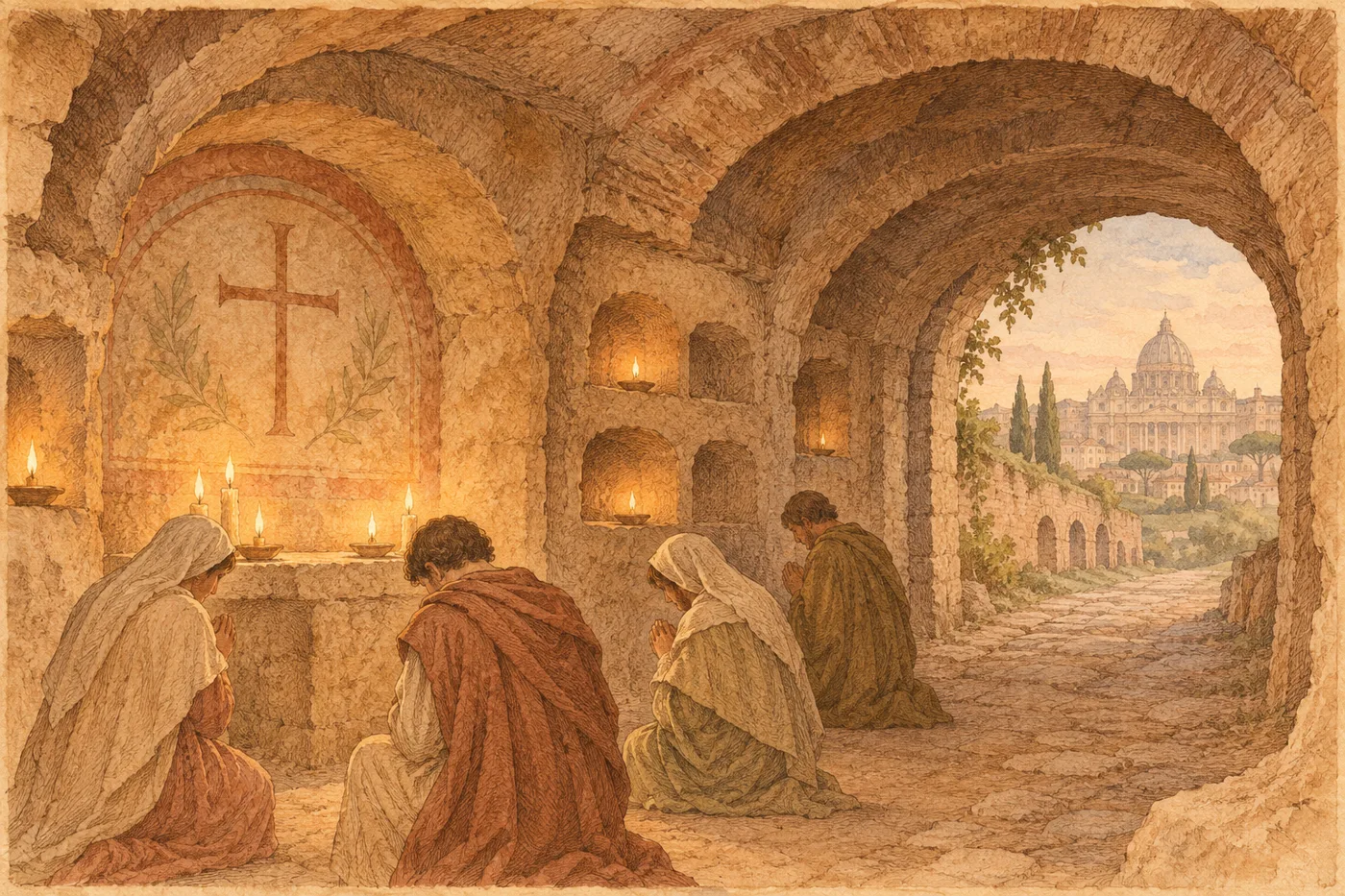
Why did a religion persecuted in the Roman Empire eventually become the state religion?
In the 1st century, at the eastern edge of the Roman Empire in the region of Judea (a Roman province), a man named Jesus appeared. Preaching God's love and compassion for the poor and weak, Jesus is said to have been crucified around the year 30 under the Roman governor. But his disciples believed he had risen and began spreading his teachings.
It was Paul who carried the teachings to various parts of the empire. He preached not only to Jews but to all peoples. Roman roads and sea routes aided his travels. The faith spread to include slaves and women, and communities called churches gradually formed.
For refusing to worship the Roman emperor as a god, among other reasons, believers were often viewed with suspicion and persecuted. Famous persecutions occurred under Emperor Nero in 64 and under Emperor Diocletian in 303. However, persecution was not constant throughout the empire. Still, the number of believers continued to grow.
The turning point came in the 4th century. Emperor Constantine officially recognized Christianity in 313, and in 325 he convened the Council of Nicaea to settle doctrinal differences. In 330, he moved the capital to the old Greek town of Byzantium (later Constantinople). Then, in 380, under Emperor Theodosius, Christianity is said to have been established as the state religion of Rome.
Meanwhile, the empire was shaking from within. In the 3rd century, emperors changed one after another, and border defenses weakened. Around the end of the 4th century, large-scale migrations of Germanic peoples began from the north and east (triggered, it is said, by pressure from the Huns, who arrived from Central Asia in 375). In 395, after the death of Theodosius, the empire was divided between the east and the west as it was passed down.
In the west, Germanic kingdoms arose in various regions. In 476, the general Odoacer deposed the young Western Roman emperor. This is commonly regarded as the fall of the Western Roman Empire. Meanwhile, the eastern empire (the Eastern Roman Empire, later also called the Byzantine Empire) continued until 1453. And the Christian church remained in Western Europe as a major power transcending national borders.
Mini timeline
- c. 30Jesus is said to have been crucified
- 313Emperor Constantine officially recognizes Christianity
- 380Christianity is said to be established as the state religion of Rome
- 395The Roman Empire is divided and inherited as eastern and western halves
- 476The Western Roman emperor is deposed
People in this chapter
He traveled widely, established churches, and left behind letters, which were later collected into the New Testament.
The emperor who recognized Christianity and moved the capital east. He is said to have been baptized only shortly before his death.
Meanwhile, elsewhere
Connection to Japan
The Account of the Wa in the Chronicles of Wei (Gishi Wajinden) records that Himiko, queen of Yamatai, sent envoys to Wei in 239.
Why it still matters
Christians today number about 2.3 billion worldwide (estimated around 2020). Many things that originated in Roman times remain part of our everyday lives today, such as Roman numerals, Vatican City where the Pope resides, and Christmas on December 25.
Perspectives differ
- Jesus' birth and death years
- Jesus is estimated to have been born around 6–4 BC and died around 30, but this is uncertain. This is why the 'AD' year 1 does not match the actual birth year.
- Content of the Edict of Milan
- The 313 agreement has long been called the 'Edict of Milan,' but scholars debate whether it was a single decree or multiple documents and agreements.
- Year of establishment as state religion
- The year 380 is famous as the year Christianity is said to have become the state religion, but the prohibition of non-Christian rites progressed toward the end of the 4th century, and opinions differ on where to draw the line.
- 'Fall' or 'transformation'
- Scholars disagree on whether 476 should be seen as a 'fall' or as one scene in a gradual 'transformation.' It is also unclear whether contemporaries regarded it as a major event.
Facts checked (4, verified by AI on the web)
- Confirmed 313: Constantine and Licinius grant freedom of religion (Edict of Milan) / 325: Council of Nicaea Britannica: Edict of Milan
- Confirmed 380: Nicene Christianity made state religion under Emperor Theodosius (some sources say 381) Britannica: How did the Roman Empire transition from pagan polytheism to Christianity?
The main text hedges with 'is said to have been established.' - Confirmed Gothic migration triggered by Hunnic pressure in 375 (some accounts give 376) Britannica: Battle of Adrianople (378)
Dates vary between 375 and 376. The main text says 'said to have been triggered,' which is appropriate. - Confirmed 476: Odoacer deposes Western Roman emperor Romulus Augustulus Britannica: Roman Empire – Height and decline of imperial Rome
This event is said to have gone largely unnoticed by contemporaries.
Sources
Britannica: Edict of Milan
Britannica: How did the Roman Empire transition from pagan polytheism to Christianity?
Britannica: Battle of Adrianople (378)
Britannica: Roman Empire – Height and decline of imperial Rome
* AI-drafted and cross-checked; human review is in progress. Status: