The Vikings — People of the North Who Crossed the Seas
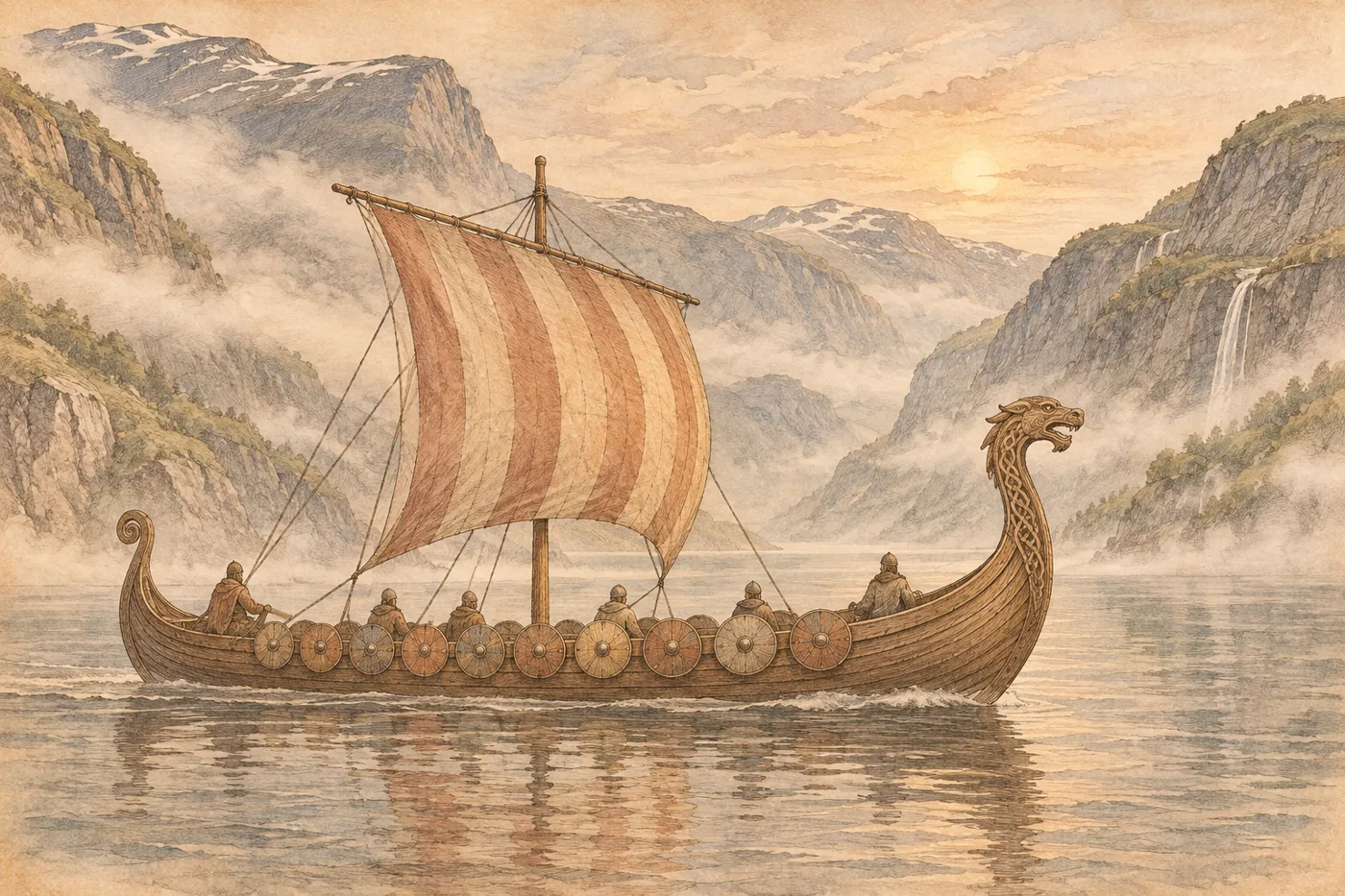
Why did the people of the northern coasts sail so far?
793: The monastery on the holy island of Lindisfarne, off the coast of what is now northeastern England, was attacked by people who came from the sea. This is known as one of the earliest recorded raids, and is usually considered the start of the Viking Age. The term 'Viking' refers to people who set out from Scandinavia (modern-day Denmark, Norway, and Sweden), but the word originally meant 'someone who goes on a raid.'
They were able to travel far thanks to their ships: long, light, sturdy vessels that could even enter shallow rivers. However, they were not only raiders. Many were farmers, and also merchants; a great number took to the sea for trade and settlement. They are said to have carried silver, furs, and slaves, with raiding and trading sometimes done by the same people.
Off the coast of what is now northwestern France, around 911, a chieftain named Rollo was granted land facing the northern sea by the king of West Francia. That land became known as Normandy ('land of the Northmen'). Rollo’s descendants gradually assimilated into the French-speaking and Christian world. One of those descendants, William, later became king of England.
Further west in the Atlantic, settlement of almost uninhabited Iceland began in the latter half of the 9th century (traditionally around 874). Around 930, a general assembly called the Althing was established, where chieftains from across the island gathered; it later came to be called one of the world’s oldest parliaments. There, a 'lawspeaker' would recite the law from memory to the people.
Toward the end of the 10th century, Erik the Red is said to have sailed to Greenland and started a colony. The sagas tell that his son Leif reached a land further west, called Vinland, around 1000. At L’Anse aux Meadows on Newfoundland, Canada, a Viking settlement has been found, known as evidence of their crossing to North America.
Meanwhile, those who headed east followed rivers into the plains of Russia. The Slavic peoples called them the 'Rus'. From about the mid- to late 9th century, states emerged around Novgorod and Kiev, with influence from these northerners. The extent of that influence, however, is still debated. In 1066, the king of Norway was killed in battle in England, and soon after, William, Duke of Normandy, seized the English throne. This is usually considered the end of the Viking Age.
Mini timeline
- 793Lindisfarne monastery raided
- c. 874Traditional start of Icelandic settlement
- c. 911Rollo receives the land that becomes Normandy
- c. 1000Vinland voyage said to take place
- 1066Norwegian king killed in battle; Duke of Normandy takes English throne. Considered the end of the Viking Age
People in this chapter
Around 911, he received land from the West Frankish king.
According to the sagas, he sailed west from Greenland around 1000.
Meanwhile, elsewhere
Connection to Japan
In 793, Japan was just before the move of the capital to Heian-kyō (794). Around 1000, when the voyage to Vinland is said to have taken place, Murasaki Shikibu was writing The Tale of Genji.
Why it still matters
Viking ships can still be seen in museums in Denmark and Norway. By the way, no solid evidence has been found that they wore horned helmets. That image is thought to have been created in later times.
Perspectives differ
- Was Lindisfarne the 'first' raid?
- 793 is a famous year, but some scholars argue there were smaller raids before it. The year stands out because a well-documented monastery was attacked.
- Vinland’s location and the site’s dating
- Opinions differ on whether L’Anse aux Meadows is Vinland itself or part of a larger area. Radiocarbon dating places the site around 990–1050, and a 2021 tree-ring analysis reportedly confirmed that timber was cut in 1021.
- Rollo’s origin
- Rollo is often said to be Danish, but that relies mainly on later chroniclers; some traditions hold that he was Norwegian. It is not certain.
- Origins of the 'Rus'
- Whether the Rus were primarily Scandinavian in origin or largely shaped by Slavic peoples is tied to national historical views, and debate continues to this day.
Facts checked (10, verified by AI on the web)
- Confirmed In 793, Vikings attacked Lindisfarne monastery (considered the start of the Viking Age) English Heritage: Viking raid (Lindisfarne)
The exact date is given as June 8 or 7. Whether it was the 'first' raid is disputed (see Debates). - Corrected & confirmed Around 911, Rollo received land facing the northern sea (part of Neustria) from West Frankish king Charles the Simple, beginning the Duchy of Normandy Reviews in History (Institute of Historical Research, University of London): La première Normandie (Xe-XIe siècles)
Sources refer to the Treaty of Saint-Clair-sur-Epte, conventionally dated 911; the earliest contemporary mention is 918, and the extent of the ceded land is unclear. The main text says 'around 911' and 'land facing the northern sea.' - Confirmed The Althing began around 930 at Þingvellir Thingvellir National Park (Iceland): History
According to the Þingvellir National Park description, the Althing was established around 930 and held there until 1798. The claim to be the 'oldest parliament' is debated. - Corrected & confirmed L’Anse aux Meadows is a Norse site from around 1000, the only confirmed Viking site in North America Evidence for European presence in the Americas in AD 1021 (Nature, via PMC)
Academic papers confirm L’Anse aux Meadows is the only confirmed Norse site in North America; timber cutting was dated to 1021 AD via dendrochronology. The occupation may have been very short. It may not be Vinland itself. - Corrected & confirmed According to chronicle tradition, the Rus settled in Novgorod under Rurik around 862 New World Encyclopedia: Varangians
This is based on a chronicle tradition; scholarly views on the Rus origin are divided. The main text softens it to '9th century' and 'influence is said to exist.' - Confirmed Traditional date for Icelandic settlement is around 874 Britannica: History of Iceland
Encyclopædia Britannica gives 874 for Ingólfr Arnarson’s arrival based on the Book of Settlements (some say 870). The main text notes it is traditional. - Confirmed Erik the Red colonized Greenland around the end of the 10th century Britannica: Erik the Red
Encyclopædia Britannica puts the colonization of Greenland at around 985. The main text says 'toward the end of the 10th century.' - Confirmed A 2021 tree-ring analysis determined that timber at L’Anse aux Meadows was cut in 1021 Science News: Vikings lived in North America by at least the year 1021
Based on a 2021 Nature paper (Kuitems et al.) using the 993 cosmic-ray spike. The source is a science news article, not an official institution. - Confirmed No solid evidence that Vikings wore horned helmets Smithsonian Magazine: Iconic Viking horned helmets are actually 3,000 years old
The National Museum of Denmark states that only one Viking Age helmet survives, and it has no horns. However, figures wearing horned helmets appear on the Oseberg tapestry, so the claim is 'no solid evidence.' - Confirmed In 1066, King Harald III of Norway was killed, after which William was crowned Westminster Abbey: William I (the Conqueror)
William was crowned at Westminster Abbey on December 25, 1066. Harald III fell at the Battle of Stamford Bridge (September 25, 1066), though that specific battle is not verified on this page.
Sources
English Heritage: Viking raid (Lindisfarne)
Thingvellir National Park (Iceland): History
Evidence for European presence in the Americas in AD 1021 (Nature, via PMC)
New World Encyclopedia: Varangians
Britannica: History of Iceland
Britannica: Erik the Red
Science News: Vikings lived in North America by at least the year 1021
Smithsonian Magazine: Iconic Viking horned helmets are actually 3,000 years old
Westminster Abbey: William I (the Conqueror)
Reviews in History (Institute of Historical Research, University of London): La première Normandie (Xe-XIe siècles)
World History Encyclopedia: Rollo of Normandy(事典)
* AI-drafted and cross-checked; human review is in progress. Status: