It goes back about six months.
When we started making the junior high school materials for Manabi Lab, the first thing I did was buy every textbook used in junior high schools in Ota City, for all three grades, from the first year to the third.
When I started reading them, honestly, I was surprised.
They were better organized than I had expected. The photos and diagrams were full of thoughtful touches. The content is genuinely good.
Why does it feel boring at school?
And yet. Classical Japanese, classical Chinese, social studies, science: why do they feel so boring when we learn them at school?
The answer I arrived at was simple. Because there are tests. Because there is memorizing.
Learning should satisfy the wish to know. It should be fun. Somewhere along the way, it turns into cramming things to memorize, and into a tool for entrance exams.
But there must be people who want to learn simply because they want to know. That thought is where this "Relearning for Fun" series came from.
We had not published it
At the same time, I thought that from a child's point of view, nobody would study something unrelated to entrance exams. I could not tell whether anyone would actually want to read it. So we did not publish it. In fact, there are many other things we have made and not published.
What changed my mind was the story in my previous post, "How a Man in His 90s Learned Two-Factor Authentication on a Site for Kids." A man in his 90s studied on our site and set up two-factor authentication on his own. The person who told me about him also wrote, "I don't know what I can learn at this point, but I have decided to try a little."
Older people are studying. Learning that, I decided to finish this content and publish it.
Reading for adults, in 16 series
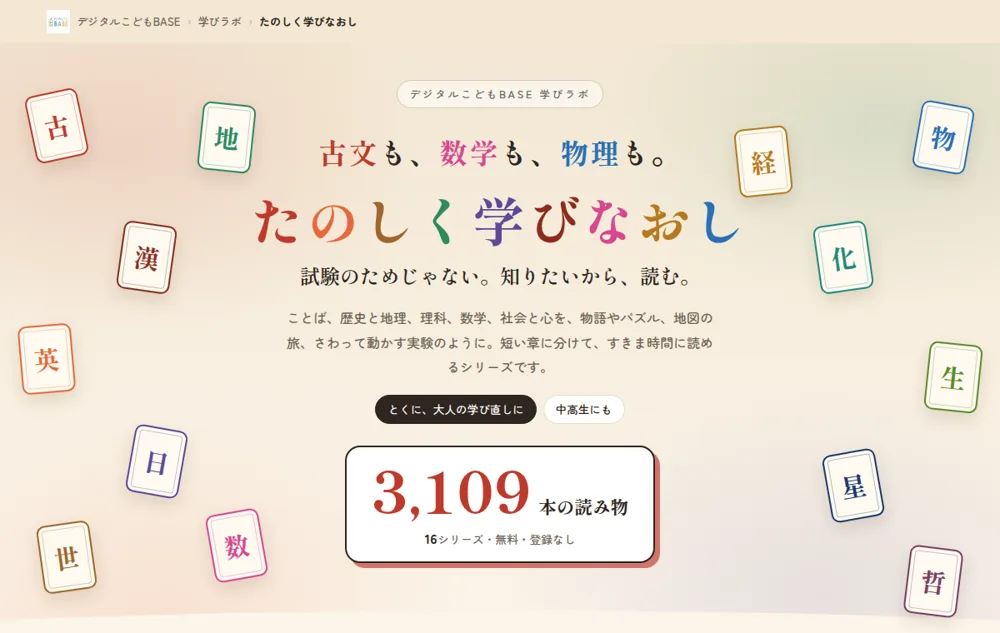
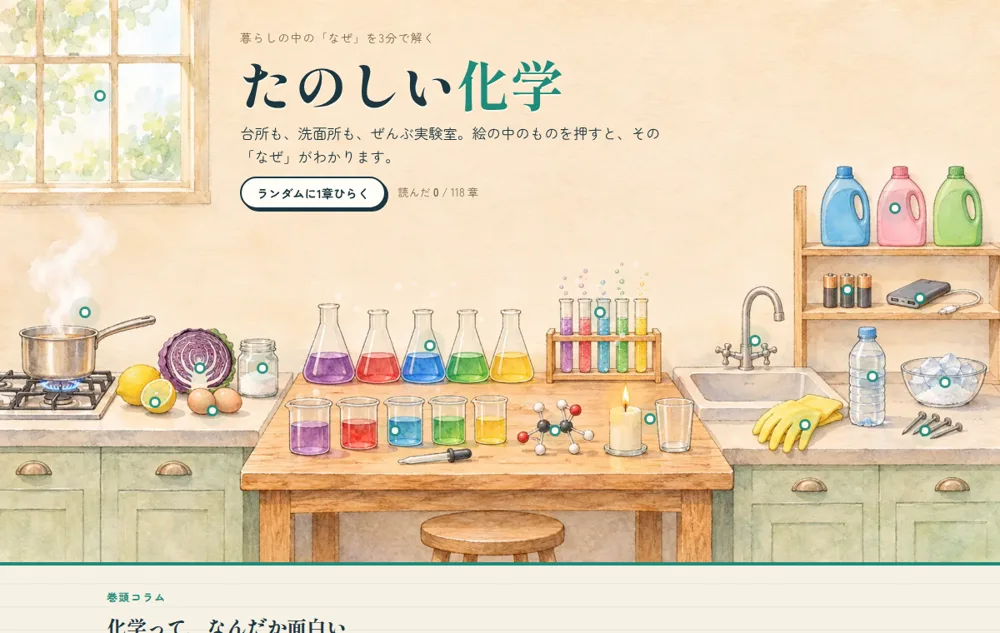
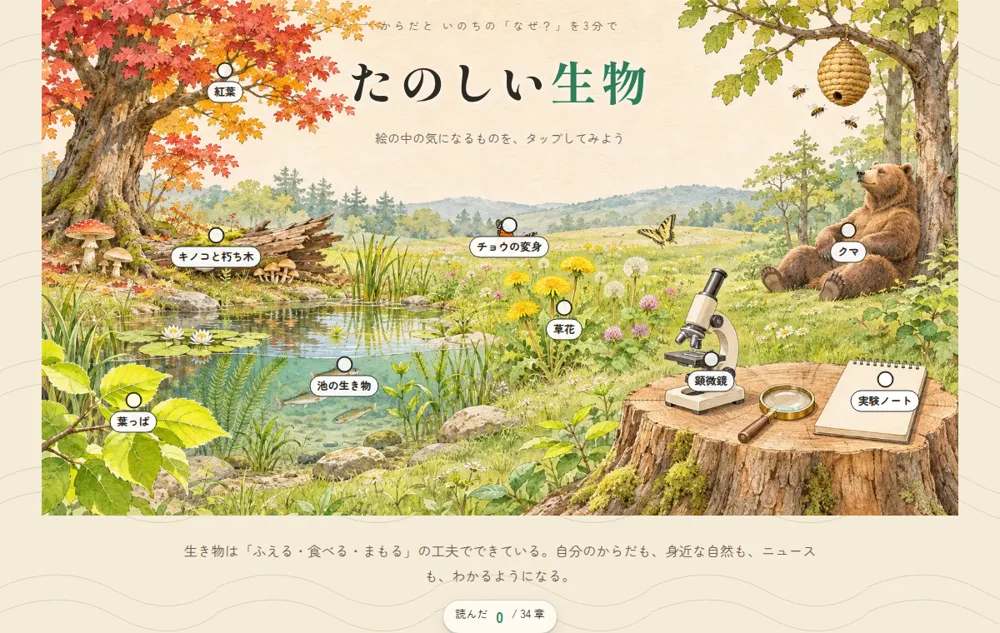
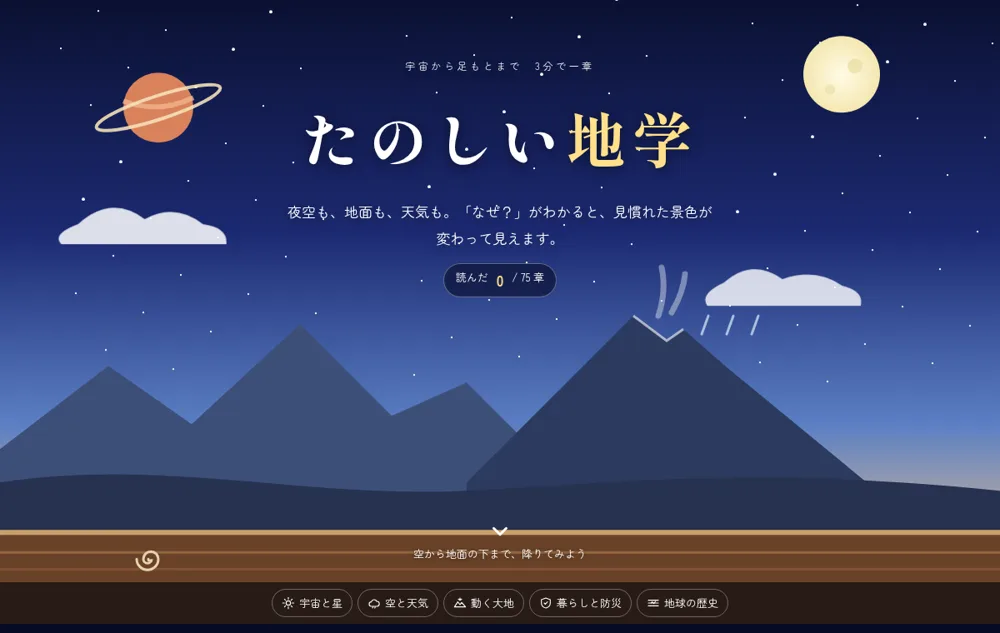
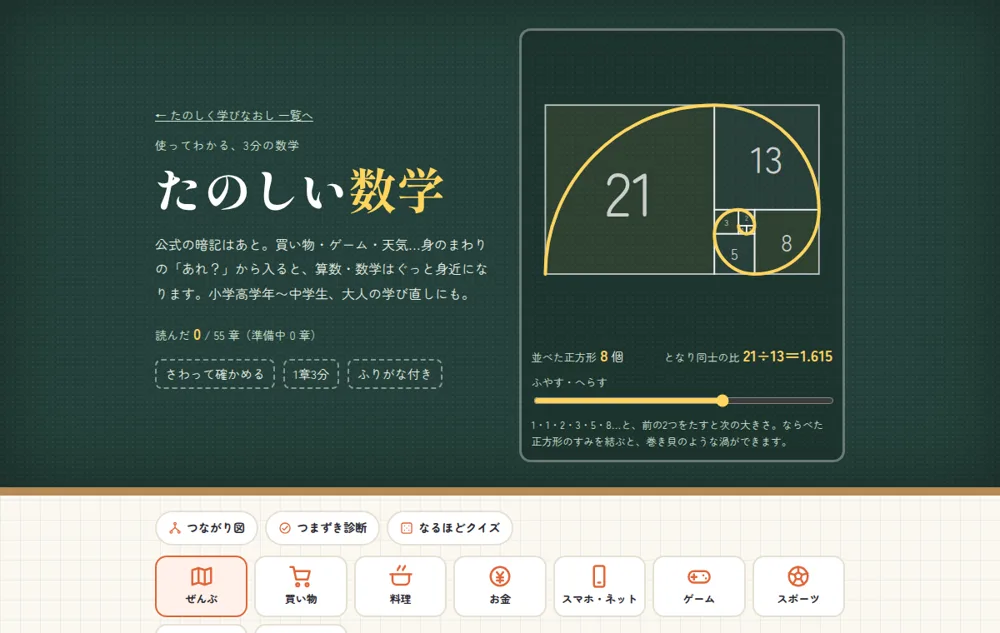
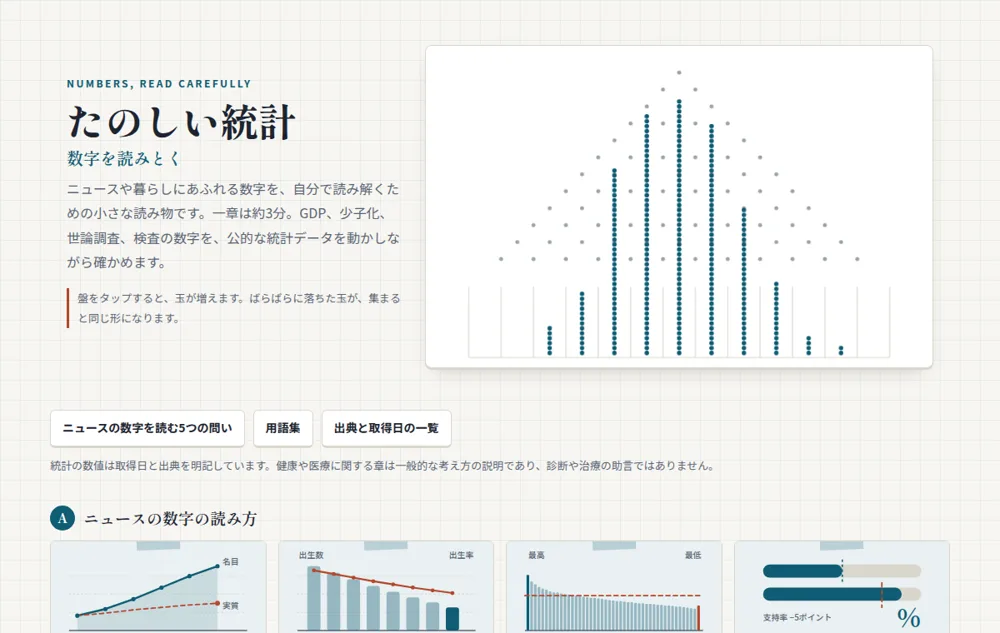
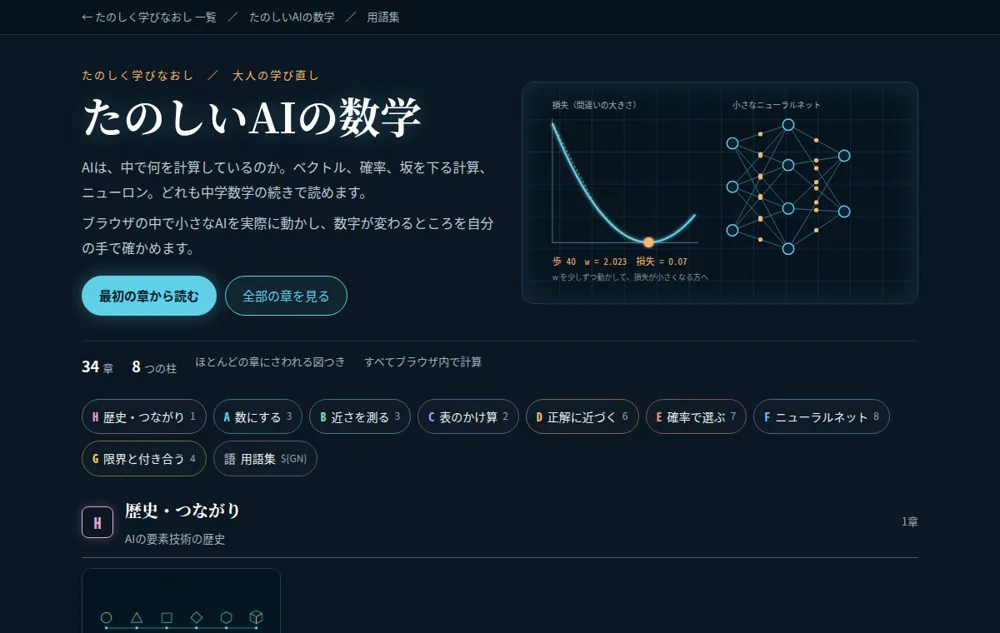
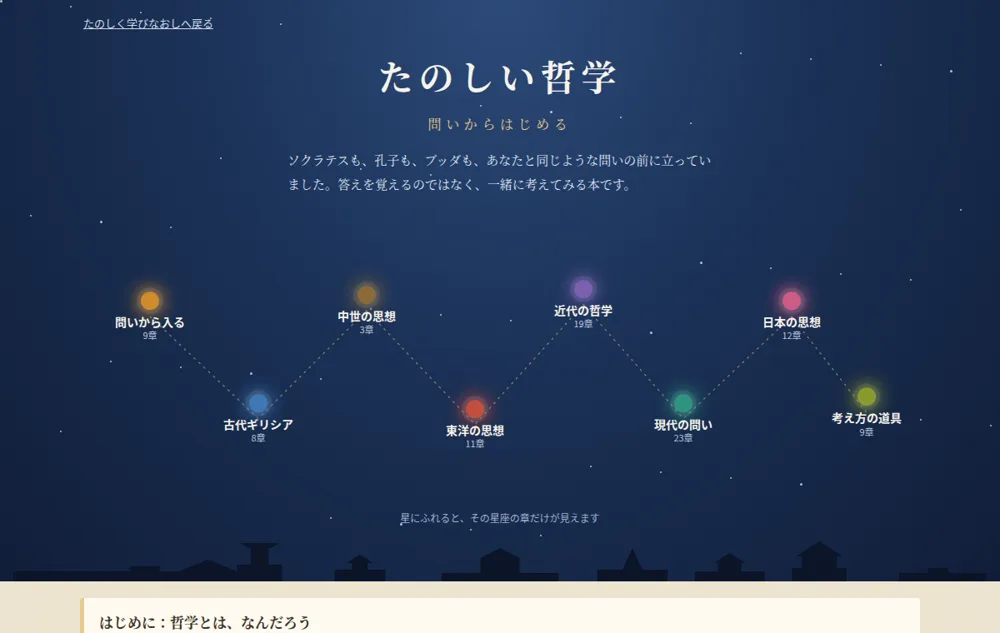
The name is "Relearning for Fun" (in Japanese). There are 16 series: classical Japanese, classical Chinese and English; Japanese history, world history and geography; physics, chemistry, biology and earth science; math, statistics and the math of AI; and philosophy, economics and psychology. There are 3,109 readings in all, free and with no sign-up.
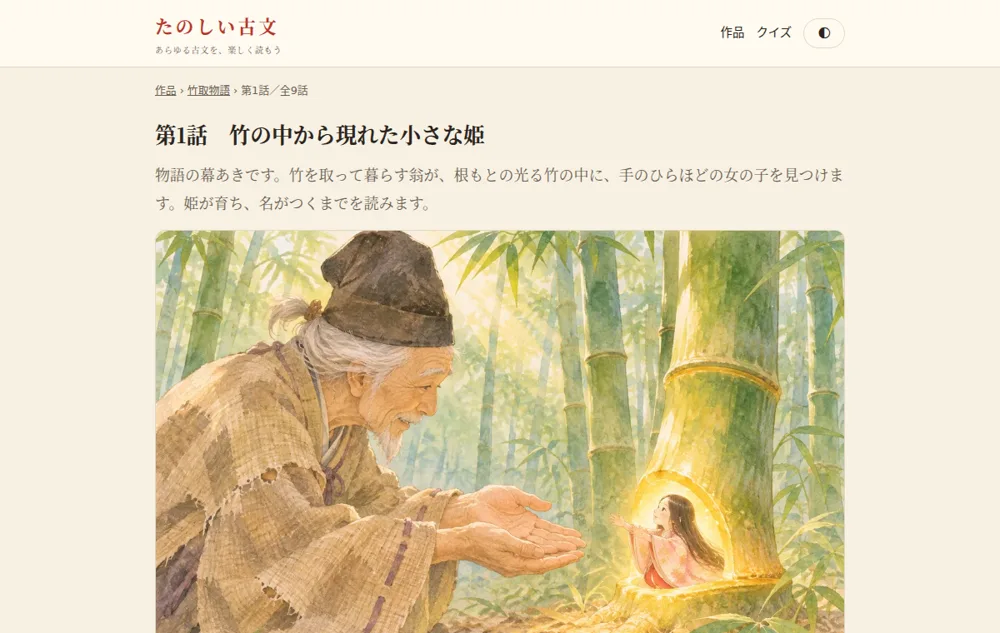
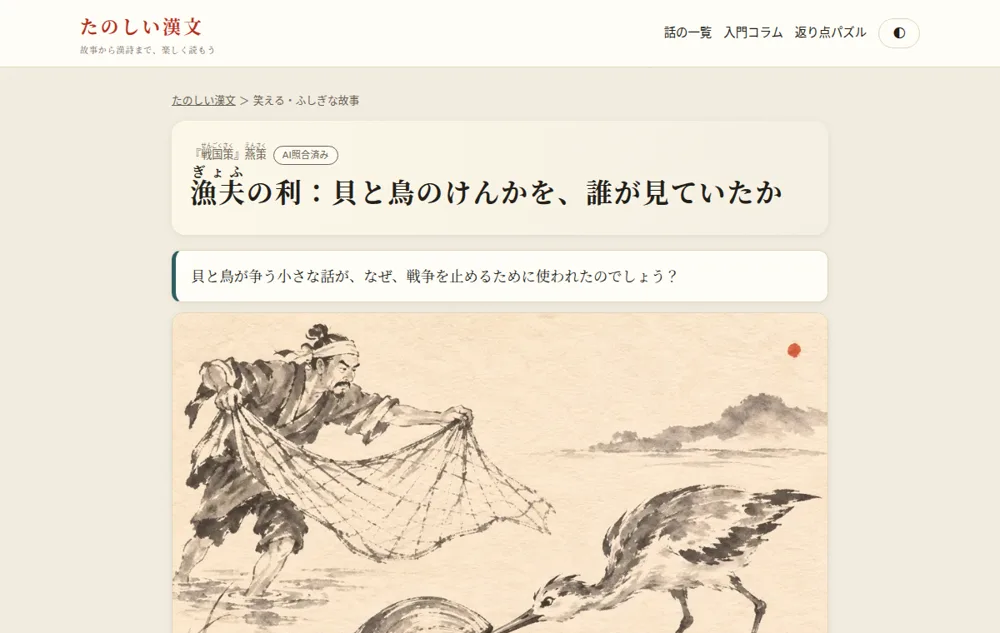
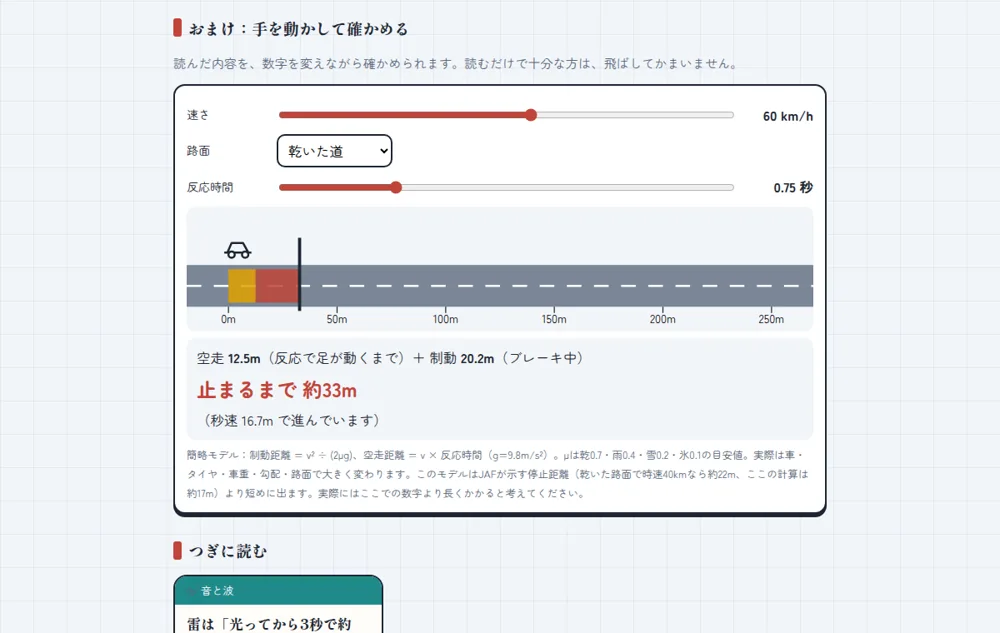
Classical Japanese is read as full stories, geography is read while turning the pages of a map, and physics and chemistry are checked by moving things with your own hands. What matters is not whether it will be on a test, but the moment you think, "I see." These are basically readings for adults, so each chapter has some substance. There are quizzes and puzzles too, but those are extras.
A subject you struggled with as a student may look different when you read it now. The series are also written so that junior and senior high school students can enjoy them.
Readings per series
| Group | Series | Readings |
|---|---|---|
| Language | Classical Japanese | 21 works / 1,354 sections |
| Classical Chinese | 93 | |
| English | 234 | |
| History & geography | Japanese history | 310 |
| World history | 149 | |
| Geography | 163 | |
| Science | Physics | 70 |
| Chemistry | 123 | |
| Biology | 82 | |
| Earth science | 75 | |
| Mathematics | Math | 55 |
| Statistics | 78 | |
| The math of AI | 34 | |
| Society & mind | Philosophy | 94 |
| Economics | 116 | |
| Psychology | 79 | |
| Total | 16 series | 3,109 |
The 16 series at a glance
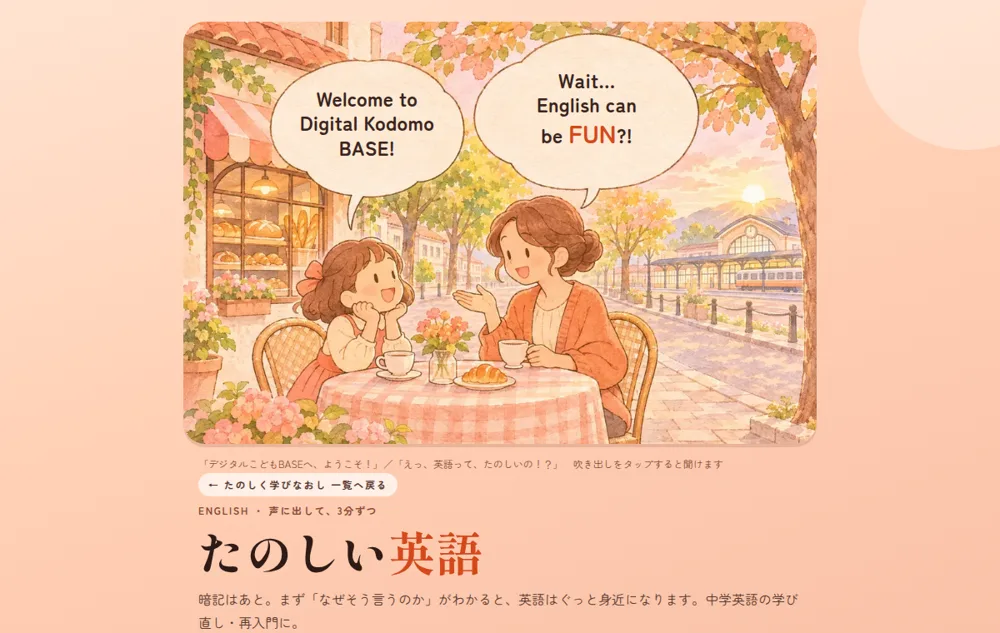
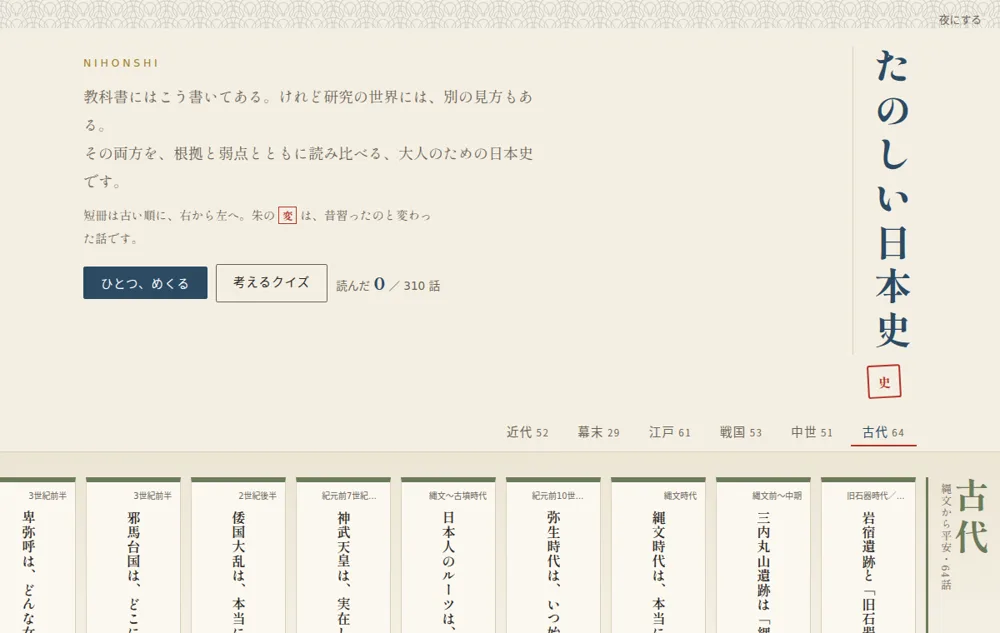
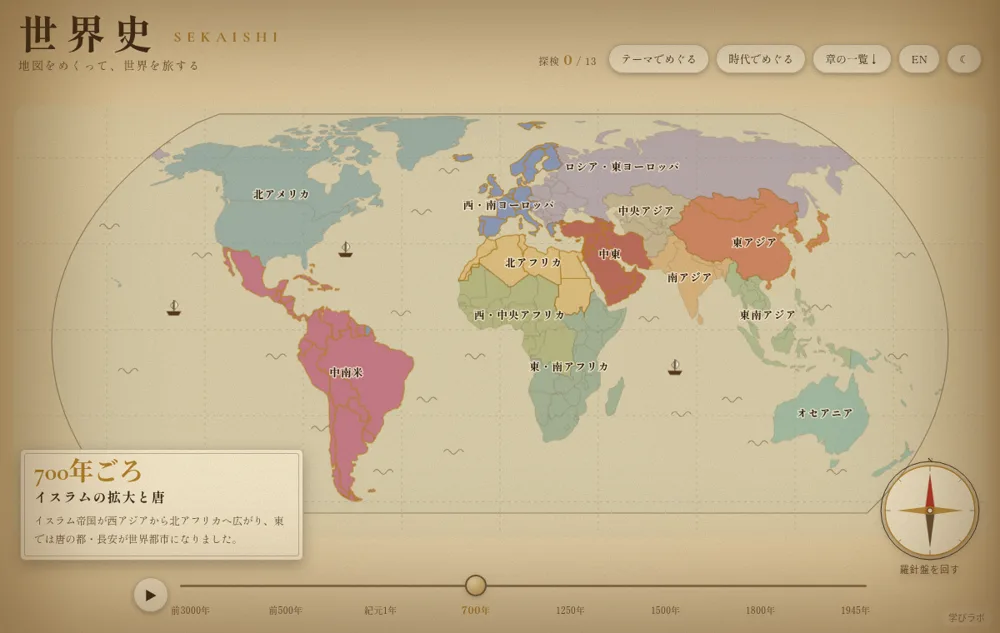
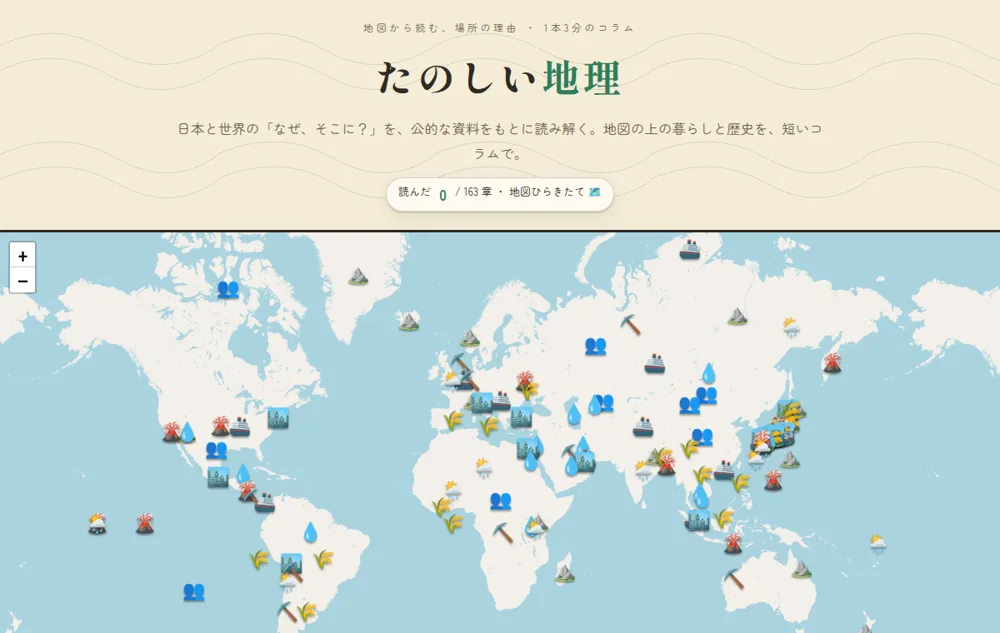
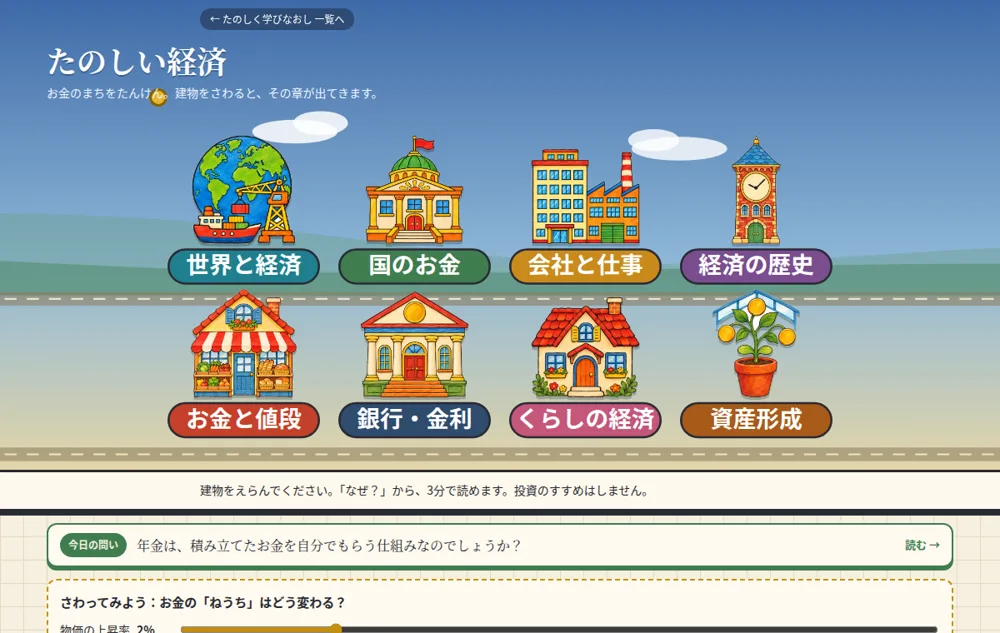
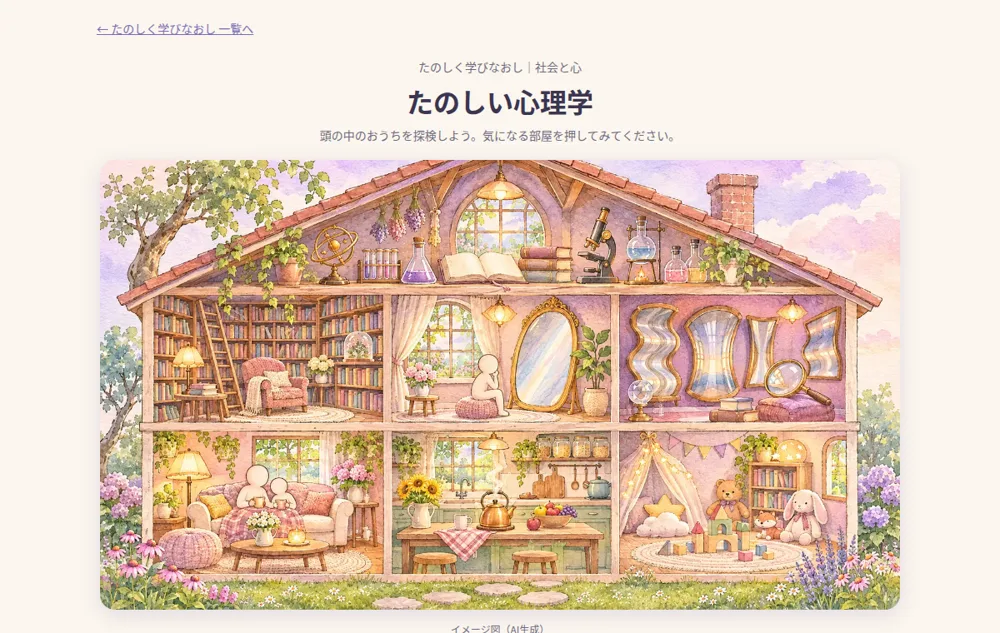
"Kodomo Manabi Lab" is now "Manabi Lab"
At the same time, we renamed "Kodomo Manabi Lab," the learning site we had run for junior high school students, to "Digital Kodomo BASE Manabi Lab."
This also came from my previous post. Before publishing it, I asked the person who had emailed me to read it, and she replied:
"I am truly happy that you have opened the site to us older people. I had been reading it with a vague sense of guilt, but from now on I will read it openly and tell the people around me."
When a name has "Kodomo" (children) in it, I think adults hold back a little. We are publishing readings for adults; it would be a shame for them to hesitate at the entrance.
So we took "Kodomo" out of the name, because we want it to be a place anyone who wants to learn can use openly, not only children. The junior high school materials in five subjects are still there, and the URL has not changed. A series for elementary school students is also in preparation.
If you find a mistake, please tell us
Figures, systems and historical facts are checked first against public sources from governments and research institutions. Even so, some mistakes may remain.
So every article on Manabi Lab now has a link to a form for reporting mistakes. If you notice anything, please let us know. We will check every report and correct the articles.
You don't have to memorize anything. Start with whichever series catches your eye.
Press release: https://digitalkodomo.jp/news/2026-11-11-manabi-labo-tanoshii_en.html
Relearning for Fun (Japanese): https://digitalkodomo.jp/kids-study/tanoshii/
*
Digital Kodomo BASE is a nonprofit that teaches children computers, AI and programming for free. All of our learning sites, including Manabi Lab, are free to use. To keep our work going, we would be grateful for your support through donations.